

In a sobering reveal to air cargo journalists at its annual Cargo Media Day briefing in Geneva in early December, IATA’s global head of cargo, Des Vertannes spoke frankly of the accusations being leveled at the industry. That these accusations come as the industry continues to struggle with nearly a three-year long stretch of severe market malaise makes not just the acknowledgement, but the pressing need for action, all the more poignant.
“There are things we need to do as an industry to ensure we remain efficient and competitive given that we are the premium mode of transport and in fact the most expensive. At the moment we are facing accusations from the users of the air cargo that we are not as efficient, or reliable, or as environmentally friendly as we should be,” Vertannes says.
He went on to relate a conversation – that is by no means unique – with the distribution director for Philipps during an air cargo event in the Netherlands earlier this year. “She attacked air cargo for being the most unreliable premium mode of transport. She said if she wants a five day service, air cargo delivers in 6-7 days, if she wants a 6-7 day service it delivers in 8-9 days.

“It hasn’t conveyed its environmental responsibilities and she was completely oblivious to the fact that the aviation industry is the only industry to have committed to tackling environmental issues and the carbon foot print challenge imposed on us, to which we’ve given firm commitments and firm deadlines for these intentions,” Vertannes continues.
Further stoking the shock-and-awe factor, Karl Garnadt, CEO and chairman of Lufthansa Cargo and the current IATA Cargo Committee chairman exhibited an original advertisement from Lufthansa Cargo in the 1960s. The advertisement featured a B707 freighter and focus on the carrier’s service proposition – “3 days”.
“The logic behind it was we promised to deliver within three days any place on the globe,” he said. This was important, he notes, because the cost of capital was much higher at that time. The logic to take to the shipper then, was that if you have high value goods and take into account capital cost etc, that air cargo, even though it is a very expensive mode of transport, was still financially beneficial to the company.
Garnadt notes this is still the case for many goods, with today’s business presenting two clear trends: The miniaturisation of cargo and its rising value. For Lufthansa Cargo the average value of one tonne of cargo is nearly €100,000 with the industry average at about €75,000 while other modes of transport like road, rail and sea coming in at about €1,500 per tonne.
“I can fully understand the complaints from shippers. You hear the same story over and over, and the issue is 90 per cent of the transit time for air cargo is time spent on the ground,” he says. This includes issues dealing with Customs, consolidation, goods acceptance issues, data issues, etc.
“So the clear message is: 40 years in this industry and we have not made any progress – we’ve lost quality, we’ve lost speed and we are diminishing the value proposition for our customers and from that point of view I can say it’s a miracle that air cargo is still such a viable part of global trade,” Garnadt says with sober conviction. “I mean, we are still carrying 30-40 per cent of the value of international trade on the long-haul trade lanes – less than one per cent of volumes, but it is 30-40 per cent of value. And with that kind of performance of delivering in an average six days, it’s a miracle that we are still here and existing.”
Making it perhaps even more miraculous is that this six day average also includes the integrators, making conventional air cargo in reality, an even greater laggard than the numbers suggest on the surface. “And the six days is not the entire truth,” Garnadt says adding, “things get disrupted in the air cargo supply chain and a shipment can take 20 days if you hit the wrong place.”
The picture gets “even worse and more depressing”, continues Garnadt bearing yet more bad news as he pointed to other modes of transport. Sea freight, for instance, has become more efficient, bringing down service times from an average 23 to 19 days. Shipping lines, through alliances and capacity sharing, have also brought up the number of sailings from maybe once or twice a month to multiple weekly sailings. And then not to forget the sea-air options which also erode air cargo’s business.
“They have been able to really compress lead time of their product cycle, which we haven’t been to do anything like, in terms of that level of efficiency,” Vertannes adds. “And that’s the issue,” he says, “when someone says ‘you’ve got modal shift’, the modal shift isn’t going from integrators to ships, its coming off the conventional users of airspace and that is the IATA members and the air cargo industry in general and that’s why it is so important that we are looking at trying to improve and transform.”
Moving forward
So the question for IATA and the Cargo Commmittee is, ‘what are the appropriate measures to eliminate the inefficiencies in the traditional air cargo chain?’. “My projection is that if we do not tackle this as an industry and this includes the forwarders, then this will be a very tough thing going forward,” Garnadt warns.
Bolstering his warning he points to the fact that nearly 50 freighters have been grounded over the last 16-18 months – more than triple the number of the Lufthansa’s entire freighter fleet, he adds. The reason for this, although partly tempered by the fact some were grounded because of fuel inefficiency issues, is keenly an issue of value proposition. “The problem is many of the suppliers that went out were the ones that primarily lived on consolidation business that takes a long time – they deliver a nine-day product when a seven-day products is asked for,” he says.
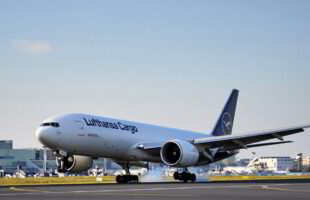
Noting that “everybody in this industry is so fascinated by aircraft,” Garnadt also admitted that Lufthansa Cargo was also chuffed to take delivery of its new B777F’s, but for very rational reasons, as he pointed to the 52 per cent fuel efficiency improvement from the admittedly very inefficient – in today’s standards – B707F of the 1960’s. “You can see the technological development from 1960’s to today, where we are using the most sophisticated technology to fly our cargo, but yet we are still using typewriters to print documents – and that is a kind of tragedy in this industry,” Garnadt notes making a sly reference to e-freight.
And while ongoing, concerted efforts to get e-freight implemented across the industry are moving forward and are clearly a key step in solving this problem, they are but only one part of a complex solution.
“What the shippers deserve and require is that they want certain quality levels which we guarantee and we have to make transparent what service level is linked to what price. We need to make transparent what service levels the industry can provide and the shipper has a choice and clear control over what he buys.
“Nowadays if you ask shippers, in many cases they have no idea what they are buying because they don’t know what the forwarder is doing with their cargo, which airline he is using, etc. As an industry we have to start again to listen to what the shippers want,” Garnadt argues.
“I had a dream”
The question then is how to move forward. In answering that question Garnadt relates his ‘dream’. “In my dream the cargo committee and the parties in IATA have an agreement that the quality of air cargo, the reliability, the predictability must be lifted to a level of 100 per cent – then this game changes,” he says.
“But then I wake up to reality that there will be members of this air cargo community that are either not willing, or not able to join in. But there are many global companies who are quality leaders – both in the forwarding and in the airline industry – and my hope is that these companies spearhead the development where we agree and implement such a transparency and kind of quality assurance system, which from my perspective we need, to get the trust of the shippers back. I think we need to create an environment that anybody who is willing and able, can join.”
By making it obvious and clear what the benefits are to the industry and to shippers, the hope would be that a quality system could be forged that ground handlers, forwarders, airports and airlines could agree on, for the entire air cargo supply chain. “That is the ultimate goal, but we are far away from that, but we must work on that because that is part of the future of the air cargo industry – it’s very decisive. Probably not everyone can follow, but the ones who can follow will get a huge benefit out of it,” says Garnadt.
But this dream may well be realised faster than anticipated assures Vertannes, saying: “Karl’s dreams and aspirations are mirrored in the Cargo Committees’ and we’ve discovered in the light of discussions that Cargo 2000’s quality mechanism is the only industry mechanism that has been developed thus far with any degree of credibility behind it.”
As a result, he says, the Cargo Committee and the Cargo 2000 (C2K) board have asked IATA to take this existing quality mechanism and extend the quality platform to a door-to-door measurement capability, adding the security elements, the customs elements, add the bits for which data is required, add the dangerous goods elements in terms of provision of handling and “try to develop around it what they call ‘mutual milestones’ and this is the area where I think we’re going to be challenged, because as we develop the mutual milestones you’re going to have people saying ‘hey wait a minute, my mutual milestone differs from an airline like Lufthansa’.”
The way around this is to go to the shippers and determine what they believe is a mutual milestone. “We’re doing it because we want the shippers to believe air cargo delivers high quality and the only way we can deliver that is if the C2K platform helps to compress time.
“So we have to get back from 6-7 days to three days, so the challenge to IATA is really how can we do things that increase efficiency when security regulators are pushing us, how do we compress time so that we can extract 2-3 days from the end-to-end supply chain within the next two years,” Vertannes said. E helps, things we’re doing on security helps, quality helps, but we’ve got to do a heck of a lot more if we’re going to take two or three days out of the value proposition.”