

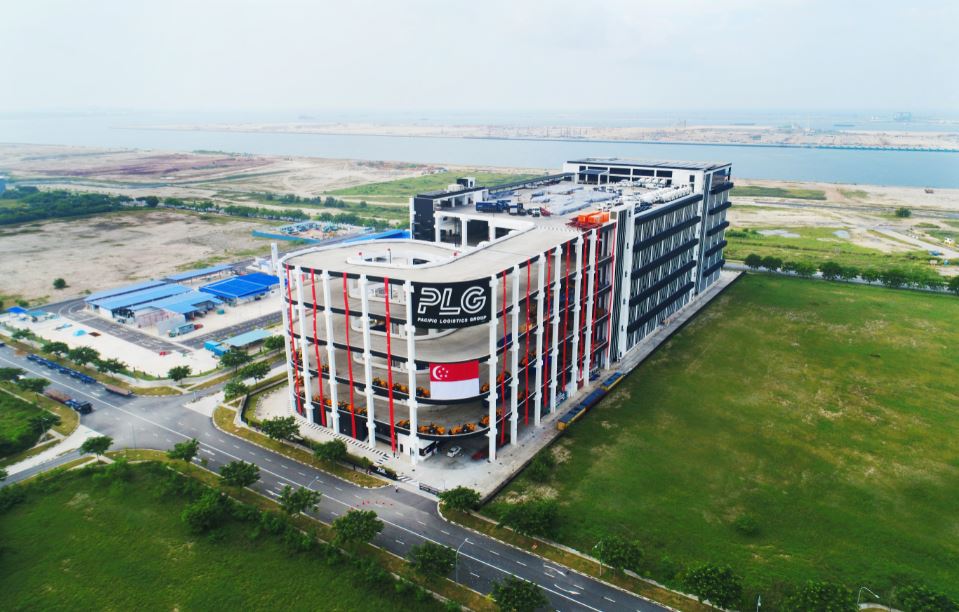
When the first wave of coronavirus cases prompted Singapore to implement a circuit breaker, Pacific Logistics Group was in charge of storing the country’s food supply. As one of the leading homegrown logistics companies in the city state, PLG is playing a crucial role in supply chains across Southeast Asia. Operating across 20 locations in 11 countries, the company handles air freight for perishables and livestock and provides warehousing solutions for frozen and chilled food.
With limited capacity and inventory pileups brought about by global lockdowns, PLG predicts manufacturers to increase export volume within 1 or 2 years and with it the demand for freight. It also expects multimodal transportation to see increased demand as more shippers explore cheaper options.

In an interview, Payload Asia talks to Kelvin Lim, founder and group managing director, as he walks us through the company’s operations, the digital shift in logistics, and how PLG is bridging market gaps and turning them into business opportunities.
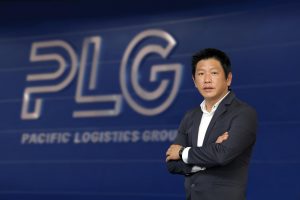 PLA: Can you tell us more about PLG’s operations? Which modes or business are driving revenue for the company? In which markets are you seeing much potential?
KL: Pacific Logistics Group is based in Singapore with global connections and regional networks spanning across 20 locations in 11 countries—including Singapore, Indonesia, Malaysia, Laos, Cambodia, Myanmar, Thailand, the Philippines, South Korea, China, and Germany. PLG provides customised and cost-effective integrated logistics solutions for clients, many of whom are MNCs.
Our revenue drivers vary season to season, depending on the industry’s trends. Last year’s pandemic resulted in more stockpiling activities and this created a strong demand for warehousing services. Warehousing rose twice the amount of pre-pandemic levels.
Freight demand is expected to increase in the coming few years as economies recover. Due to limited freight frequency and inventory pileups during the global lockdowns, we foresee manufacturers increasing their export volume within the coming 1-2 years, driving the demand for freight.
Multimodal transportation too is expected to see increased demand and growth as more explore railway freight as part of the options. By leveraging a mix of sea-rail or air-rail options, this meets short transit times and balances out the supply and demand of freight equipment.
PLA: With capacity congestion in both sea and air, how are you managing the sharp increase in rates? What would you say is the main headache for shippers aside from surging costs?
KL: This surge in pricing was caused by the domino effect of low air freight frequency, which in turn pushed a higher demand for sea freight. We think that the price will reach its corrective equilibrium point once the frequency of aircraft and sea vessels reach pre-pandemic volume levels.
Likewise, the backlog of inventories resulting from limited shipments posed another challenge to sellers and shippers aside from surging costs, as it incurred additional warehousing costs. Shippers and sellers had to factor in these additional costs, and consumers had to absorb these fluctuations.
With these rising costs, shippers and sellers were forced to explore an alternative mode of freight—rail freight—to export their goods. With our strong background in freight, we foresee higher conversion rates from sea freight to rail freight amongst our current customers.
PLA: 2020 was quite a disruption but in some way, it did fast track digitalisation especially for the logistics industry. What are your thoughts on this?
KL: Apart from incorporating digital advances in daily operations such as very narrow aisle (VNA) and automated handling, one crucial area digitalisation needs to tackle is automating the flow of information. This helps to bridge communications gaps between operations teams, back-end teams, and the customers. With access to data via real-time tracking and orders, this reduces manpower inefficiencies and common information can be shared quicker, particularly with telecommuting now part of the new normal.
PLG was in charge of Singapore’s stockpile during the circuit breaker. Can you tell us more about your capacity to store perishables? What about pharmaceuticals? Are you putting your hands into distributing the vaccines?
We presently handle air freight for perishables and livestock, as well as warehousing solutions for frozen and chilled food. At present, we can store up to 4,500 pallets for our frozen storage facility.
For other ambient food storage, we have a total of 200,000 square feet of space. We are also exploring the storage of perishable goods. Alongside, we introduced a brand new vertical—food logistics, to solve logistical challenges for the F&B industry. With our recent storage facilities Halal-certified, PLG serves the diverse needs across the entire industry.
At this stage, we are working closely with customers to build a stronger footprint and expand our capabilities to handle the sensitive requirements for pharmaceuticals.
PLA: Your headquarters near Tuas Megaport has a great view of everything that’s going on around at the maritime terminal. For those looking for a career in logistics and stepping into a great office with a view, how would you describe PLG as a workplace?
KL: It is amazing to witness the progress of Tuas Mega Port, all from the doorsteps of our headquarters – from the initial land reclamation works down to the installation of automated rail-mounted gantry cranes, and the opening of Phase 1’s operations. In relation, shipping and ports are important elements in logistics and PLG being 1 kilometre away from Tuas Mega Port is advantageous.
We are within reach of the port’s main gate in 15 minutes. We gain efficiency in turnarounds because more trucking can be accomplished within the same time-period as compared to other logistics companies that are situated much further a distance from the Mega Port.
The logistics industry has evolved significantly in recent years and we believe it will continue to change even in the next few years. With a strong shift towards digitalisation, the need to remain relevant has become more pertinent than ever.
As a dynamic and agile organisation, PLG is quick to capitalise on bridging market gaps and turning them into business opportunities. This agility is made possible because of our strong collaborative culture, where cross-functional teams work closely to achieve business objectives.
PLA: Which trends do you predict will shape up logistics in the years ahead? What do companies need to do to recover and thrive post-crisis? And where do the opportunities lie?
KL: We foresee more mergers and acquisitions over the year and increased strategic partnerships to consolidate resources and increase market leadership. To thrive in these dynamic times, companies need to adapt and shift quickly to industry trends. For PLG, this means aligning with the broader national development in infrastructure to facilitate new economic growth. As digitalisation becomes a turning point for the industry, key opportunities will arise in this race to come up with the next industry-changing innovation.