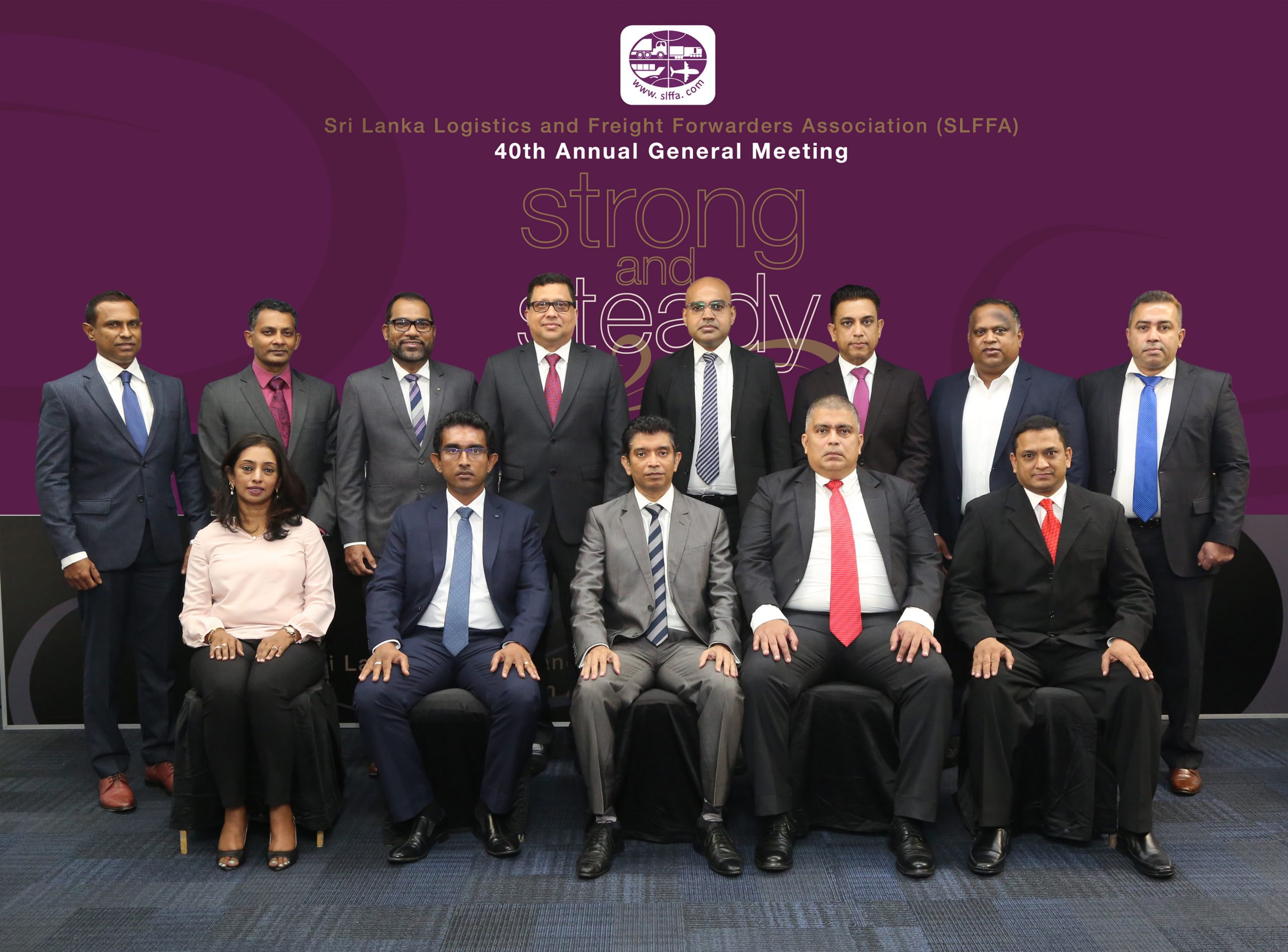

Here’s an interview to give you an idea of Sri Lanka’s freight market from the words of Dinesh Sri Chandrasekara, chairman of the Sri Lanka Logistics & Freight Forwarders Association.
Which trade routes does Sri Lanka connect by air or sea? What makes the country ideal for such cargo connections?
Sri Lanka’s strategic position off the Southern tip of India places it within twenty nautical miles of the major East-West shipping route that connects major ports. The Colombo Port is viewed as the subcontinent hub of India, as 70% of cargo passing through it is transhipment cargo. Larger vessels prefer to dock at Colombo due to the deep draft offered by the port, and feeder vessels transport cargoes from Colombo to Bangladesh and Indian Ports. The country also has smaller ports at Galle, Trincomalee and Kankasenturai, as well as the newest port in Hambantota on the Southern coast. This port is closest to the East-West shipping route.
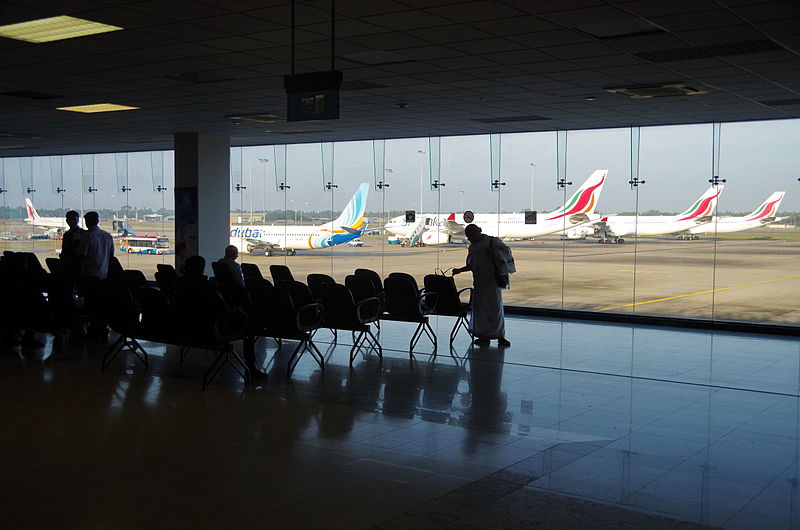
In terms of air connectivity, Sri Lanka lies approximately halfway between the major air connectivity hubs of Dubai and Singapore. The Bandaranaike International Airport is the major international air gateway to the country, located just thirty kilometres from the commercial capital Colombo, and has direct expressway connectivity to it. A second international airport, the Mattala Rajapakse International Airport is present in Hambantota but remains to be effectively utilized, however its proximity to the Hambantota port and direct road connectivity makes it an attractive international cargo hub.

What is the main hindrance in Sri Lanka’s cargo hub aspirations?
The main hindrance is the presence of excessive red tape, and slow pace of change in the state sector and regulatory environment. The Covid-19 pandemic was a major driver in digitalising several processes pertaining to customs and port operations, but redundancy still exists as certain functions still require physical documentation. The area of payments has enjoyed evolution as facilitators such as LankaPay have teamed up with the major banks in the country, enabling payments to now be performed via online banking, as opposed to being made physically, with cash paid at counters and printed receipts issued.
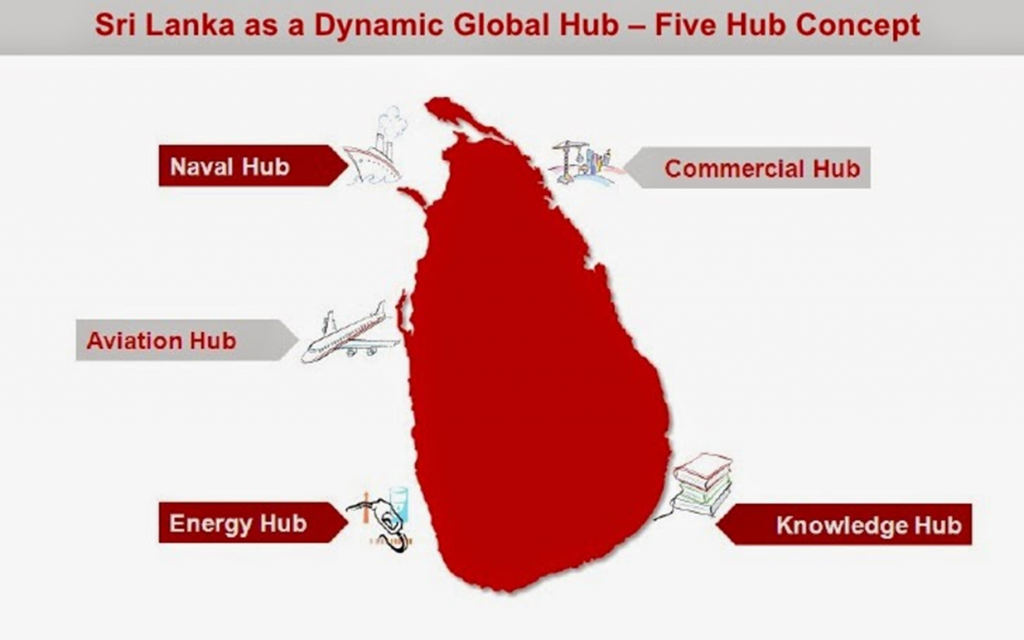
Adopting a more macro viewpoint, Sri Lanka achieves less per year on the LPI indicator than other SAARC countries. One reason for this is that changes in Government bring about changes in policies that cause setbacks for the industry. Furthermore, the Maritime and Aviation industries are under two separate Ministries, which is one reason why the ‘Five Hub Concept’ for Sri Lanka has been elusive to achieve.
There is a distinctive lack of concessions and infrastructure granted to the freight forwarding and logistics sector. Currently, it is not adequately recognized as a separate function and is simply clustered under ‘Transportation’ in the Central Bank of Sri Lanka’s relevant reports.
In terms of opportunities that are not properly utilized, the country could further capitalize on its attractive location to step up offerings in terms of marine lubricants, bunkering, freshwater supplies, slops and sludge removal, offshore supplies, ship chandling, ship repairs and maintenance, shipbuilding activities and crew management, as well as offering more specialized services aimed at the cruise ship and yacht segments.
Taken from an earlier statement: why is there a reluctance to adopt e-freight for some of the country’s top airlines?
The reluctance of adopting e-freight by some of the country’s top airlines is a factor that lies with each airline. Most airlines are represented by a general sales agent in Sri Lanka, whilst the operations are handled at their regional or head offices. Thus, the decision to adopt e-freight for a particular market such as Sri Lanka can only be made by them, and the volumes may not justify such a move. Another factor is that their management or IT systems may not be conducive to the adoption of e-freight and may require modernization. Such modernization may not be financially feasible to the airline, or not planned for our region.
What are the challenges for freight forwarders and logistics in Sri Lanka right now?
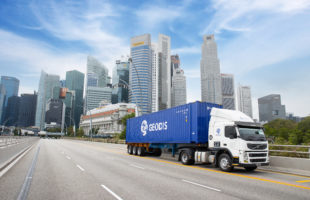
A major challenge is that the infrastructure of the country needs to be developed to a greater degree. Sri Lanka is heavily road-dependent for carriage of cargo, as the railways transport less than 1% of total cargo volumes. The road network has been steadily developing, with major roads and even expressways connecting the major export processing zones (EPZs) and industrial zones. However, there is a trend for industries to move away from these zones due to a dearth of labour, as well as high labour turnover. Thus, factories have turned to setting up operations in rural areas, near small towns and villages where there is an ample and willing workforce, particularly for unskilled or semi-skilled roles. However, road connectivity to these areas can be moderate to marginal, and thus, moving raw materials in and finished goods out in a timely manner can be a challenge. This was well reflected with the recent heavy rains that the country faced, turning many rural roads into quagmires, and disrupting movements for days.
Another challenge is that the facilities for air freight at the Bandaranaike International Airport have not significantly changed or upgraded for at least three decades. The Air Cargo village that was set up in the early 90s is still the same. The storage area is no longer sufficient, and cargo tend to get subjected to the effects of weather as a result. A part of the storage area has also been taken over by the authorities for airport expansion, with no alternative provided at the time of writing.
Port infrastructure and customs processes can be cumbersome too. We have faced confusions with HS code classifications, and these need to be in an easier and clearer format. Confusions with HS codes when clearing result in delays and lower productivity as a result. The lack of adequate digitization as a whole causes significant hindrances to cross-border trade. There is no simple cross-docking facility to cater to imports in the airports and seaports to increase efficiencies in distribution when multimodal freight is involved.
How important is the SLFFA in addressing such issues?
The Sri Lanka Logistics and Freight Forwarders Association is the apex body that represents the freight industry, across a transparent and collaborative platform. We have subcommittees for sea freight, air freight and other areas, and our subcommittees actively and tirelessly engage with the relevant public and private sector entities to ensure that issues are highlighted, solutions strategized, and robust implementation plans effected. The industry consists of players of all sizes, and an individual player may struggle to have their voice heard. We, as a collective body, provide them a strong and clear voice, and we deal with a myriad of parties, including the Sri Lanka Ports Authority, Airport and Aviation Services Limited, Shippers’ Council, Sri Lanka Customs, and other stakeholders. If Sri Lanka is to achieve the Five Hub concept, the SLFFA is best poised to influence relevant stakeholders and policymakers with robust plans and implementation strategies.
Where are local players in terms of digitalisation and adopting automated processes?
There is an observed laggard behaviour in this area. Larger companies saw the benefits of digitalization in terms of cost reductions and pushed for it. The Covid-19 pandemic was another driver that forced more players to adapt somewhat reluctantly. There was, and still is a reluctance among some players who are used to a manual way of doing things, with physical signatures and bank cheques, and they find it overwhelming to adopt digital signatures and online banking, for example. They are not yet convinced that it is secure or safe enough, and we are working to reassure them that it is.