

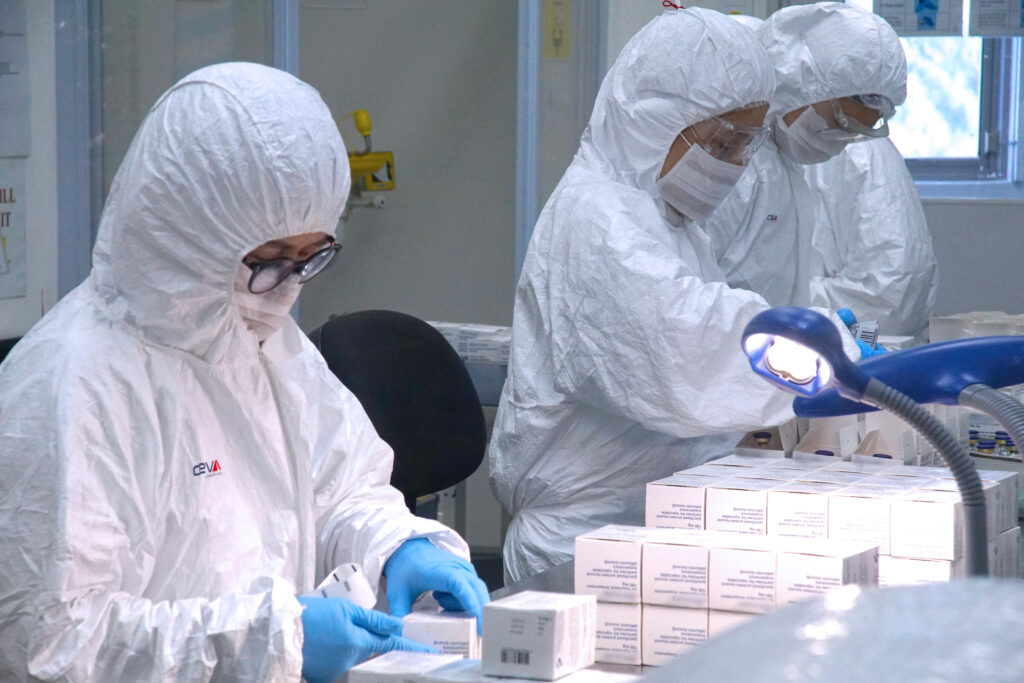
From life-saving vaccines to sensitive biologics, healthcare logistics demands precision, reliability, and, above all, care. It’s a sector where a single misstep—be it a temperature excursion or customs delay—can have serious consequences. For CEVA Logistics, the answer lies in more than just moving cargo. It’s about creating resilient, transparent, and sustainable supply chains that prioritise the patient’s needs.

“Each shipment has a direct impact on a life,” says Eric Ten Kate, Global Sector Leader for Healthcare at CEVA Logistics.


Operating across 170 countries, CEVA has established an extensive cold chain network that supports the end-to-end flow of healthcare products. In the Asia Pacific region, with approximately 25,000 employees, its purpose-built facilities for healthcare logistics are certified to the highest standards, including GDP and GMP. These specialised sites are situated in China, Malaysia, Singapore, and Australia.
CEVA sets itself apart with a distinct, patient-focused approach. At the centre of this is its CEVA FORPATIENTS platform, which brings together air, ocean, ground, and contract logistics, all underpinned by the understanding that each healthcare shipment contributes to a person’s well-being.
“In Asia Pacific, we customise healthcare logistics solutions that support healthcare systems by ensuring the timely and efficient movement, storage, and distribution of essential resources like medical devices, equipment, pharmaceuticals, and supplies,” says Ten Kate. “We pay meticulous care and attention in handling high-value and temperature-sensitive products, prioritising safety and efficacy, and ensuring compliance with regulations.”
Managing complexity with confidence
Transporting high-value, temperature-sensitive healthcare products over long distances presents a number of challenges, from maintaining temperature stability and complying with regulations to navigating geopolitical risks and coordinating multiple stakeholders. For CEVA, overcoming these challenges starts with a robust infrastructure and a culture of compliance.
“CEVA has a robust digital infrastructure built not just to manage logistics, but to demonstrate that medicines have remained authentic, within the correct temperature range, and fully compliant throughout their journey,” says Ten Kate.
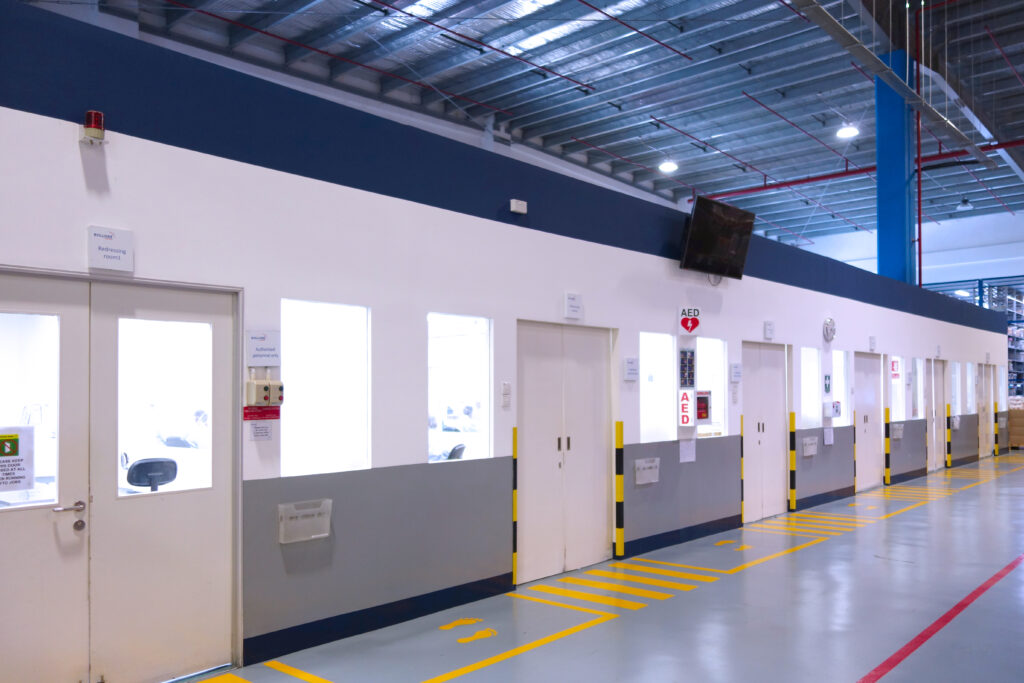
CEVA’s global network of cold-chain facilities—strategically located and GDP-compliant—includes dedicated ambient and cold room storage linked to GDP multimodal transport across air, road, and ocean. Key sites in Asia Pacific include Singapore, Malaysia, China, and Australia.
To reduce risk, CEVA offers tailored, end-to-end solutions: “We offer tailored solutions for customers’ specific needs, including development of the customer’s end-to-end supply chain roadmap: evaluation, risk analysis, SOP design, and auditing of all involved stakeholders to develop a transportation plan that minimises critical cold chain breaks at control points.”
CEVA provides 24/7 real-time monitoring via multiple platforms and a dedicated control tower team supported by healthcare specialists and IT systems. “We provide customers with 24/7 visibility and real-time monitoring of shipments via multiple platforms and a control tower managed by our team of healthcare experts and supported by a dedicated IT system and processes.”
When disruptions occur, CEVA is ready with contingency protocols. “Alert management is activated in case of temperature deviations, using sensors that monitor temperature and humidity. Deviation management includes compliant back-up procedures. We have temperature follow-up documentation.”
Additional services include innovative temperature-controlled packaging, on-site pharmacists and GDP-trained staff, customs brokerage with ISO-certified processes, and a strong compliance framework aligned with the World Health Organisation (WHO), the International Air Transport Association (IATA), and national regulations.
“We ensure full compliance with regulations from the WHO, IATA and local regulatory bodies, and mitigate compliance risks,” Ten Kate adds.
Visibility, technology, and control
Visibility is foundational in healthcare logistics, and CEVA has built its digital ecosystem to deliver exactly that.
“Technology alone is never enough; it must be combined with industry expertise to unlock the potential value,” says Ten Kate.
CEVA’s myCEVA platform offers real-time freight management, enabling customers to track shipments, automate processes, and enhance transparency. The company’s control towers serve as data-driven coordination hubs that integrate inputs from road, air, sea, and rail, providing actionable insights.
“The control tower can be defined as a centre for disparate data, which is translated into information for decision-makers and professional operators. This overall vision means control tower operators can identify risks and opportunities far in advance.”
To maintain uninterrupted visibility, CEVA has implemented a follow-the-sun control tower model, where teams across time zones coordinate global oversight 24/7, allowing immediate response to delays, diversions, or emergencies.
CEVA is also investing in new tools to push visibility further. In France, the company has established a dedicated innovation hub focused on integrating meaningful technologies like artificial intelligence into supply chain operations.
“While the market has evolved beyond basic track-and-trace, healthcare clients demand far more validated, end-to-end transparency that enables not only monitoring but proactive intervention.”
Sustainability: A strategic imperative
In line with its parent company, the CMA CGM Group, CEVA is committed to protecting the environment and aims to become net zero by 2050.
“At CEVA, sustainability is embedded in both our internal roadmap and our client-facing operations, where we play an increasingly strategic role. While our influence on direct emissions is limited, we are deeply involved in Scope 3 emissions, where collaboration with customers is most impactful,” says Ten Kate.
The company continues to invest in LEED-certified warehouses and solar energy systems, while expanding its low-carbon vehicle fleet, with 1,450 units expected globally by 2025. CEVA’s energy efficiency plan focuses on reducing energy consumption and shifting to clean energy sources.
The company also supports circular economies, partnering with stakeholders to develop closed-loop supply chains. More sustainable packaging solutions are being implemented that meet sterilisation and safety standards without compromising environmental goals.
Where feasible, CEVA encourages a modal shift from air to ocean freight, helping customers cut emissions without sacrificing control. As part of the CMA CGM Group, CEVA has access to LNG-powered vessels and global decarbonisation infrastructure.
“Sustainable aviation fuel, while widely endorsed, remains economically prohibitive, raising unresolved questions about cost-sharing across manufacturers, logistics providers, and end users,” notes Ten Kate.
Even with systemic challenges, CEVA’s approach remains pragmatic and collaborative.
“Sustainability in healthcare logistics is no longer a value-add but a strategic imperative, and our role is not only to ensure compliance, but to help build resilient, future-ready supply chains capable of delivering on both commercial and environmental expectations.”
People, partnerships, and a patient-first culture
Much of CEVA’s strength lies in its culture, one shaped by long-term customer collaboration, continuous innovation, and clear leadership vision.
“At CEVA, our customers’ needs and strategic ambition are at the centre of all we do,” Ten Kate shares.
In Asia Pacific, CEVA operates a regional competence centre that supports customer-specific goals. Through co-innovation programs, the company collaborates with healthcare clients to streamline operations, improve lead times, reduce carbon impact, and build scalable solutions.
“By analysing current customer processes and identifying potential mid-to-long-term improvements in productivity, cost savings with the given lead times, and CO₂ reduction, proven solutions become established best practices within the partnership.”
Leadership also drives continuous learning and innovation throughout the organisation, ensuring that teams stay ahead of evolving needs.
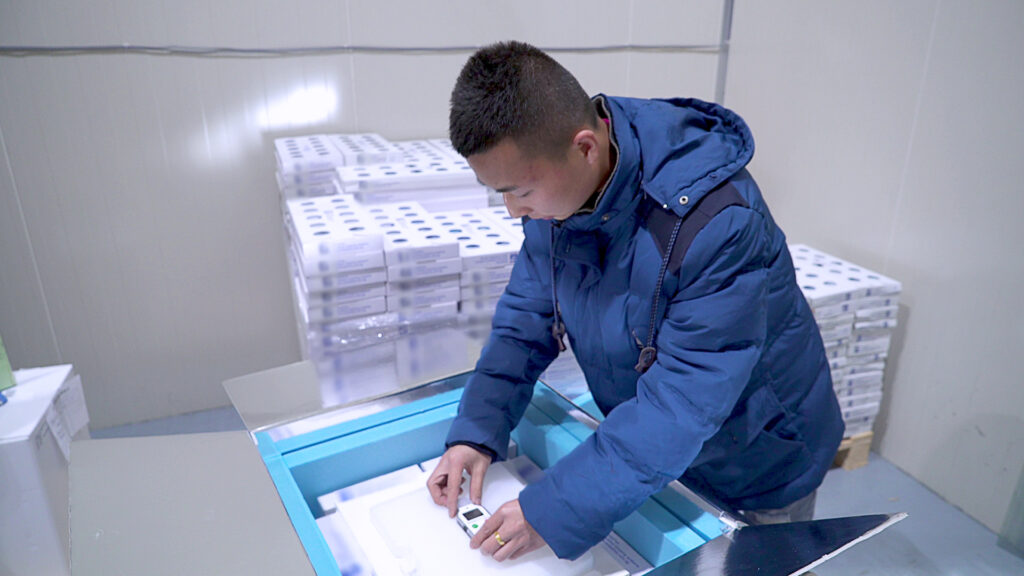
One such example comes from Singapore, where CEVA supported a major global cruise line in distributing flu vaccines. The team managed the pick, pack, and pre-conditioning of passive shipper boxes, maintaining strict 2–8°C temperatures and achieving 100% on-time delivery to destinations across Europe, the United States, and Asia Pacific—all within 96 hours.
What’s next for healthcare cold chain
While Europe remains the largest contributor to CEVA’s healthcare revenue, the company is rapidly scaling in Asia Pacific—a region poised to become a biomanufacturing powerhouse.
“Asia Pacific is on its way to becoming a biomanufacturing powerhouse, building on its achievements and ambitions in clinical trials and biotechnology innovations in recent years,” says Ten Kate.
To meet rising demand, CEVA’s strategic focus will centre on high-impact markets, enhanced service integration, and an uncompromising commitment to operational excellence.
“Our scope extends beyond in-warehouse logistics, across the full supply chain, with a growing emphasis on outbound freight management, visibility solutions, and seamless customer integration,” he explains.
The company’s broader mission is rooted in long-term impact.
“As we move forward, CEVA’s ambition is to combine precision with purpose: to grow where we can lead, to partner where we can create value, and to ensure that logistics become not just an enabler of healthcare delivery, but a force for advancing systems that are more responsive, sustainable, and patient-focused.”
This story was first published in the May-June 2025 issue of Payload Asia.