
By Steve Healy
Automation is increasingly being utilised across all sectors, and pharmaceutical logistics is no exception, where it plays a pivotal part in ensuring temperature integrity for pharma shipments being transported worldwide.


Technological innovations are enabling new opportunities for supply chain visibility and reactivity, helping to protect the cold chain and ensuring temperature-sensitive, high-value pharmaceutical payloads reach their destinations in the correct condition.
These innovations offer an exciting opportunity for logistics companies and their clinical research clients. The ability to react more effectively to temperature deviations, mitigate risks to better protect payloads, as well as use analytics to more effectively plan routes for shipments, means better service for the client and operational ease for the company and critically ensures the safe delivery of life-giving, lifesaving pharmaceuticals for patients.
Defining the cold chain
Refrigerating shipments with ice has been common for centuries, but far more effective methods developed throughout the 20th century with the advent of more mobile and effective refrigeration technology. While originally primarily used for food, innovations in medicine have increasingly required more stringent refrigeration. Demand for cold chain systems has significantly grown, with a further spike following the COVID-19 pandemic due to the associated vaccinations requiring cold chains to travel to their destinations around the world.
Modern pharmaceutical cold chains are defined by precise temperature management at all stages of the logistics process. Some medicines are incredibly sensitive to even the smallest variations in temperature or other environmental factors, so it is imperative that specific conditions are maintained throughout a payload’s journey. This ‘unbroken’ cold chain is the ideal form of cold chain logistics, with new technologies facilitating the possibility of this uninterrupted cold chain and the possibility of verifying that cold chain while the payload is in transit.
New technologies
Innovations in supply chain technology have broadly focussed on expanding the ‘visibility’ of the supply chain. Increasing visibility means making more information available to stakeholders throughout a product’s journey from point A to point B, such as location data, live inventory information and other status updates. This real-time monitoring provides the opportunity to see what is happening to a pharmaceutical shipment before it arrives at its end destination and allows those operating within the supply chain to react accordingly to any issues.
This can help limit disruption and allow for more responsive planning and risk mitigation management. This practice is especially helpful when data is shared between different involved parties, including the logistics company transporting the payload, any ports along the journey, and the sender and the receiver, creating the possibility for more proactive and agile responses to new information.
For cold chain payloads, there are additional concerns that require more detailed information. Innovations such as real-time temperature tracking allow for more stringent and specific temperature management practices to be enacted in real-time. Any deviations can be spotted early and appropriately dealt with much faster than they would otherwise. This monitoring also creates data that can be used to derive insights about risk factors that cause temperatures to rise out of acceptable levels, enabling more detailed planning to mitigate these risks in the future, and in turn more effective reactive measures.
Even situations where the payload is damaged or going to arrive late can be dealt with more effectively. An irreparable temperature excursion that requires reshipping of the product can be immediately reacted to, minimising the delay to the receiving party and minimising any potential impact on patients.

Automation and connected software systems
These insights are enabled by connected software systems, allowing all stakeholders to stay informed about the status of a shipment. The more information available to the various stakeholders, the better. This allows all parties to stay abreast of important developments and react accordingly. However, software can also enable technologies to work together directly without the need for stakeholder intervention.
Advances in automation and Internet of Things (IoT) technologies mean that software and hardware can be calibrated to automatically mitigate risks, with IoT-enabled hardware reading the temperatures of payloads and adjusting environmental temperature controls to keep them in range.
Issues with equipment can also be identified earlier. For example, a temperature-controlled shipper may be experiencing larger temperature fluctuations than others, so a maintenance team can perform checks on it to resolve any issues, mitigating risks before they even arise. This maintenance may be urgent, so stakeholders can ensure a maintenance team is available on an existing route or divert the package if necessary.
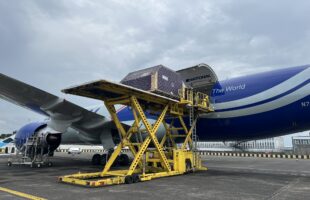
The ground team at an airport can be made aware a pharma payload cannot be left on the tarmac for too long as it may deviate in temperature and take measures to ensure it is properly stored quickly and effectively. Even if a package is handled improperly, another stop along the route can be made aware of and increase temperature control methods to bring a product back into range quickly, minimising damage. These kinds of interconnected actions are enabled by automation and connected software systems.
Other applications include security updates, with reports on if or when a package is opened; and reports on other environmental factors, such as humidity. The more risk factors that are measured and controlled for, the more they can be mitigated, and the more medicine can reach its destination in good condition ready to be supplied to patients. Warehouses, ports and other touchpoints in a supply chain should be encouraged to add their own data points and monitoring technologies, adding more information to the process and procedures allowing for even more informed decision-making.
Post-journey optimisations and lane mapping
Post analysis also enables logistics businesses to use their analytics for ‘lane mapping’, which is the practice of creating simulations of temperature behaviour across potential shipping lanes for an outbound pharma payload from its country of origin to its destination region.
There may be direct or indirect options, but the key considerations will be the levels of temperature control capabilities that are available within the selected lane and route, the supply chain’s design, and completing a route analysis. Considerations must also be made regarding the suppliers, airline, courier and all other parties involved, ensuring they have the necessary expertise to handle cold chain payloads and can be relied upon to do so. Even their ability to react to issues should be measured as part of qualifying a stakeholder.
Automation provides an opportunity to inform these decisions and, should a less reliable route need to be utilised, a more comprehensive mitigation strategy can be prepared in advance.
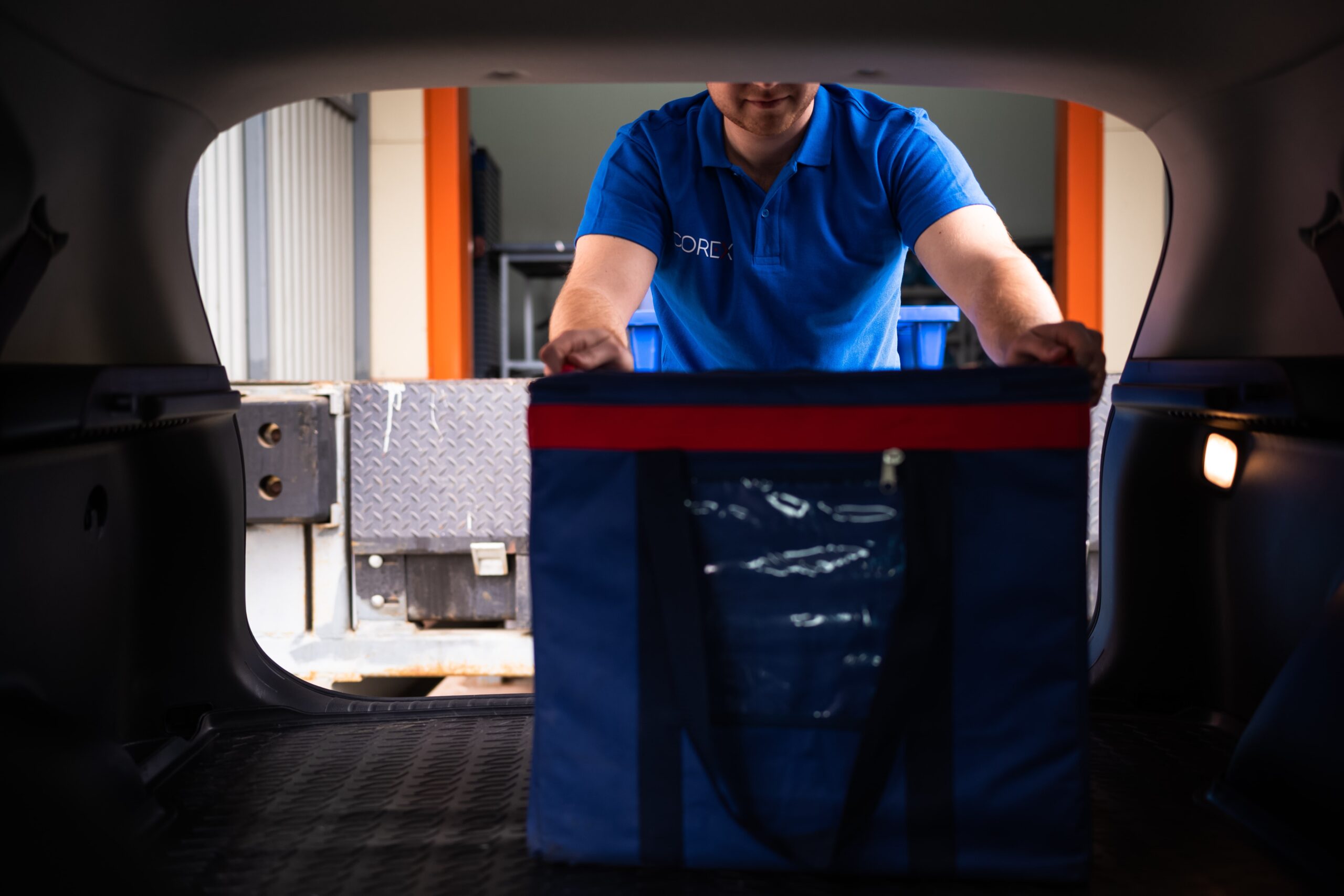
It is important that customers involved in the supply chain have access to all the relevant information that is available during the shipping process. Various organisations operating within the pharma logistics sector can provide that visibility via various automated options. For example, clients can stay up to date on the transportation progress of their pharma payloads via COREX’s customer portal, which also provides information on any issues and risk factors.
This enables everyone within the supply chain to have constructive conversations about how to react and be more informed when planning future shipping lanes. These platforms are often interoperable allowing seamless integration with all loggers, providing more information to be used in operational reviews with customers and collaborators within the pharma logistics space and to make suggestions on factors, such as packaging and level of service, helping to mitigate future issues.
Having data is all well and good, however, it is important to have experts on hand who can extract meaning from that data and analyse it effectively. Logistics companies should encourage proactive engagement with their pharmaceutical customers to offer solutions and suggestions to make their supply chains more efficient and to ensure integrity is maintained.
The future
The future for pharmaceutical logistics promises ever-increasing amounts of data to work with. IoT technologies produce huge amounts of data, and this is where artificial intelligence (AI) comes in. The large amount of data produced can be overwhelming to people managing supply chains, who may struggle to extract the necessary insights due to the sheer volume of data at their disposal.
AI can be implemented to more effectively manage and interpret this data. AI can use data from previous trips and combine it with weather predictions and other data points to make recommendations for supply chain planning. This allows logistics companies to suggest more efficient methods to their clients in terms of cost, sustainability and maintaining temperature integrity. Use of AI in this context is still new, and humans should remain the ultimate decision makers on any supply chain planning decisions.
Another much-touted technology is blockchain. Blockchain is a decentralised ledger that can record transactions and can trigger them automatically. These transactions are encrypted in such a way that they are effectively un-hackable, meaning that no malign actors can alter the record for personal gain. While this is an enticing prospect, implementing blockchain technologies is very energy-intensive. While certain schemes have been piloted, the sector is a long way from wide adoption, and the technology has more broadly fallen out of favour outside of cryptocurrency applications.
Many logistics and pharmaceutical businesses are increasingly concerned with sustainability, whether that be due to consumer preference, investor pressure or regulation. Existing technologies are contributing to increased sustainability, such as IoT technology increasing efficiency and therefore reducing emissions. Other concepts like the circular supply chain, meaning that containers and other materials should be reusable and used to send multiple payloads over time, should also be made easier to implement by IoT technologies. Sustainable containers that have the required temperature integrity are still in their infancy, but this is a promising avenue for sustainable development.
However, innovations like AI require a lot of energy to work, so certain advances could be offset by the implementation of energy-intensive technologies. There is a balance to be found between increased efficiency, sustainable supply chain concerns and cost-effectiveness.
Cold chain logistics and concerns about temperature integrity are a growing segment of the pharma logistics market. Some of the most exciting medical innovations of recent times require a cold chain to travel, which will only encourage more innovations in the sector.
About the author:

Steve Healy has over 20 years of experience in the pharmaceutical logistics sector, with focuses on commercial pharmaceutical distribution and clinical trial supply chains. With extensive knowledge of Good Distribution practices and complex temperature-controlled supply chain solutions, including airfreight, road freight and specialist courier services, he has worked with pharmaceutical companies and central labs, and CROs to improve their logistics operations and supply chains. He has also worked with public sector institutions in the rollout of COVID-19 vaccines and other public health initiatives.
This story was first published in the July-August 2024 issue of Payload Asia.