

• Skip to main content
  • Skip to primary sidebar

Ad – Bottom Content

Payload Asia

The rise of smart warehouses: How automation and AI are transforming logistics

Payload Asia

  • Home
  • Latest News
  • Channels 
    • Carriers
    • Aircraft Manufacturers
    • Airports
    • Courier & Mail
    • Freight Forwarders
    • Express
    • Ground Handling & Cargo Terminals
    • Logistics
  • 12th Payload Asia Awards
    • About
    • Categories
    • 11th Payload Asia Awards
    • 10th Payload Asia Awards
    • 9th Payload Asia Awards
    • Awards Gallery
  • Subscribe
  • Advertise
  • More 
    • Event Calendar
    • Directory
    • Contact Us
Share

Leaderboard

The rise of smart warehouses: How automation and AI are transforming logistics

September 5, 2025 by Kim Yang

As the wave of automation and AI continues to reshape industries, warehouse management is undergoing a transformation like never before. There’s a common belief that we’re heading toward “lights-out factories.” But what exactly does this mean? A “lights-out factory” refers to an operation where the entire production process runs with minimal human intervention, to the point where it can continue operating with the lights off. The concept is powerful: 24/7 production, continuous output without breaks, extreme efficiency, lower costs, and heightened safety.

To achieve this, two critical pillars support the transformation: automation and digitisation. In practice, this translates to automated equipment clusters and digital twin-powered intelligent decision-making systems.

Automation: the heart of the revolution
Logistics isn’t like finance or software—it’s physical, labour-heavy, and deeply operational. Warehouses still rely on workers picking and moving goods, truck drivers handle long hauls, and couriers keep last-mile deliveries running. But here’s the problem: labour shortages, rising costs, and surging e-commerce demand mean this model just doesn’t scale anymore. We need to rethink productivity itself. The way forward is automation—real, large-scale automation that transforms productivity, not just tweaks it.

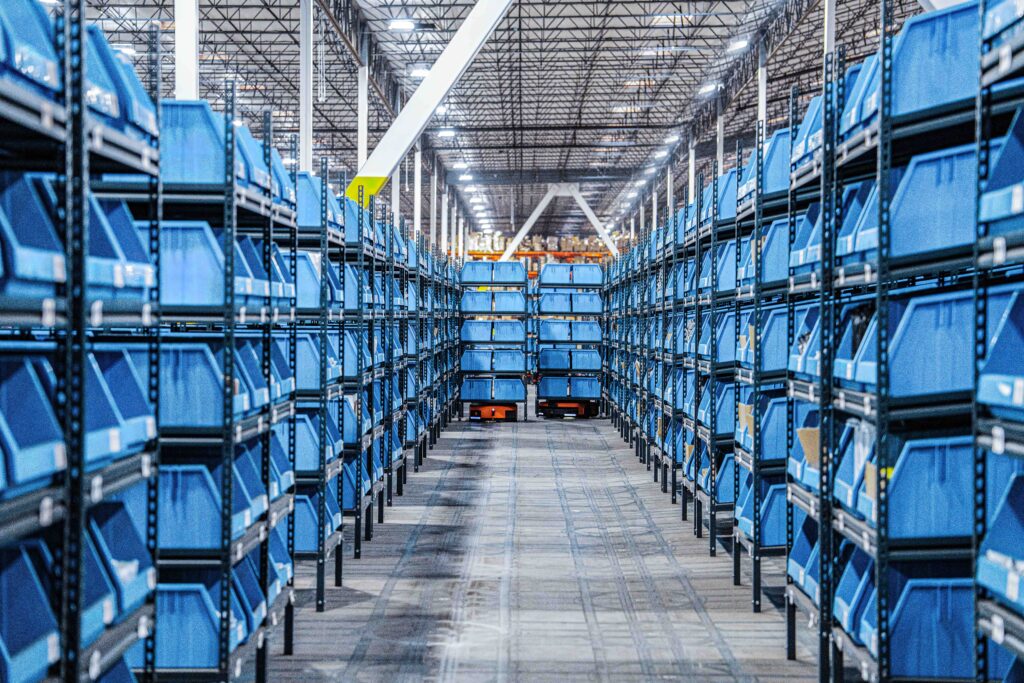
Take automated guided vehicles (AGVs). They’ve changed the game by bringing goods to workers instead of the other way around, speeding up fulfilment and reducing human strain. What used to take hours can now be done in minutes. 

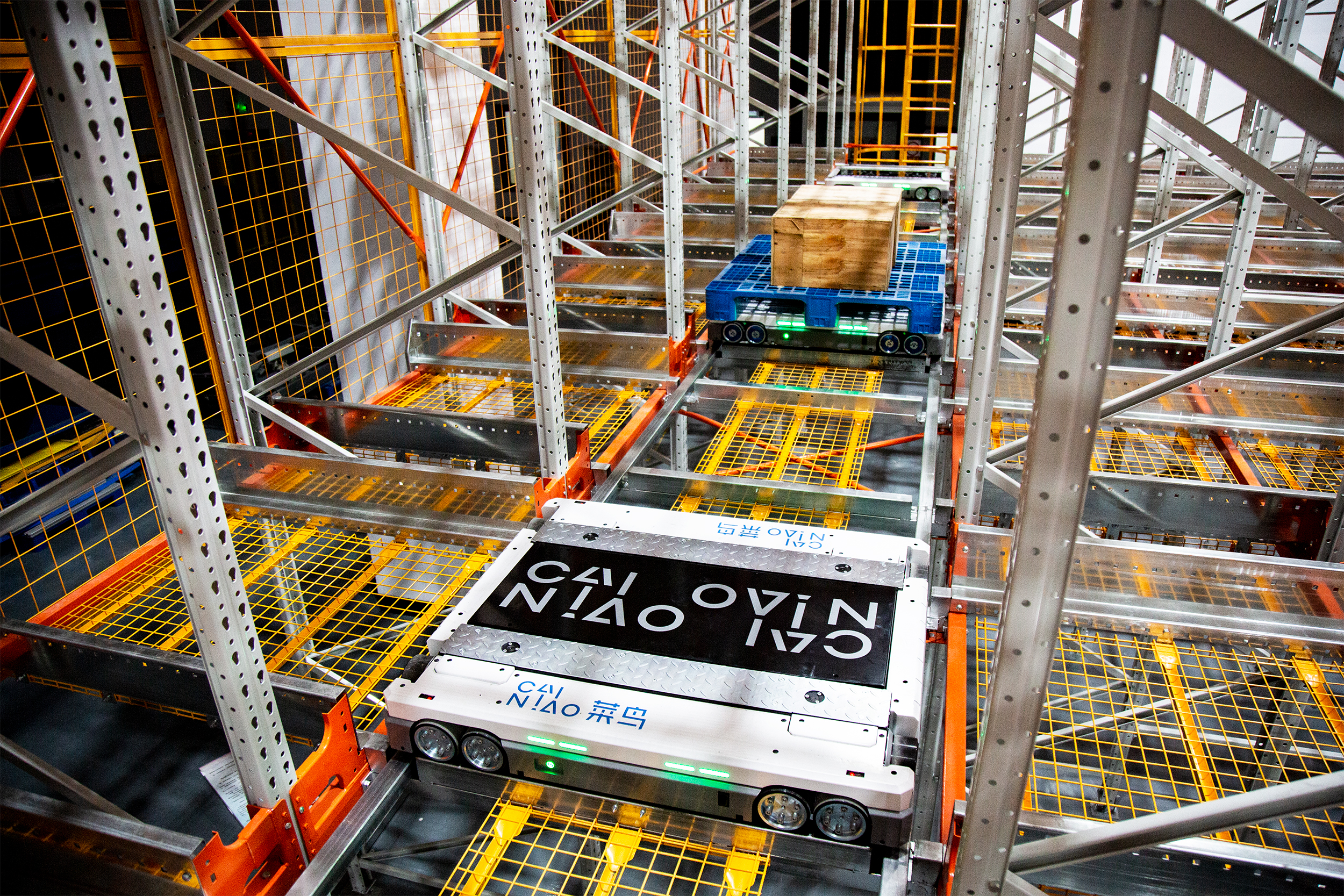
Then there are four-way pallet shuttles. Pallet storage is considered one of the most efficient ways to store goods. When it comes to automating pallet storage, there are several challenges to tackle: improving storage density, speeding up retrieval, reducing costs, and boosting system flexibility. Automated stackers have a clear advantage over traditional equipment like forklifts, especially in high-rise warehouses over 15 meters tall, where forklifts can no longer reach.

In recent years, the introduction of four-way pallet shuttles has elevated automated pallet storage technology to new levels. Unlike traditional systems that move only forward and backwards, these shuttles can move laterally as well, navigating warehouse aisles with more flexibility. This added mobility allows warehouses to make the most of their storage space, repositioning pallets dynamically based on real-time demand.

Industries like e-commerce, retail, third-party logistics (3PL), cold chain, automotive, electronics, food and beverage, pharmaceuticals, and manufacturing are already putting these systems to work. With high storage density, scalability, energy efficiency, and faster deployment cycles, they are becoming a core component of modern smart warehouses.

At Cainiao, we’ve built our own four-way shuttle system, designed to handle 1,500kg loads while working in sync with other robots. In one partner factory, deploying these shuttles cut total warehouse management costs by 38% by eliminating inefficiencies that humans simply shouldn’t have to deal with.
Intelligence: the brain behind
Automation on its own isn’t enough. Smart logistics needs a brain—a system that makes real-time decisions to optimise everything from storage placement to delivery routes. That’s where digital twins and AI-powered control systems come in.

Warehouses don’t operate in isolation. They’re part of a much bigger ecosystem, connected both upstream (suppliers, manufacturers, inbound logistics) and downstream (distribution, last-mile delivery, customers). Within the warehouse itself, everything—storage, picking, packing, outbound processes, and delivery—must be visible and coordinated.

A well-designed logistics system doesn’t just automate tasks; it flows seamlessly, is logically structured, and keeps key performance indicators in sync. This puts new pressure on logistics system integrators, who must now master not only automation hardware but also software development, customised solutions, project execution, and ongoing operational support.

Companies leveraging AI-powered control systems are already seeing measurable improvements—higher inventory turnover, reduced disruptions, and faster fulfilment cycles. Take Cainiao’s case—our Supply Chain Control Tower is designed to provide panoramic visibility, real-time alerts, and intelligent diagnostics across 15 core logistics scenarios, from procurement and production to warehousing. One company that integrated real-time monitoring and risk prediction through this system saw a 25% increase in inventory turnover.

Looking to the future, automation technologies such as automated 3D warehouses and flexible AGV systems will continue to develop rapidly. Their applications across storage, handling, and transportation will become more widespread. Robotic arms, including humanoid robots, will gain traction in tasks like sorting, automatic loading and unloading, and assembly line automation. Although the four-way shuttle system is still in its early stages, its potential for more intelligent, flexible applications is immense. For example, its use in cold storage facilities represents a huge untapped market. Even traditional stackers will become smarter, safer, and more efficient.

Meanwhile, AI-driven warehouse intelligence will continue to push the boundaries of predictive logistics. Autonomous control towers will oversee entire supply chain networks, ensuring that every facility operates at peak performance. 

About the author:
Kim Yang
Senior Director, Logistics Technology & Automation, Cainiao

With over 20 years of experience in logistics planning and automation, Kim Yang leads Cainiao’s logistics technology automation initiatives. Having worked for Alibaba and Cainiao for a decade, Kim has played a key role in the design and implementation of numerous automation projects. He was instrumental in developing Asia’s largest automated warehouse utilising AGV technology.


This story was first published in the May-June 2025 issue of Payload Asia.
Other Topics: air cargo network, air express, air freight services, air logistics, Asia Pacific air cargo, Asia Pacific air freight, Asia Pacific air logistics, Asia Pacific shipments, Cainiao, cargo flights, e-commerce logistics, express delivery, express logistics, international air shipments, international express delivery, smart logistics, transpacific air cargo, transpacific air freight

Related Articles

  • JAL Group updates FY2026 summer schedule for international cargo network
  • TAPA EMEA and Trans.eu launch the first freight exchange built on TAPA’s supply chain security certifications
  • Evolving the cargo network: How legacy experience shapes a resilient, future-ready strategy
  • TIACA Executive Summit 2026 drew industry leadership to Warsaw
  • DHL Global Forwarding Japan launches Explosives Detection Dog screening with Sanko Total Service to enhance air cargo security and screening efficiency
  • Frankfurt Airport returns to passenger growth in May as holiday travel boosts demand

Ad – After Content

Primary Sidebar

Trending News

  • CAICargoAi Unveils CargoMART Interline, revolutionising… CargoAi is proud to announce the launch of CargoMART Interline,…
  • lufthansa cargoLufthansa Cargo launches development of innovative… Lufthansa Cargo is developing a new type of virtual reality…
  • cce groupCCE Group and Emirates sign MoU to expand long-term… CCE Group and Emirates have signed a Memorandum of Understanding to explore expanded…
  • ceva logisticsCEVA Logistics reinvents healthcare cold chain in Asia From life-saving vaccines to sensitive biologics, healthcare logistics demands precision,…
  • From L to R - Christopher Lim, Praveen Gregory, Bjoern SchoonDHL Global Forwarding announces strategic leadership… DHL Global Forwarding, the freight specialist arm of DHL Group,…
  • Hactl Executive Director–Information Services John Lee (left) received the ISO IEC 27001 2022 certification from SGS Hong Kong Limited Deputy Director, Products & Services Development Chris Yau (right).Hactl’s COSAC-Plus becomes the first Hong Kong… Hong Kong Air Cargo Terminals Limited (Hactl) – Hong Kong’s largest…
  • Saudia Cargo_Payload Asia 2025Saudia Cargo named ‘Best E-Commerce Carrier –… Saudia Cargo, the leading air cargo carrier in the Middle…

Payload Asia Awards

Subscribe To
Our Newsletter


Payload Asia continues to be the authoritative source for informative, accurate and up-to-date news and information on the air cargo industry and related sectors.

With its updated and refreshed look the online edition continues to provide high quality coverage on the Asia-Pacific, India-Middle East, Europe-CIS, North & South America and Africa air cargo markets.

© 2025 Harvest Information. All rights reserved. Privacy Policy

Partner Sites : Asia Food Journal and Television Asia Plus .

We use cookies and similar technologies to improve your browsing experience.
Continuing to use this site means you agree to our use of cookies. I agreeRead More
Privacy & Cookies Policy

Privacy Overview

This website uses cookies to improve your experience while you navigate through the website. Out of these cookies, the cookies that are categorized as necessary are stored on your browser as they are essential for the working of basic functionalities of the website. We also use third-party cookies that help us analyze and understand how you use this website. These cookies will be stored in your browser only with your consent. You also have the option to opt-out of these cookies. But opting out of some of these cookies may have an effect on your browsing experience.
Necessary
Always Enabled

Necessary cookies are absolutely essential for the website to function properly. This category only includes cookies that ensures basic functionalities and security features of the website. These cookies do not store any personal information.

Non Necessary

Any cookies that may not be particularly necessary for the website to function and is used specifically to collect user personal data via analytics, ads, other embedded contents are termed as non-necessary cookies. It is mandatory to procure user consent prior to running these cookies on your website.

Analytics

Analytical cookies are used to understand how visitors interact with the website. These cookies help provide information on metrics the number of visitors, bounce rate, traffic source, etc.

Performance

Performance cookies are used to understand and analyze the key performance indexes of the website which helps in delivering a better user experience for the visitors.

Advertisement

Advertisement cookies are used to provide visitors with relevant ads and marketing campaigns. These cookies track visitors across websites and collect information to provide customized ads.

Save & Accept

Stay Updated!

Subscribe now to receive the latest news, updates, and exclusive insights. Don’t miss out!


By submitting this form, you consent to receive marketing emails from Payload Asia. You can revoke your consent to receive emails at any time by using the SafeUnsubscribe® link, found at the bottom of every email.

Disclaimer: Translations on this website are automated using Google Translate. While we strive for accuracy, please be cautious, as machine translations may contain errors. For critical or sensitive content, consider seeking professional human translation. We are not liable for any reliance on the translated content.

1