

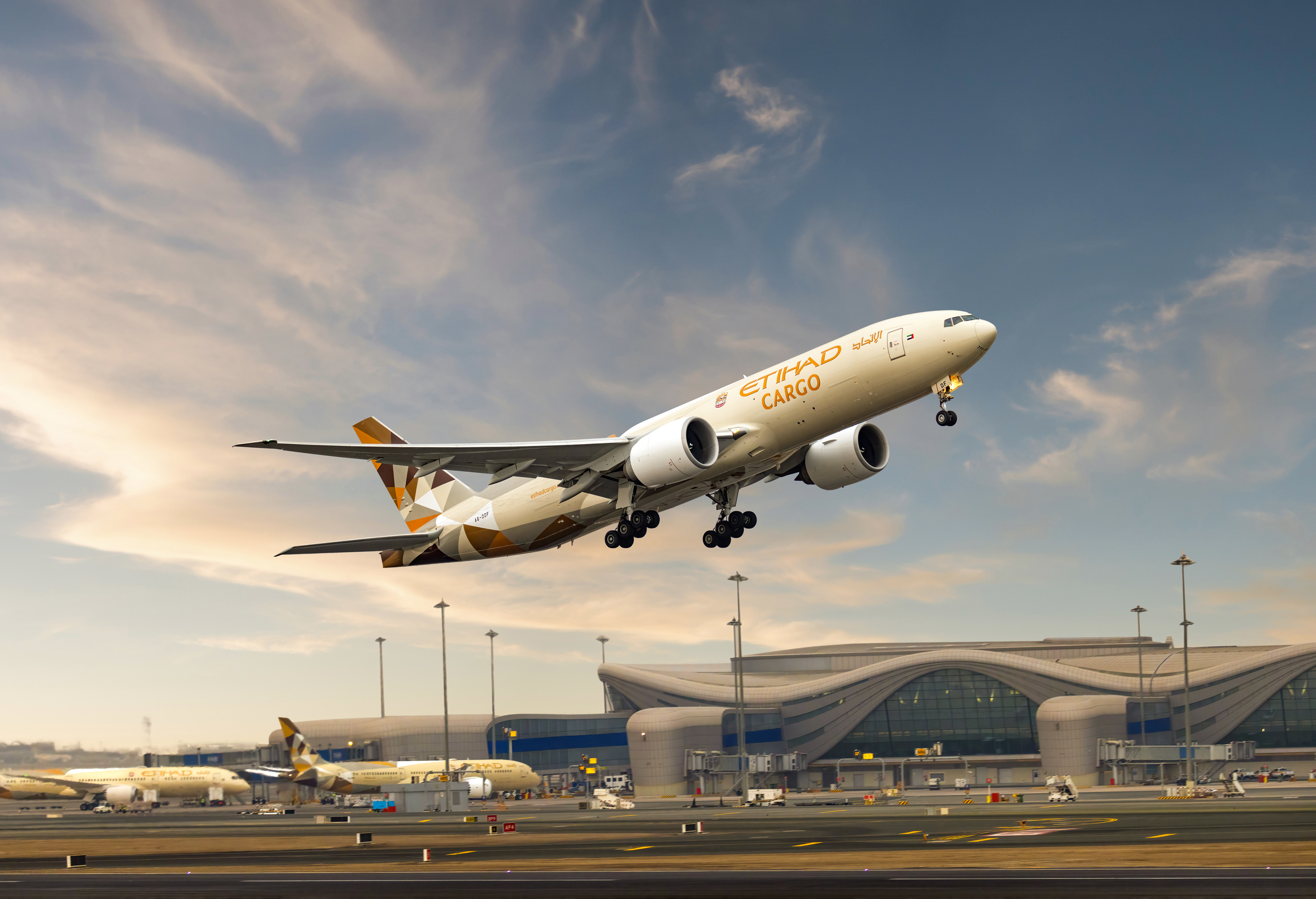
Winning Overall Carrier of the Year is a distinction few airlines earn once, and rarer still to secure across multiple regions. At the 12th Payload Asia Awards, Etihad Cargo achieved exactly that, taking home top honours for both Carrier of the Year – Middle East and Europe, a dual recognition that underscores the carrier’s expanding global relevance and strategic clarity at a time when the air cargo industry is navigating profound change.
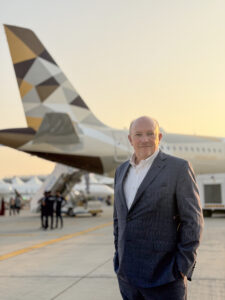
For Etihad Cargo, the awards are not a culmination but a confirmation. As Chief Cargo Officer Stanislas Brun explains, the recognition reflects years of deliberate investment and disciplined execution. “Winning Overall Carrier of the Year for both the Middle East and Europe is an important recognition for the team as it reflects the strategic decisions made over the past few years,” he says. “It reinforces the effectiveness of our investments in capacity, network agility, and partnerships.”
A strategy shaped by demand
In Europe, Etihad Cargo’s award-winning performance was closely tied to how it responded to shifting market dynamics in 2025. Rather than chasing growth indiscriminately, the carrier focused on strengthening its presence in high-demand hubs. “We expanded our footprint through increased frequencies to key hubs such as Frankfurt and Amsterdam and added London to our network, providing customers with improved connectivity and reliability,” Brun notes.
These enhancements were not isolated decisions but part of a wider effort to reinforce Abu Dhabi’s role as a highly efficient global transit hub, a role that has become increasingly critical as supply chains rebalance and cargo flows diversify across regions.
That strategy extends well beyond Europe. In Asia, Etihad Cargo has steadily deepened its footprint, recognising the region’s role as both a production powerhouse and a consumption-driven growth market. Central to this expansion has been the carrier’s Joint Business Agreement with SF Airlines, which Brun describes as commercially and operationally significant.
“Around 50% of our Hong Kong capacity is now operated through the partnership,” he says, adding that it has strengthened the Asia–Middle East–Europe corridor while reinforcing Abu Dhabi’s position as a key transit point for both freighters and passenger aircraft.
From recognition to acceleration
While awards offer validation, Etihad Cargo is firmly focused on how that recognition translates into forward momentum. According to Brun, the carrier enters 2026 with confidence that its strategy is delivering tangible value. “These recognitions support our plans for 2026 and confirm that our current strategy is delivering the right outcomes for our customers,” he says.
One of the most immediate enablers of growth has been the recovery and expansion of passenger operations, which have added valuable belly capacity to the network. Building on this, Etihad Cargo is preparing to extend its global reach further west with the addition of Charlotte to its US network — strengthening east–west connectivity and broadening options for shippers across transatlantic trade lanes.
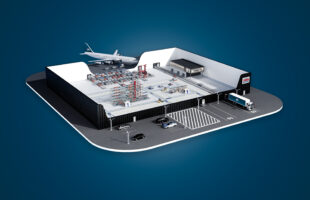
At the same time, the carrier is investing heavily in the resilience of its hub. “We will also continue enhancing Abu Dhabi’s hub, further improving efficiency and resilience ahead of the opening of the new facility in 2027,” Brun says. Looking further ahead, fleet modernisation remains a cornerstone of Etihad Cargo’s long-term vision. “By 2028, the addition of the A350 to our fleet will provide greater flexibility, improved sustainability performance and increased reach across high-demand corridors.”
Asia Pacific: Anchoring global connectivity
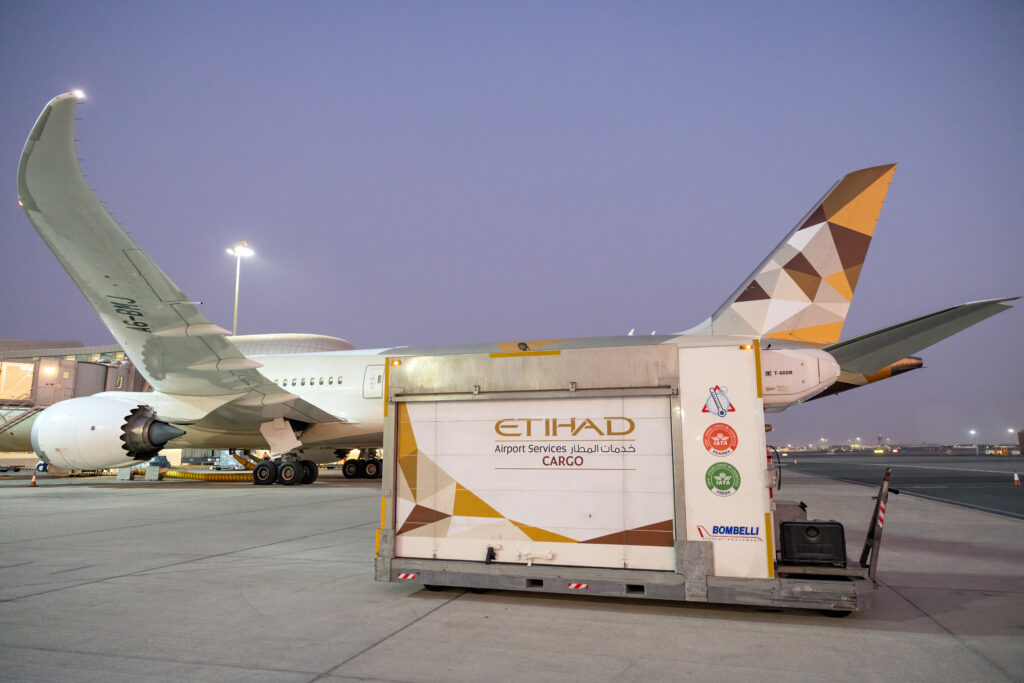
Asia Pacific remains a central pillar of Etihad Cargo’s growth strategy, not only as a source of cargo volumes but as a region that increasingly shapes global trade patterns. Recent expansions to Phnom Penh and Hanoi are emblematic of this approach. Hanoi, Brun notes, has already grown to six weekly frequencies and will increase to eight from 2026 to meet customer demand.
Hong Kong, meanwhile, is set to become an even more strategic gateway from 2027, supported by freighter fleet expansion and strengthened partnerships. Complementing this is Etihad Cargo’s collaboration with Teleport, which extends regional reach across Southeast Asia. Through these network synergies, the carrier is enabling “additional connectivity across Southeast Asia through agile cross-border solutions,” reinforcing Abu Dhabi’s role as a bridge between Europe, the Middle East, and Asia.
Partnerships as a competitive advantage
If network expansion is one pillar of Etihad Cargo’s strategy, partnerships are another. The joint business model with SF Airlines has emerged as a clear differentiator, contributing close to 30% of cargo revenue in 2025 alone. More than a commercial arrangement, Brun describes it as a blueprint for how airlines can collaborate to deliver greater value. “By integrating our networks and coordinating schedules, we have established a highly responsive Asia–Middle East–Europe corridor that supports faster transit times, greater frequency, and more reliable uplift,” he says.
This collaborative mindset is particularly important as trade patterns evolve. With shifts in trans-Pacific traffic, rising demand across Africa and Europe, and China’s continued role as a major production hub, Etihad Cargo is prioritising flexibility. “Above all, our approach is customer-driven,” Brun emphasises. “We continue to invest in routes, fleet, and partnerships that enhance responsiveness and flexibility.”
Freighters as enablers of speed and scale
As demand for time-sensitive and high-volume shipments continues to grow, Etihad Cargo is leaning into the flexibility and control offered by its expanding freighter operations. Rather than relying solely on belly capacity, the carrier is deliberately scaling its freighter fleet to support fast-moving cargo flows across key global corridors.
This approach allows Etihad Cargo to respond more dynamically to shifting demand patterns, particularly for express, e-commerce-driven, and high-value shipments that require speed, reliability, and precise uplift. As Brun explains, the carrier continues to “invest in routes, fleet, and partnerships that enhance responsiveness and flexibility,” ensuring capacity can be deployed where and when customers need it most.
Freighters also play a central role in supporting Etihad Cargo’s growing presence across the Asia Pacific and strengthening connectivity through Abu Dhabi. With Hong Kong set to become an even more strategic gateway from 2027, supported by freighter fleet expansion, the carrier is positioning itself to handle increasing volumes while maintaining service consistency across high-demand trade lanes.
Digitalisation beyond efficiency
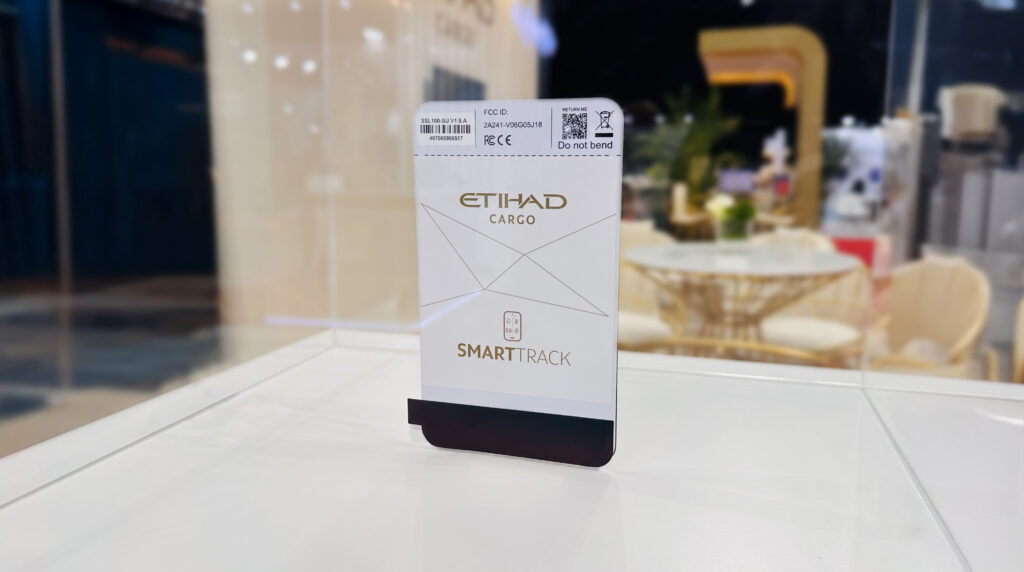
Technology has become another defining element of Etihad Cargo’s differentiation, with digital tools increasingly used not just to optimise efficiency but to enable smarter, more proactive operations. A flagship example is SmartTrack, the carrier’s premium shipment visibility solution.
“SmartTrack represents a major milestone for Etihad Cargo not just in enhancing shipment visibility, but in demonstrating how AI and machine learning can transform the way cargo moves across a global network,” Brun explains. Built around an IoT-enabled device with six advanced sensors — including shock, tilt, humidity, temperature, and light — SmartTrack provides end-to-end monitoring across the supply chain.
Shipments are continuously monitored by a 24-hour control centre, where dedicated teams respond to alerts in real time. “The AI-enabled control tower adds predictive capabilities, identifying patterns and supporting early intervention,” Brun says, noting that these tools are particularly valuable for sensitive products such as pharmaceuticals, perishables, and high-value cargo.
Sustainability embedded in operations
As sustainability moves from aspiration to operational necessity, Etihad Cargo has embedded decarbonisation and resource efficiency into its planning and partnerships. The carrier operates one of the youngest and most fuel-efficient fleets in the industry, delivering significantly better CO₂ performance compared with previous-generation aircraft.
Beyond fleet renewal, Etihad Cargo is also exploring new technologies through collaborations such as its MoU with LODD Autonomous, including work on the “Hili” hybrid VTOL aircraft. Designed for short-haul, low-emission cargo operations, the platform supports the carrier’s long-term vision for more sustainable logistics without compromising operational practicality.
Looking ahead to 2026
As the industry looks toward 2026, Brun expects air cargo to be shaped less by sheer capacity growth and more by volatility, regulation, and the need for rapid response. “Key trends include potential changes in tariffs and regulations, as well as last-minute disruptions such as natural events or sudden supply chain interruptions,” he says.
Rather than viewing these uncertainties as constraints, Etihad Cargo sees opportunity. By leveraging digital tools, predictive analytics, and a flexible operational network, the carrier is positioning itself to respond quickly to disruption while maintaining reliability across global trade lanes.
For Brun, the message to customers and partners is one of continuity and confidence. “We would like to sincerely thank our customers and partners for their trust, collaboration, and shared commitment to excellence,” he says. “Looking ahead, Etihad Cargo remains dedicated to delivering innovative, tailor-made solutions that meet evolving market needs and create real value.”
As Etihad Cargo builds on a year of recognition and performance, its roadmap to 2026 is clear: strengthen the network, modernise the fleet, deepen partnerships, and harness digital innovation — all while remaining agile in an increasingly unpredictable global cargo landscape.
This story was first published in the November-December 2025 issue of Payload Asia.