
As global trade accelerates and air cargo networks grow more complex, SATS is redefining what next-generation hub operations should look like. Through a blend of automation, orchestration, digital intelligence, and workforce transformation, the ground handler is shaping a cargo environment designed for scale, resilience, and service excellence—anchoring Singapore’s position as a world-leading logistics and aviation hub.

According to Henry Low, CEO of SATS Singapore Hub, the catalyst behind the company’s latest transformation initiatives is clear: rising volatility and the rapid maturation of technologies such as AI. “The key question we must ask is how we uplift the level of service excellence that is the bedrock of Changi Airport’s reputation as a world-class, efficient air hub,” he says. SATS’ new Hub Handler of the Future programme reflects this ambition—focusing on operational redesign, technology adoption, and the ability to manage tomorrow’s scale with today’s resources.
Automation, AI, and a more connected hub
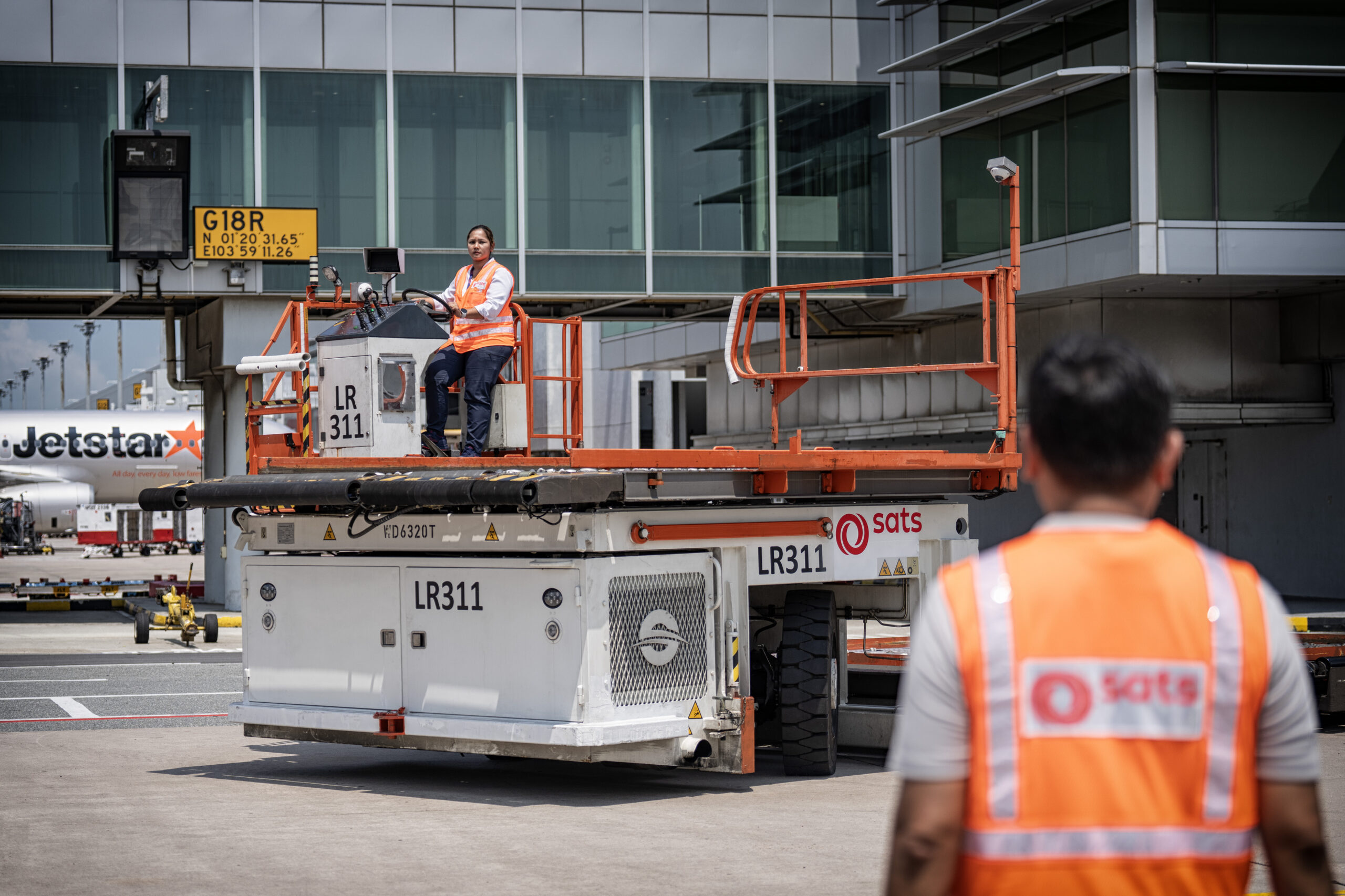
For SATS, the cargo terminal of the future is one where technology quietly anticipates needs—supporting both passengers and operational teams with greater consistency, reliability, and safety. Automation is helping redeploy manpower into higher-value roles, improving service standards while enhancing the employee experience. “We envisage a more seamless and connected experience driven by technology,” Low explains, emphasising safety and a more intuitive workflow for both staff and customers.
At the core of this shift is digital orchestration. SATS’ Flight-to-Task system uses real-time data and AI-powered modelling to optimise manpower deployment, equipment utilisation, and turnaround sequencing. This real-time orchestration helps maintain Changi Airport’s benchmark service levels, even as demand and complexity increase. Early trials have already delivered a productivity improvement exceeding 15%, demonstrating how AI can transform both efficiency and coordination across the hub.
Expanding into integrated and time-critical logistics
Beyond traditional cargo handling, SATS is evolving into an integrated logistics partner offering specialised services for high-value and time-sensitive shipments. Its expanding portfolio includes temperature-controlled handling, cross-dock services, multimodal integration, and partnerships with logistics leaders such as SF Express, Kuehne+Nagel, and Sterling. These collaborations strengthen Singapore’s connectivity and reinforce its role as a strategic global node for air, sea, and land freight.
This integrated approach enables faster, more reliable movement of pharmaceuticals, perishables, aircraft-on-ground (AOG) parts, and e-commerce cargo—supporting the region’s diversification and Singapore’s continued competitiveness.
Preparing for Terminal 5 and future growth
As Singapore prepares for the development of Terminal 5 and a surge in regional air traffic, SATS is laying the groundwork for a scalable, intelligent operating model. Automation and job redesign are central to this strategy, empowering teams to take on more complex responsibilities while reducing repetitive tasks. The goal is to ensure that even as volumes increase, service excellence and safety remain uncompromised.

Embedding sustainability into the hub transformation
Sustainability is woven into SATS’ transformation roadmap. The company is investing S$250 million to modernise its air freight terminals and ground infrastructure with energy-efficient systems and automation. Plans include electrifying 70% of ground support equipment and expanding solar installations across its facilities—an important step toward reducing carbon intensity and enabling environmentally responsible growth.
A workforce built for the future
Low is quick to emphasise that transformation is ultimately a people journey. SATS involves its teams early to co-design new workflows and equip them with future-ready skills. Over the past year, the company has redesigned 11 roles to support electric and autonomous equipment, and partnered with Singapore’s Institutes of Higher Learning (universities, polytechnics, and technical institutions) to deploy AI-enabled and simulator-based training modules. These efforts are strengthening safety practices, boosting learning, and empowering staff to take on higher-value roles.
Collaboration as a catalyst for Innovation
Partnerships remain a cornerstone of SATS’ innovation strategy. The company works closely with airlines, logistics providers, technology firms, and government agencies to drive ecosystem-wide progress. One example is SATS’ collaboration with Changi Airport Group and SIA Engineering Company on autonomous staff bus trials—an initiative that enhances airside safety and productivity while contributing to Singapore’s broader aviation innovation agenda.
These collaborations reinforce the Hub Handler of the Future roadmap and strengthen SATS’ global network, positioning the company to deliver higher efficiency, stronger service quality, and greater resilience.
Tomorrow’s hub: Data-intelligent, automated, and connected
Looking ahead to 2026 and beyond, SATS sees data intelligence, automation, and ecosystem connectivity as the defining forces of next-generation air cargo handling. “The ability to anticipate, adapt, and orchestrate operations seamlessly will be key,” Low says. With its investments in AI, digital integration, sustainability, and workforce development, SATS is positioning itself as a leader in the next phase of aviation logistics.
Recognition at the 12th Payload Asia Awards, where SATS and its network companies earned five honours, further validates this transformation journey. For SATS, the awards reflect the dedication of its people and its commitment to raising global standards in safety, productivity, and customer experience.
This story was first published in the November-December 2025 issue of Payload Asia.