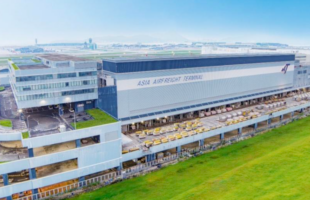



SATS Ltd reported record revenue of S$6.35 billion for the financial year ended 31 March 2026, supported by robust cargo volume growth and contributions from ground handling and food services. Revenue rose 9.0% from the previous year, while full-year PATMI increased 17.0% to S$285.2 million.
Cargo processed across the combined SATS and Worldwide Flight Services (WFS) network reached 9.65 million tonnes, up 7.0% year on year. SATS said its cargo volumes have outperformed IATA’s global benchmarks over the past two and a half years, supported by market share gains and network expansion.

Gateway Services revenue rose 10.8% to S$4.95 billion, while Food Solutions revenue increased 2.9% to S$1.39 billion. SATS said the improved performance reflected stronger operating leverage, with EBITDA rising 10.6% to S$1.15 billion and the EBITDA margin improving to 18.1%.
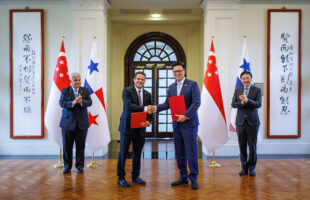
SATS also continued expanding its global footprint during the year. The group renewed its EVA Air cargo handling partnership across US stations, expanded its business with Air Europa Cargo in Spain and acquired Aviapartner Cargo NV at Brussels Airport.
The combined SATS and WFS network now operates over 225 stations in 27 countries. SATS said the broader network supports cargo, passenger and ground handling operations across key trade lanes.
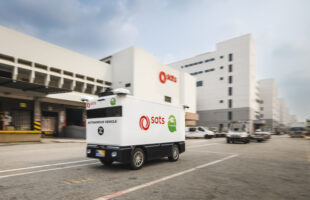
In its outlook, SATS said air cargo demand remained robust through much of FY26, although the Middle East conflict, which escalated in the final month of the quarter, weighed on revenue, costs and operating profit. The company added that it will continue to scale investment in technology and AI across its global network, while managing infrastructure investment worldwide in line with the dynamic operating environment.
Kerry Mok, SATS President and Chief Executive Officer, said the results reflected the strength of the company’s platform and network despite a challenging operating environment. “The conflict in the Middle East has weighed on industry performance. We have been working closely with our customers to maintain their cargo flows as routes and lanes shift, drawing on the breadth of our network to serve them wherever they need us. While short-term challenges persist, our operating model has consistently proven its resilience. We enter FY27 with a broader network, continued infrastructure investment, a strong pipeline of opportunities and confidence in our ability to deliver long-term value for our shareholders.”