
More than 30,000 users across 172 countries now book air cargo capacity through cargo.one, a figure that reflects how far digital distribution has come in an industry once built on phone calls, email exchanges and static PDF rate sheets.
Real-time booking, API connectivity and digital marketplaces have become integral to modern air cargo operations, enabling airlines and freight forwarders to connect more efficiently than ever before. Since launching one of the industry’s first digital air freight booking platforms in 2018, cargo.one has helped shape that evolution. Today, the company is looking beyond digitalisation, focusing on how artificial intelligence can build on those digital foundations to deliver faster decisions, greater efficiency and more intelligent workflows.



“Five years ago, most forwarders sourced capacity through phone calls, email chains, and PDF rate sheets, and pricing could often be stale by the time it reached a booking,” says Simson Demmer, Chief Customer Officer at cargo.one.
“cargo.one launched the first e-booking platform for air freight in 2018, and today over 30,000 users across 172 countries rely on us every day. In many markets, online sales exceed offline volumes.”
For Demmer, the industry’s move towards digital booking represents far more than replacing manual processes with online tools.
“The shift is structural: forwarders expect accurate, real-time access to global capacity, and their competitiveness rests on it. The last five years built that foundation. The next five are about what everyone builds on top of it, and that is the bigger opportunity.”
Building a connected ecosystem
Central to cargo.one’s strategy is creating stronger digital connections between airlines and freight forwarders. Rather than functioning solely as a booking platform, the company has expanded its network of API integrations to provide real-time access to airline inventory directly within the systems freight forwarders already use.
According to Demmer, these integrations eliminate much of the friction traditionally associated with air cargo bookings.
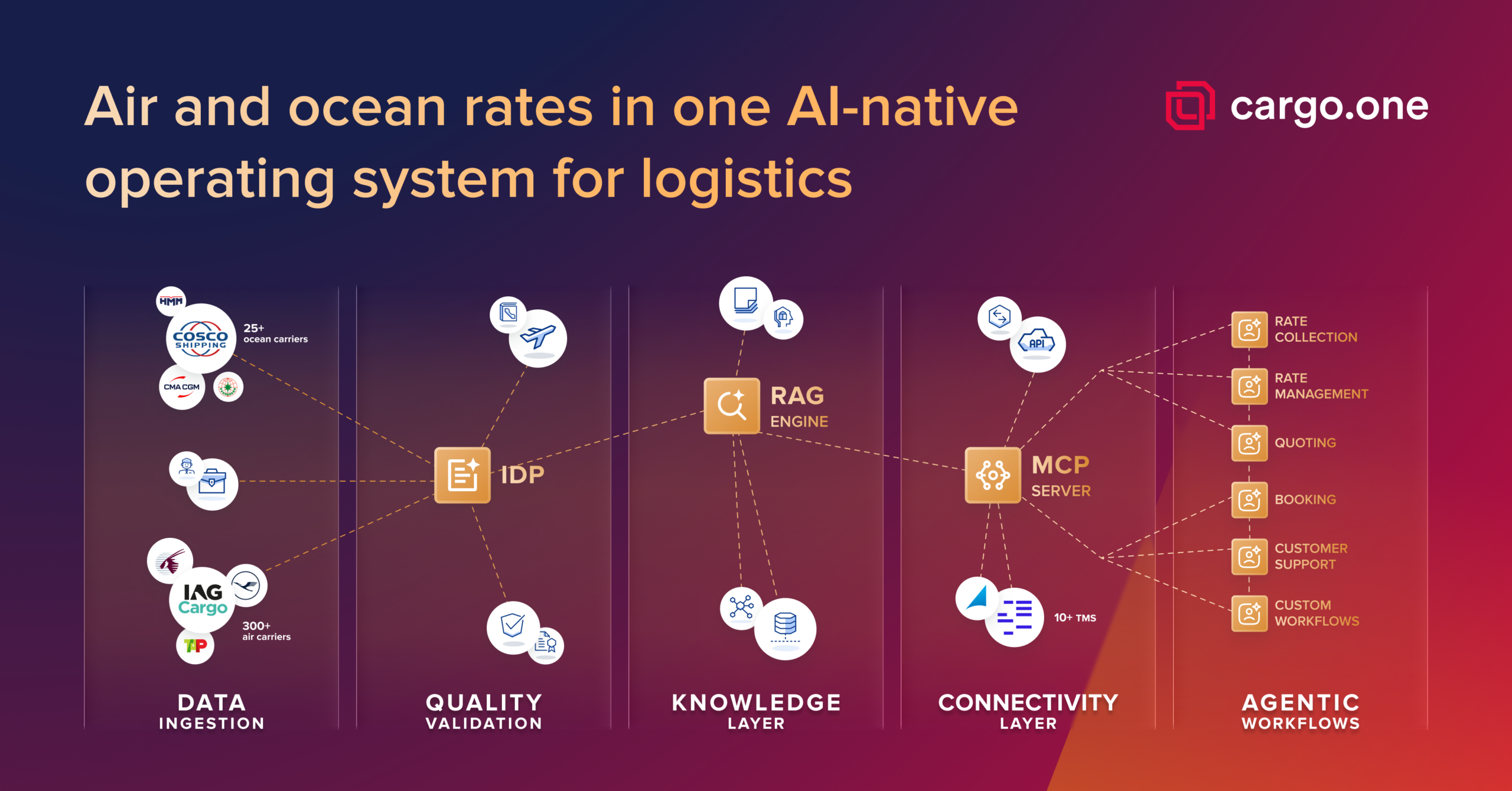
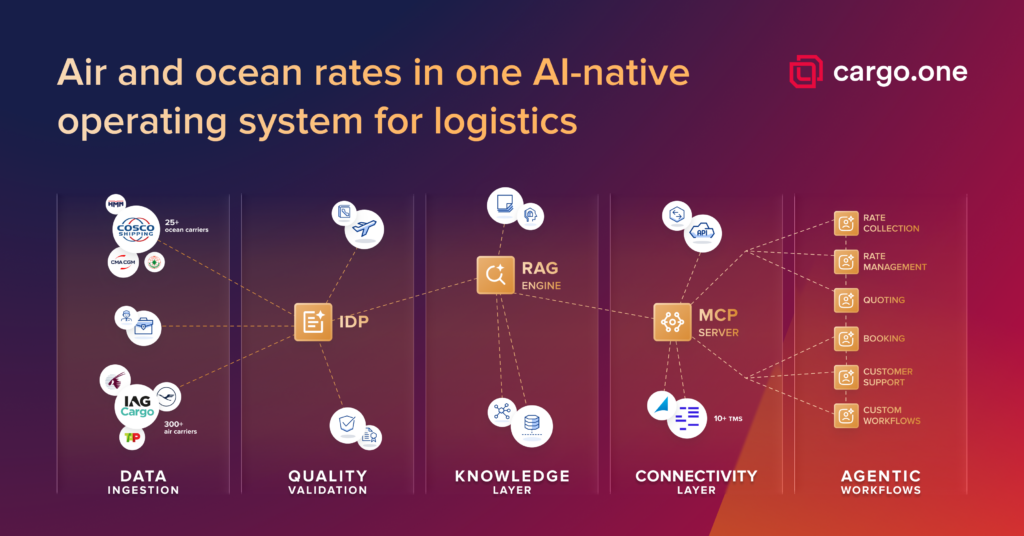
“cargo.one’s API integrations have removed all the distance between an airline’s inventory and a forwarder needing to quote at speed,” he says. “cargo.one has built over 100 live air and ocean carrier connections that now comprise the industry’s leading AI-native multimodal rate foundation.”
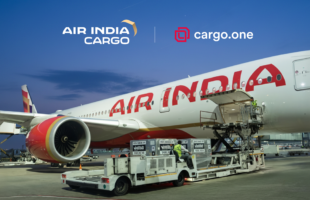
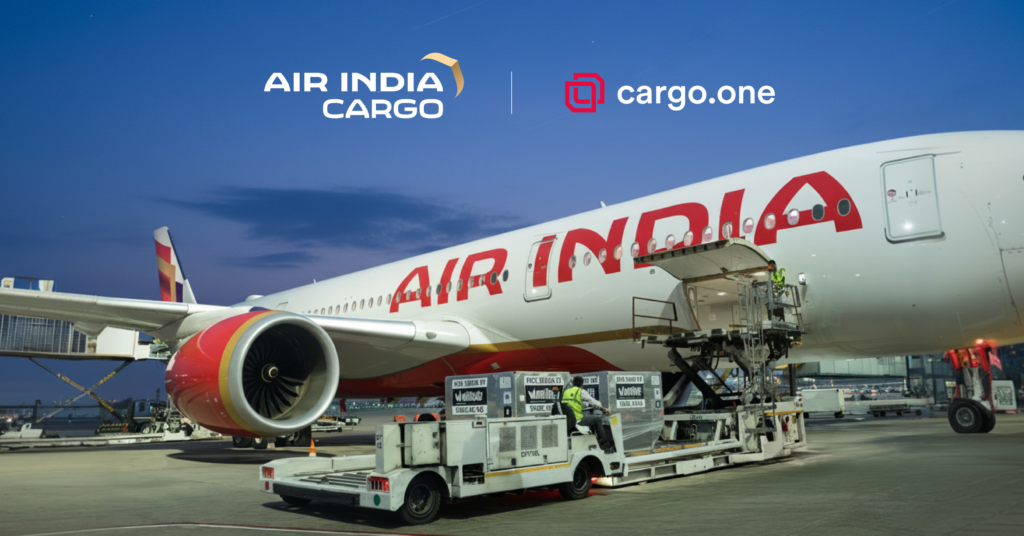
As more airlines invest in digital distribution, cargo.one has continued to broaden its connectivity network. Recent additions include Air India Cargo, enabling freight forwarders to access real-time rates and self-service bookings directly for the first time.
The company’s API strategy also extends beyond airline partnerships. Many global freight forwarders now integrate cargo.one directly into their own transport management systems, allowing booking data and market information to flow seamlessly into existing operational workflows.
Demmer pointed to Kuehne+Nagel as an example, noting that the logistics provider partnered with cargo.one to accelerate airline connectivity globally rather than developing every airline API independently, reducing costs, shortening implementation timelines and expanding digital capacity access without adding internal complexity.
Digital connectivity, however, is only part of the equation. Once booking data becomes available in real time, it creates the foundation for faster decision-making and increasingly intelligent workflows across the booking process.
Speed and visibility, quantified
As shipment volumes continue to grow and customer expectations rise, the ability to respond quickly has become a competitive differentiator for freight forwarders. Real-time pricing and booking visibility allow forwarding teams to issue quotations more quickly while improving confidence in the information behind them.
“When hundreds of requests land each day, they need to respond fast and accurately to win,” Demmer says. “When you can quote using the very strongest pricing and cost data around the clock, a quote that used to take around 30 minutes now takes under a minute.”
The company has extended these capabilities through AI-powered sales operations, helping automate routine quotation processes for both airlines and freight forwarders.
“Our AI workers now push that further for both airline and forwarding teams: they handle requests for quotation automatically, turning quotes around 68% faster at 89% accuracy, with anything below the confidence threshold routed to a human,” he says.
“Customers get answers faster, and teams win back time for specialist shipments and their most valuable customers.”
The combination of real-time pricing, rapid quoting and automated workflows allows freight forwarders to respond more effectively to increasingly time-sensitive supply chains, where speed, accuracy and visibility have become essential to maintaining service levels.
More than a marketplace
While digital marketplaces have simplified access to capacity, Demmer believes their broader value lies in strengthening commercial collaboration between airlines and freight forwarders. By placing airline products directly within the daily workflows of thousands of freight forwarders, cargo.one enables carriers to expand market reach while gaining valuable insight into customer demand.
“As the go-to AI technology partner for both global carriers and freight forwarders, cargo.one places capacity products and services directly within the digital workflows of thousands of forwarders, and so enhances global accessibility in all the major freight markets,” he says.
The company has also become a launch platform for airlines introducing new digital products. Demmer cited United Cargo’s Passive TC capacity as one example, with cargo.one becoming the first sales platform to make the offering available digitally.
Digital platforms also provide airlines with greater visibility into customer behaviour.
“Airlines also gain something they rarely had before: real-time demand signals,” Demmer explains. “Seeing how forwarders actually search and book gives carriers better information for pricing and inventory decisions than sales calls alone.”
The Asia-Pacific region continues to present significant opportunities for further digital adoption. According to Demmer, growing demand across major trade lanes is encouraging regional carriers to expand their digital offerings, while customer expectations increasingly mirror those seen in Europe and North America.
“We now see that those Asia-Pacific carriers that can capitalise upon the API connectivity they built will pull ahead in terms of satisfying future market demands,” he adds.
From co-pilot to autonomy
For cargo.one, digitising bookings was never the end goal. The company’s focus is now shifting towards embedding artificial intelligence into the data and workflows that already underpin digital booking.
“AI bolted on as a separate tool will not hold up in logistics. It has to be native to the data,” Demmer says. “A unified rate foundation, shared equally by AI and human experts, fixes that: faster quoting, fewer missed options, more accurate automation and documentation, and customer answers that match what the team would recommend.”
Rather than replacing experienced professionals, cargo.one sees AI as augmenting them by taking on repetitive, time-consuming tasks while leaving more complex decisions to people.
Adoption, Demmer explained, is a gradual process.
“Forwarders do not hand control to AI on day one. Most teams start in co-pilot mode, where the AI prepares quotes, RFIs or support replies for review. As the accuracy proves itself, they move to supervised mode, where the AI runs routine work on its own and flags exceptions.”
He adds: “AI is transformative when it takes on repetitive work. People handle the work that needs judgement: complex shipments, unusual routings, high-value customers, exceptions.”
Looking ahead, Demmer expects AI adoption to accelerate as more organisations establish stronger digital foundations and gain confidence in AI-supported workflows.
“The benefit over the next five years is not fewer people; it is teams on both sides handling more volume at the same accuracy, airlines getting cleaner demand signals and faster-quoted RFQs to price against, and customers receiving a faster, more consistent performance regardless of who handled their quote,” he says.
Ultimately, he believes technology will continue to enhance, rather than replace, human expertise.
“Logistics will always be a people business. Agentic AI just makes good teams faster, sharper and harder to beat.”
This story was first published in the July-August 2026 issue of Payload Asia.