

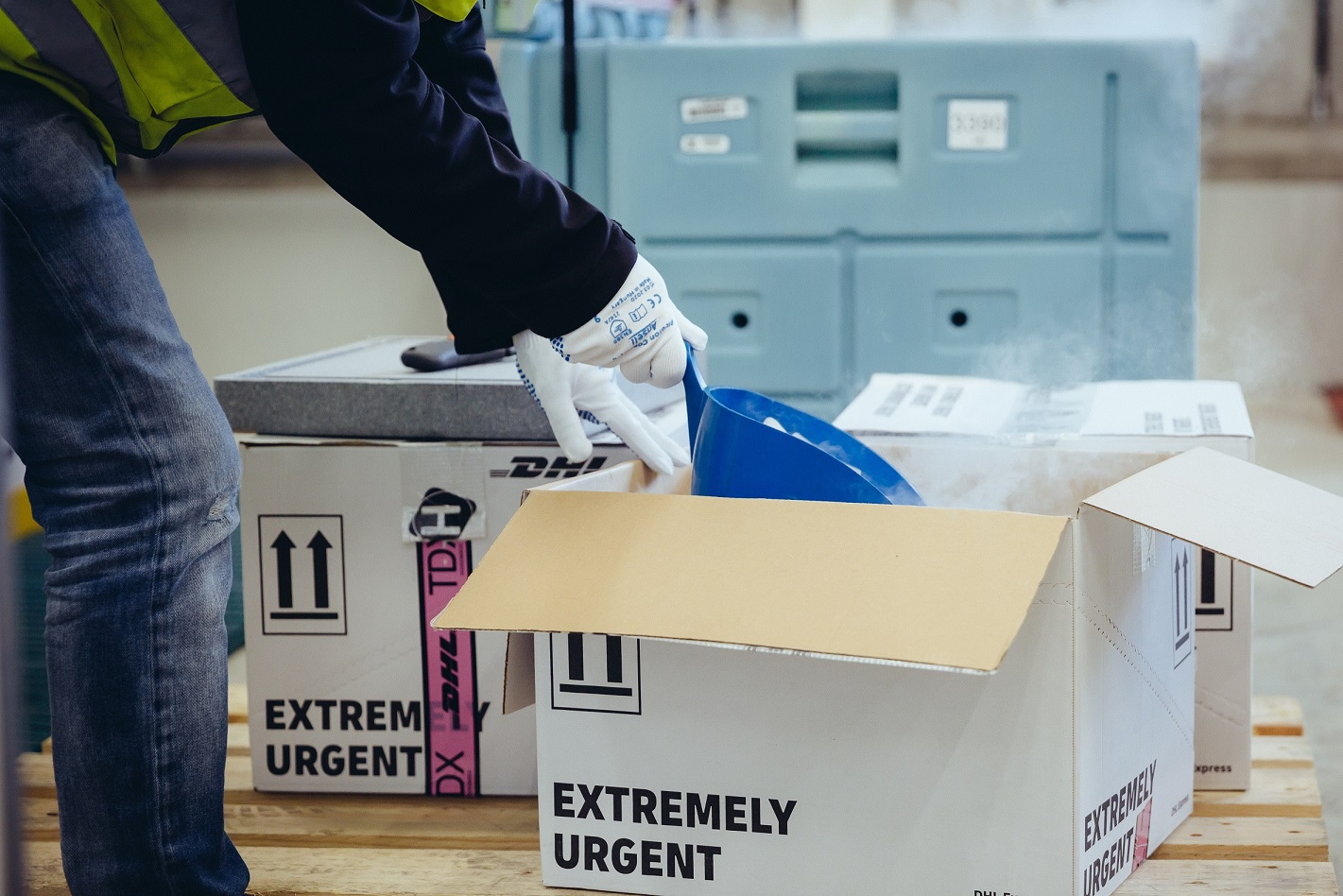
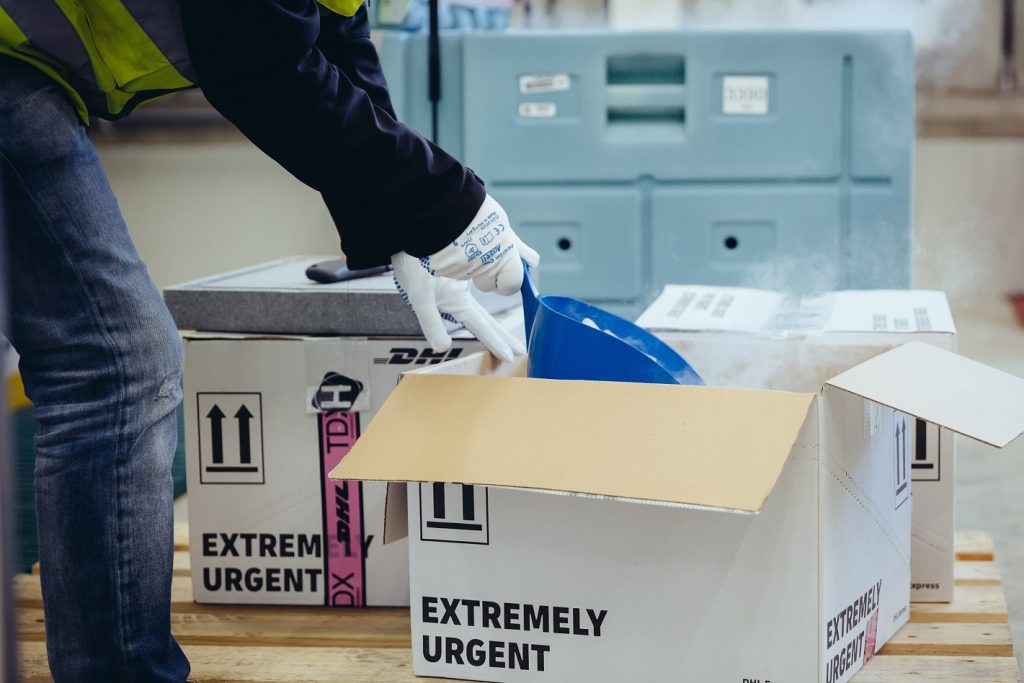
Some Covid-19 vaccines, like that of Pfizer and BioNTech, need to be stored at -70°C, which would require the use of dry ice.
COVID-19 vaccine distribution may be an exciting opportunity for cash-strapped airlines, but carriers will need to work with their insurers to ensure any policies are suited to the new risks, even if they are experienced in the transport of pharmaceuticals.
The sheer size of the logistics operation now required to deliver the vaccines across the globe and into its most remote regions is daunting. Indeed, the scale of the challenge is unprecedented.
The International Air Transport Association (IATA) suggested in October that the equivalent of 8,000 B747Fs (each capable of carrying 100 tonnes) would be needed to deliver enough vaccines for the earth’s 7.8 billion inhabitants. Others believe the entire global fleet may be needed in some capacity, as well as many more ground-handlers who may not be specialists in the ‘cold’ supply chains that move temperature-sensitive goods.
Traditionally, less than a fifth of global pharma shipments are transported by air to end-user destinations, but the ‘speed-to-market’ requirements of the COVID vaccine is expected to put unprecedented strain on the cold supply chain, which includes airports, ground-handlers and freight forwarders.
Three of the vaccines’ biggest manufacturers—AstraZeneca, Pfizer and Moderna—are expected to have the collective capacity to have produced 5.3 billion doses by the end of 2021, enough for about 40 percent of the world’s population (acquiring immunity will require two doses for some vaccines).
Also read: When and which Covid-19 vaccines will be available in Asia
For air-transport providers and their supply-chain partners, the pharmaceutical industry has always required specialist infrastructure and knowledge; at a minimum, temperature-controlled environments (Pfizer’s vaccine must be stored at -70°C until used, for example) and a secure chain of transport are required.
This has kept the greatest proportion of the pharma market in the capable hands of a handful of experienced ‘cold’ cargo carriers. But pressure to deliver the vaccine as quickly and widely as possible is expected to bring new, less-experienced operators to assist in their distribution, adding a series of new supply-chain risks.
Logistical challenges are far from the only liabilities that carriers and insurers will need to consider. Shipment values are expected to be significantly higher than those for standard international shipments covered by insurers in accordance with the limits of the Montreal Convention (‘the Convention’). The Convention limits damage-related insurance cover to ‘22 Special Drawing Rights’ (SDR) per kilogram, or a value equivalent to US$30-$32, depending on currency fluctuations.
The market has yet to establish how those vaccines will be valued; the possibilities range from the vaccines’ manufactured or replacement costs, to their retail costs. The latter has been estimated by some manufacturers at $20-$25 per dose. Given that the vaccines are comparatively lightweight cargo, many shipment liabilities will far exceed the cover available under the limits of the Convention.
Those limitations on liability can be broken, however, if a claimant can prove the carrier has acted recklessly, and with knowledge that their actions were likely to lead to the loss or damage of the cargo. In such circumstances, claimants can seek an indemnity based on the actual loss, which could be the current market value of the goods.
The Convention also allows for freight to be transported under Special Declarations of Value (SDV), often the market value of goods; however, most carriers prefer not to offer SDVs in order to limit their legal exposure and that of their insurers.
It remains to be seen if parties contracting to transport the new vaccines will lean on the carriers to move them under SDVs. Until then, in the event of loss or damage to vaccines, insurers will anticipate having to offer compensation based on the weight limits set by the Convention.
It is important that carriers inform their insurers of any decision to go the SDV route, as a typical policy may not cover any third-party claims that exceed the Convention’s standard limits. In short, carriers should make insurers and their agents aware of any material changes in risk inherent in a decision to transport fragile vaccines.
IATA and the World Health Organization both believe it likely that as much as 25 percent of the vaccines will be ruined every year due to poor temperature control.
The practise of transporting pharmaceuticals by air is not new to aviation, so the insurance market has solutions readily available. However, the pandemic has the potential to gather a perfect storm of risk.
Peak vaccine distribution will spur demand for international cargo capacity at a time when much of the fleet is sitting idle; IATA’s latest numbers indicate capacity on international routes in October 2020 was down about 25 percent year on year.
Given the anticipated time constraints on delivery for the vaccine, the responsibility for distribution may migrate to less experienced cold-chain handlers (with less suitable equipment), and there will be increased demand for distribution to remote areas where even experienced handlers are unfamiliar with the terrain, both physical and regulatory.
Also, with many skilled professionals on furlough as the aviation industry cuts costs to survive the pandemic, pilots, ground-handlers and cold chain expertise may be in short supply even on well-travelled routes.
With risks and liability expected to rise throughout the supply chain, airlines hoping to capitalise on vaccine distribution should be prepared to answer a detailed list of questions from their insurers/brokers.
These may include queries about: the carriers’ experience with pharmaceuticals, vaccine values and whether the cargo being carried is under the limits of the Convention, whether the contract includes consequential loss (by third parties), their involvement with storage at any part of the supply chain, responsibilities for loading/unloading aircraft or maintaining temperatures, etc.
Before agreeing to transport COVID-19 vaccines, airlines and their ground-handling agents would be well counselled to talk to their insurers and brokers about the how that may raise their exposure to liability to ensure policies will respond accordingly.
Philip Clayton is Head of Claim Advocacy – Aviation & Aerospace; Andy Bowman is Claims Advocate – Aerospace. Both work for Willis Towers Watson.
All views expressed in this column are that of the author and do not necessarily reflect this publication’s view. This article was not edited by Payload Asia and the author was not remunerated for this article.
Do you know more about this story? Contact us through this link.
For media kits and information on advertising or sponsoring, click here.