

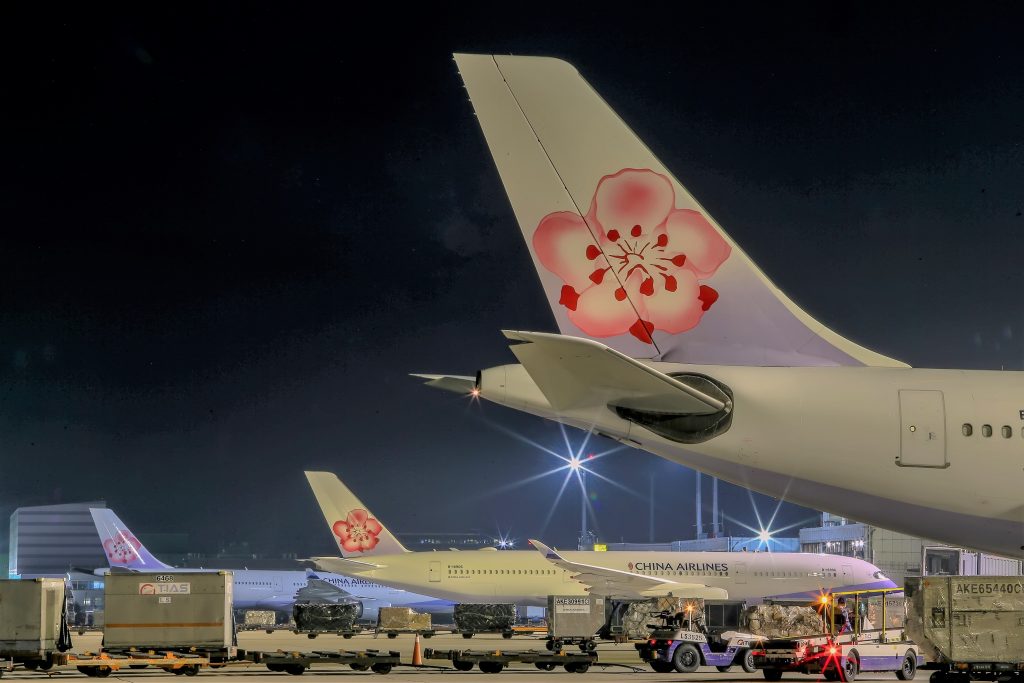
Due to sharp drop in passenger numbers and jump in cargo demand, China Airlines has switched over to ‘prioritize cargo over passengers.’ In 2020, the COVID-19 pandemic sent the global passenger market into a free fall. The Taiwanese carrier did not escape unscathed with a massive shift between its passenger and cargo businesses. Though passenger revenues plummeted by 78.7 percent, the global airline industry suffered total losses of more than US$100 billion in 2020. The airline relied on its moderate size, geographic environment and the world’s largest fleet of 747-400F freighters to help buck the trend.
The Taiwanese carrier has focused its efforts on expanding its cargo portfolio to compensate for losses from the passenger business. The air cargo team stepped into the breach and adopted a flexible “prioritize cargo over passengers” business strategy. The belly hold on passenger aircraft is being used to supplement the freighter network while resources such as passenger/freighter fleets, routes and networks are also being integrated. Multiple initiatives were adopted simultaneously to compete for cargo opportunities to help China Airlines through a very difficult year. Cargo’s outstanding performance resulted in an 88% jump in revenue in 2020, and it became the main source of revenue for China Airlines from March 2020 onwards and now accounts for over 90% of total revenues. Cargo revenues in 2021 amounted to TW$124.5 billion, an increase of 52% year on year.

All-in-one air support
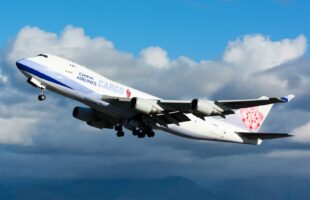
China Airlines operates the largest 747-400F freighter fleet in the world and a surge in air cargo demand during COVID-19 meant these freighters were kept busy. During the pandemic, the carrier started taking delivery of 777F freighters that were on order. Its whole freighter fleet of eighteen 747-400Fs and three 777Fs were fully utilized during the course of 2021.
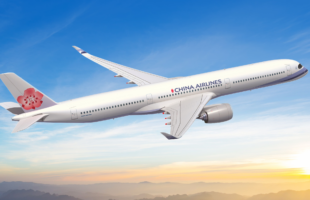
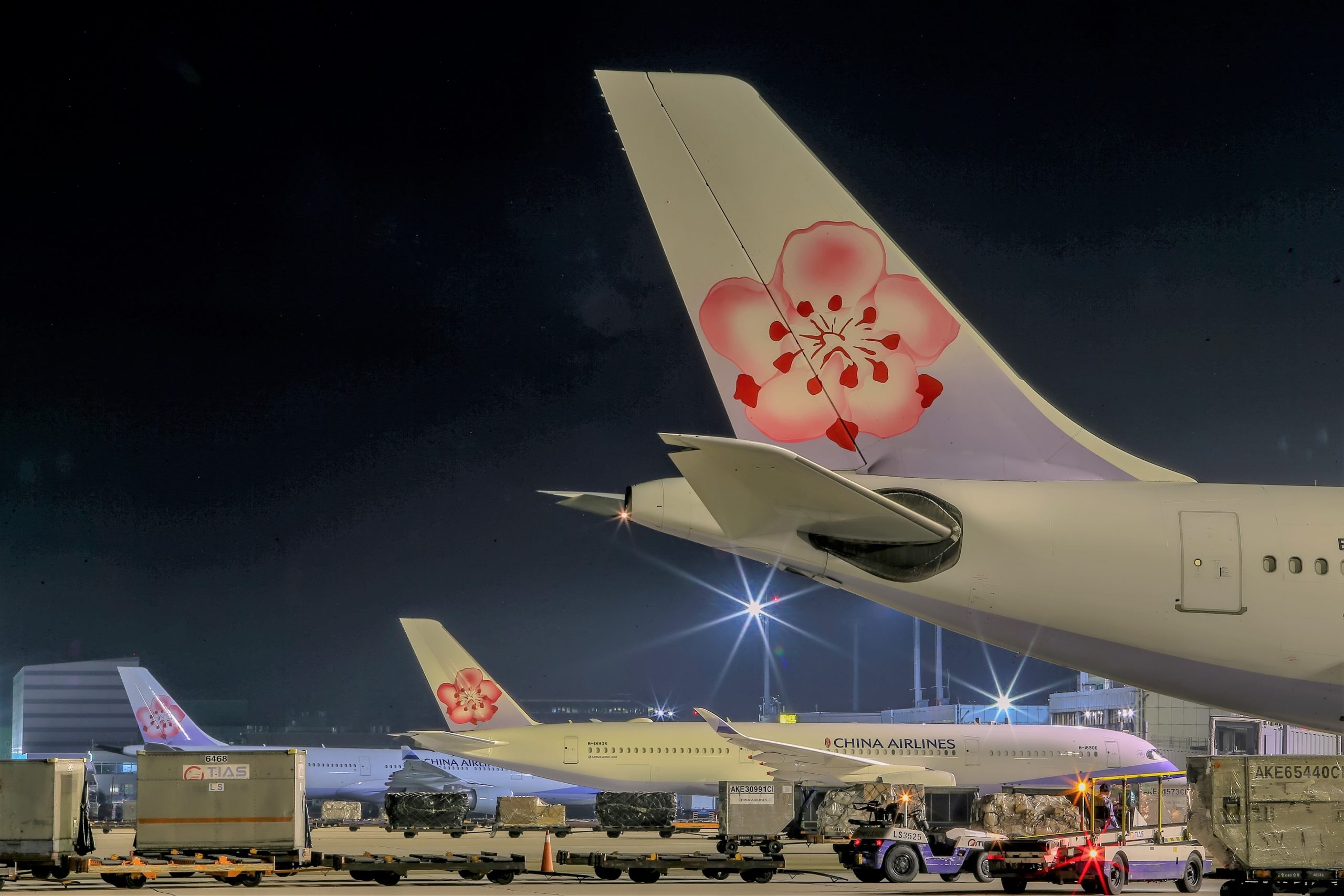
Additional passenger aircraft for carrying cargo were introduced on long-haul routes such as San Francisco, Los Angeles, Amsterdam, and Frankfurt. To compete for increased business, the belly holds of passenger aircraft on cross-strait and regional routes in Asia were also made available for cargo services. Passenger aircraft were dispatched as necessary to support cargo demand and boost the scale of the argo business. Strong global demand meant that passenger aircraft flew over 1,000 cargo-only services each month, on average. The US West Coast saw a particularly strong demand for cargo. China Airlines was operating up to six or seven flights to Los Angeles per day during the peak season.
“We began assigning passenger aircraft to cargo missions from March 2020 onwards. Flights were considered worthwhile if revenues from the belly hold covered variable costs such as fuel, airport fees and labor. The increase in cargo revenue helped the company cope with the liquidity pressures at the start of the pandemic,” the airline said.
In addition to the belly hold, China Airlines used the cabins to carry cargo as needed. Taiwan’s CAA gave its approval for certain types of goods to be carried in the cabin of passenger aircraft, boosting their carrying capacity even more. The use of cabins to carry cargo was mainly utilized by China Airlines on the US West Coast (LA) route where demand was highest.
Competing for new business
During the COVID-19 pandemic, China Airlines focused on strengthening Taiwan’s position as a transshipping hub and established itself in promising markets and made full use of air rights and freighter capacity. During the course of 2021, the airline increased its scheduled services by 23% and flew additional flights in response to market demand, flying up to 130 flights each week.
It also prioritized higher-value American routes, such as Chicago and Los Angeles, significantly boosting cargo revenues and strengthening capacity on cross-strait and Southeast Asia routes. “This not only allowed us to handle Taiwan’s border inspection and quarantine requirements but also to improve freighter capacity through optimized dispatching of crews,” the carrier noted.
China Airlines says it will continue to focus on the development of high-value cargo such as e-commerce, precision machinery, and cold-chain products to boost profits. “The bidding system for hold space will also be promoted to increase unit revenues by prioritizing high-value sources such as urgent and project cargo. Medium- and long-term aircraft or hold charter opportunities will be actively sought out to maintain flight load-factors and revenues,” the airline added.
In addition to bidding for the vaccine transport market and to transporting vaccines purchased by Taiwan on a number of occasions, the airline generated new revenue sources by successfully carrying out vaccine transshipment missions to other countries in Asia and Oceania, with its cold-chain logistics business growing several-fold.
From auto parts, semiconductor chips to actual vehicles and high-precision wafer machinery, China Airlines found revenue to ensure its survival, generating cargo revenues in excess of TW$100 billion in 2021.
“Shortages in sea cargo capacity meant that e-commerce, textile and other industries that traditionally went by sea now relied upon air cargo as well. COVID-19 spurred the rapid growth of the stay-at-home economy and a jump in online shopping. Fitness equipment, vacuum cleaners, gaming consoles, boutique handbag brands, and even machines for mining digital currency are just some of the goods carried aboard cargo charters,” it noted.
Fleet programme
China Airlines is the fifth largest air cargo carrier in the world. Its ongoing fleet acquisition program is expected to boost operating performance by balancing network development and market movements against the aircraft replacement schedule. The airline began taking delivery of six 777F freighters in December 2020. Three have been delivered so far with two more slated for 2022 and one more lined-up in 2023; delivery of the four newly ordered 777F freighters will commence in 2023 and be completed in 2024.
For domestic or short-haul routes, China Airlines introduced two A321neos at the end of last year, which will add further belly capacity. Equipped with cargo loading systems, the narrowbody aircraft’s bellyhold can be configured for bulk cargo as well depending on local airport requirements, adding 10% to 20% more capacity in line with its current cargo-centric operations. The airline expects eight of the Airbus narrowbody jet to be delivered throughout 2022, which will see the retirement of three 737-800s from its fleet.
Plans for future growth
As the global economy continues to recover, the demand for air freight is increasing and the shift from sea to air freight continues to pay dividends. Other factors such as an imbalance in supply and demand and low inventory levels are also having an effect. Strong demand for export hold space has kept cargo load factor high resulting in high shipping rates. As a result, overall cargo revenue has continued to grow year on year. Accumulated cargo revenues have exceeded TWD100 billion in 2021.
The pandemic is showing signs of easing in Southeast Asia and production in China is back on track. Sea freight remains congested but is creating a strong demand for export hold space. There continues to be high demand for the transport of high-tech goods, auto parts, semiconductors and e-commerce goods. Intense competition for hold space to Europe and the Americas has spurred higher prices on American and Chinese routes.
“The European, American and Australian markets are now entering their traditional peak season. Western countries are also beginning to relax their border restrictions. Demand is therefore expected to remain strong and sea freight will continue to be diverted to air cargo. Port congestion is expected to continue throughout the first half of 2022 so air cargo rates should stay high,” China Airlines said.