

As air cargo demand continues to expand across Asia Pacific and beyond, the aviation industry is seeing new opportunities and challenges, particularly in freighter conversions and aircraft leasing. Asia Pacific origin markets contributed 56% of the global 12% year-on-year increase in air cargo tonnages in the first 10 months of 2024, according to WorldACD Market Data.

Leading this evolution is ST Engineering, a Singapore-based company leveraging its strong engineering heritage, outward-looking mindset, and firm commitment to sustainability. Jeffrey Lam, Group COO (Operations Excellence) and President Commercial Aerospace at ST Engineering, shares insights into the changing market landscape, the company’s management philosophy, and the critical role innovation and sustainability will play in shaping the industry’s future.
A shift toward freighter leasing
Traditionally, aircraft leasing companies have focused on passenger aircraft, but that is starting to change. “What we’re seeing is that traditionally, leasing companies have focused on passenger aircraft leasing, but they realise there is an opportunity in freighter aircraft leasing,” Lam explains.


“With many lessors owning passenger aircraft that reach the end of long leases, they now look at converting these aircraft to freighters instead of simply selling them. Leasing converted freighters has become a viable and attractive alternative.”
This trend is particularly strong in Asia Pacific, where growing manufacturing hubs and new trade routes are reshaping cargo flows. “With additional routes being established, especially between manufacturing and demand locations, the converted freighters will continue to see demand and opportunity for growth,” he adds.
Long-term growth despite near-term uncertainties
While short-term disruptions like COVID-19 and trade tensions have created challenges, Lam remains confident about the long-term prospects of the cargo market.
“The cargo market is a very stable, long-cycle market, so we expect continued steady growth,” he says. “As a result, the freighter fleet will also continue to see long-term growth. Having said that, there may be short-term challenges, as in all situations—COVID being one of them. Now we don’t know if the trade war will escalate with other impacts, but there are two key trends propelling the growth of freighter fleets. One is that it simply has to grow to cater to the freight carriage demand. Second, there is an existing fleet of much older aircraft that needs to retire from the freighter fleet, and then it needs to be replaced by newer freighters.”
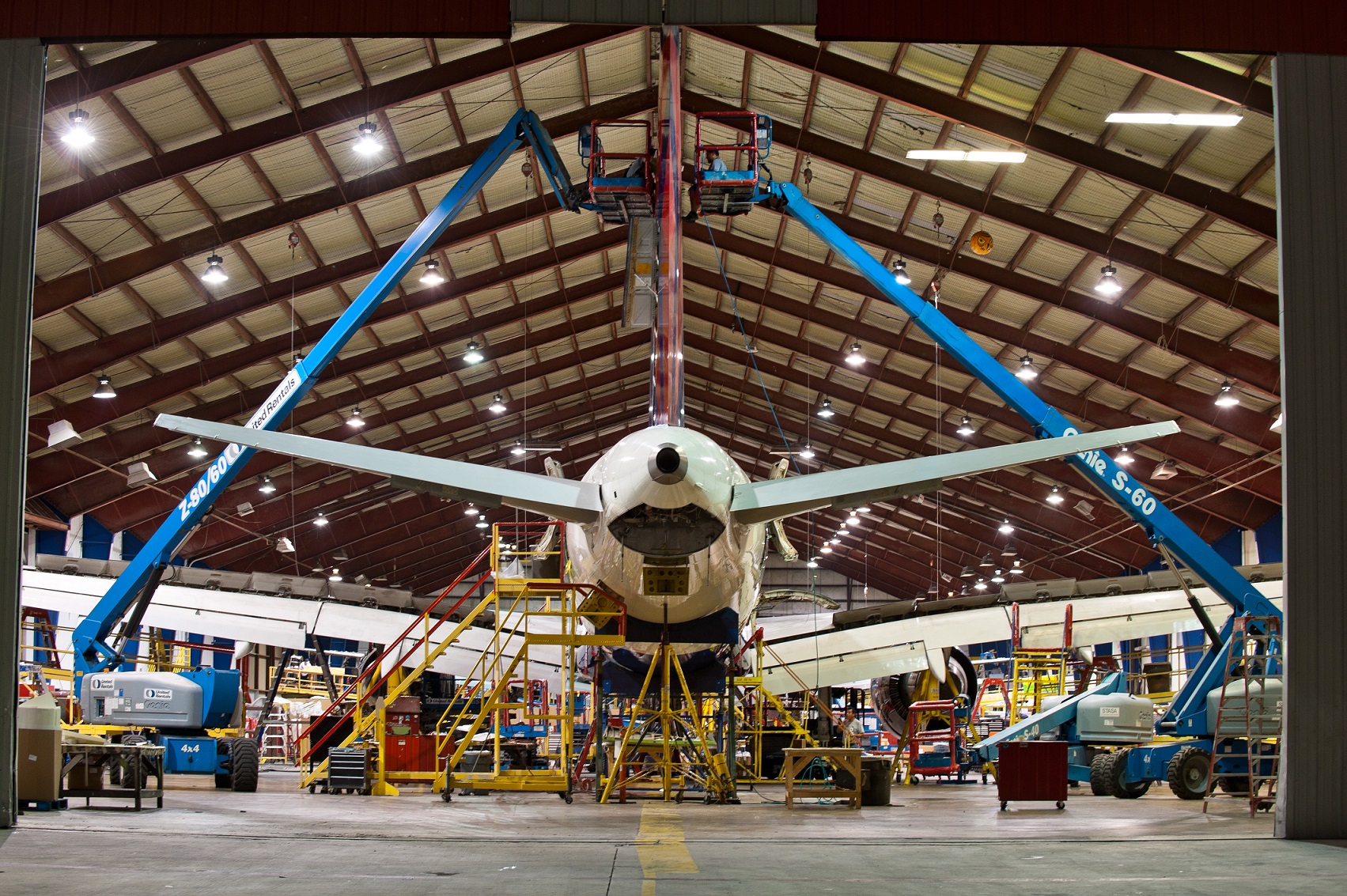
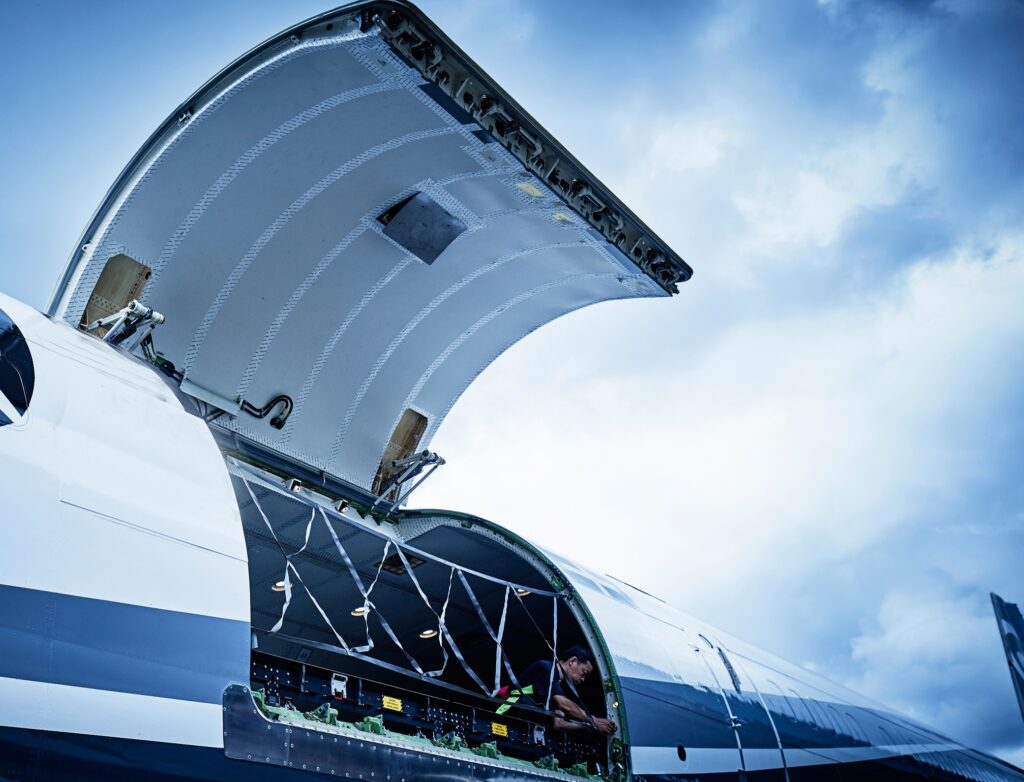
Freighter conversions, Lam notes, offer the most economical solution for airlines and operators looking to expand or modernise their fleets without the high capital costs associated with new aircraft. He adds that while belly freight has recovered post-COVID and remains a critical part of traditional passenger routes, the demand for dedicated converted freighters will continue to grow, especially as new manufacturing hubs open up and create new cargo corridors.
Sustainability at the core
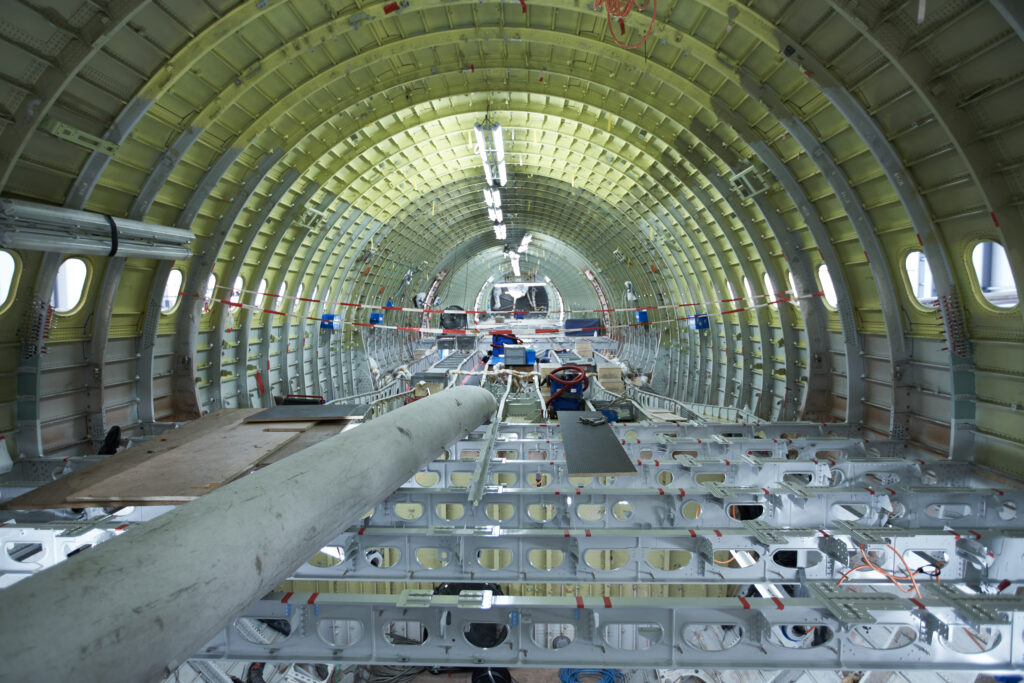
Sustainability is not just an add-on for ST Engineering—it is embedded into their business model. Offering converted freighters is a key part of that strategy.
“When we offer a converted freighter, it’s actually a very sustainable proposal because instead of building a new freighter—and imagine all the carbon emissions that need to be emitted in order to build a new freighter—we are simply converting a used passenger aircraft,” Lam explains. “We think that’s a very green proposition.”
Newer-generation converted freighters such as the A330P2F and A320P2F models are not only more fuel-efficient but also offer operators a lower-carbon alternative compared to traditional older freighters.
Lam notes that while technologies like hydrogen-powered aircraft are still in the distant future, operators today can take steps by flying more efficient routes, using newer aircraft, and utilising sustainable aviation fuels.
Fostering a culture of innovation
A major factor behind ST Engineering’s continued leadership in aerospace is its focus on continuous improvement and innovation.
“I’ve been saying that the letter ‘I’ is a very useful word. Because it means innovation. It means improvement,” Lam says.
At ST Engineering, continuous improvement is applied at every level—on the shop floor, in operational areas, and across business management. “There’s always an opportunity to do something better, faster, cheaper, safer, and at higher quality,” he emphasises.
The company trains its teams to seek out process and product improvements and to incorporate the latest digital, robotic, and automation technologies to drive efficiency and quality.
Motivating engineering teams is critical, especially given the technical complexity of freighter conversions. Lam explains that ST Engineering’s workforce includes both engineering graduates and skilled technical labour on the shop floor, each bringing complementary strengths.
“Our approach is how we can put the two together to work on improving our work processes, or improving our tooling or improving products by harnessing the capabilities of both,” he says. The company fosters a very open system, encouraging anyone to propose ideas and initiate improvement projects, which are then resourced and supported by management. “Together, teams of continuous improvement employees work collaboratively to develop solutions that meet the needs of both the shop floor and engineering teams—and ultimately, the customers,” he adds.
Cross-functional collaboration for strategic alignment
Managing cross-functional teams—across MRO, engineering, and leasing—requires careful balance, especially given the different cultures between OEM and MRO businesses.
“You are right, the operating philosophy can be somewhat different across an OEM or an MRO business. The pace, the focus, and the emphasis are somewhat different,” Lam notes.
Despite these differences, ST Engineering encourages movement of people, especially engineering talent, across organisations and management roles to foster cross-pollination. Lam points out that commonalities like inventory management, labour optimisation, and regulatory compliance provide strong shared ground between the two sides of the business.
Moreover, customer synergies are a natural bridge: “While one delivers an OEM product to a customer, the other delivers an MRO solution to the same customer, so we see these synergies that could play across the organisation,” he says.
Staying agile in a regulated industry
Innovation in the aerospace industry comes with its own set of challenges, particularly because it is highly regulated.
“Indeed, it’s one of the challenges. We are strictly regulated, and at the same time, we have to be very forward-looking and keep adapting and changing,” Lam says. “We will change, adapt and innovate under the regime of strict regulation. It is a fine balance, but it’s a balance that challenges us every day.”
The company’s unique position as a fully third-party MRO provider—unaffiliated with airlines or OEMs—also gives it a strong advantage.
“We are very outward-looking,” Lam notes. “We are continuously listening to the needs and expectations of our customers, and looking outward to bring the latest technologies and best practices into the organisation.”
This outward-facing mindset, Lam emphasises, helps ST Engineering stay grounded in real-world conditions and closely aligned with evolving market expectations, even in a highly dynamic and regulated environment.
Navigating a shifting logistics landscape
Beyond aerospace, ST Engineering is closely monitoring major shifts in global supply chains. “Cargo freight is not the most efficient today. Load factors are still around 50% for dedicated cargo,” Lam explains. “What we’re seeing is a shift in global manufacturing capacity, which may redraw road networks and cargo flows.”
This change, accelerated by trade tensions and shifting market access, could significantly reshape traditional cargo routes and supply chains. Another factor ST Engineering is tracking is the interplay between belly freight and dedicated freighters.
“During COVID, we saw a dramatic shift from belly freight to dedicated freighters, and then a shift back as passenger networks recovered,” Lam says. He expects this push-pull between cargo types to remain a key market dynamic.
Lam also highlights the fragility of supply chains, citing inflationary pressures and cross-border disruptions that continue to impact business operations.
To adapt, ST Engineering is embracing deeper automation and digitalisation. While automation has been part of aerospace for decades, Lam notes the real transformation today lies in the intelligence being applied. “With deeper levels of AI, we’re able to do more than we could ever do before—whether it’s very detailed inspections or very complex manual tasks,” he says.
Positioning for growth in the Asia Pacific
With logistics becoming increasingly complex across the region, Lam sees big opportunities for Asia Pacific, provided governments and industry stakeholders work together to lower barriers to trade.
“Asia Pacific has a great opportunity to facilitate trade in every possible way—not just carrying cargo, but lowering tariffs, streamlining customs, and embracing digitalisation,” he says. “If we can trade virtually, barrier-free, tariff-free, and non-tariff-barrier-free, we can all prosper together.”
From driving sustainability through freighter conversions to embedding continuous innovation across its operations, ST Engineering is positioning itself at the forefront of a dynamic and evolving aerospace industry. With a strong focus on customer needs, agility in a regulated environment, and a commitment to shaping the logistics future of Asia Pacific, ST Engineering continues to build on its legacy as a global leader in commercial aerospace.
This story was first published in the March-April 2025 issue of Payload Asia.