

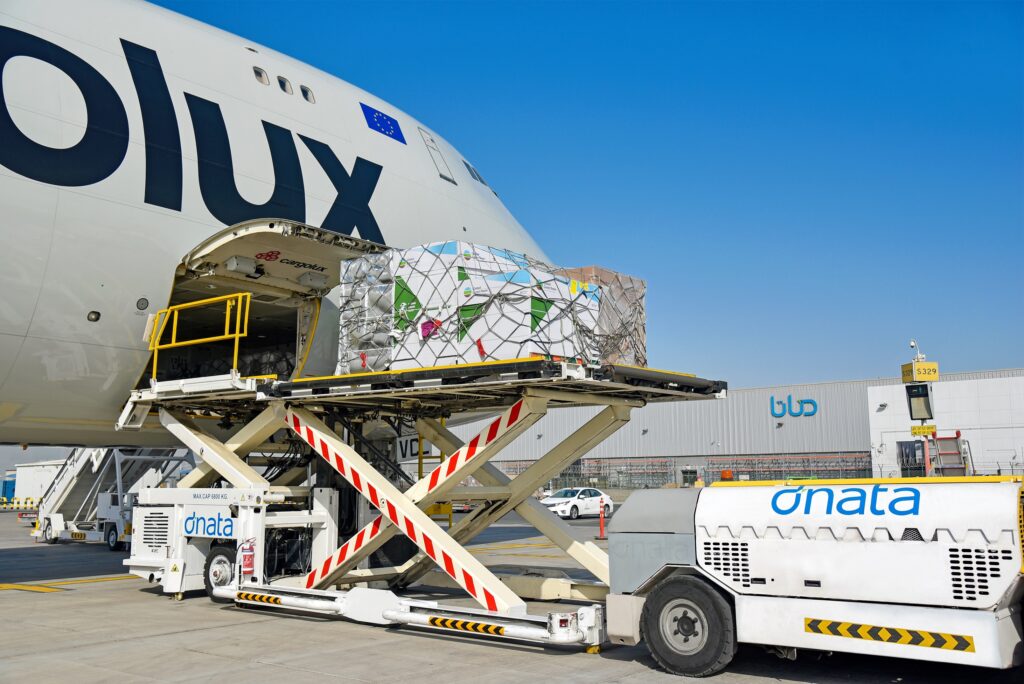
Founded in 1959 in Dubai, dnata (Dubai National Air Travel Agency) has grown from a regional player into one of the world’s largest and most respected air and travel services providers. With operations in 34 countries across six continents, the company now delivers ground handling, cargo, travel, inflight catering, and retail services to airlines and airports worldwide. As a subsidiary of the Emirates Group, dnata has built a global reputation for safety, innovation, and service excellence.
In today’s fast-moving air logistics environment, temperature-sensitive cargo such as pharmaceuticals and perishables demands more than just speed; it requires precision, consistency, and innovation. Few providers understand this better than dnata, which has made strategic investments to become a trusted global partner for cold chain logistics.


As the winner of Cold Chain Service Provider of the Year at the 11th Payload Asia Awards, dnata’s work in this space is gaining industry recognition. According to Guillaume Crozier, Chief Cargo Officer at dnata, the award is a testament to the company’s ongoing efforts to “offer an uncompromised temperature-controlled handling and storage solution to airline customers,” backed by flexible infrastructure and tailored handling processes.
Purpose-built for pharma
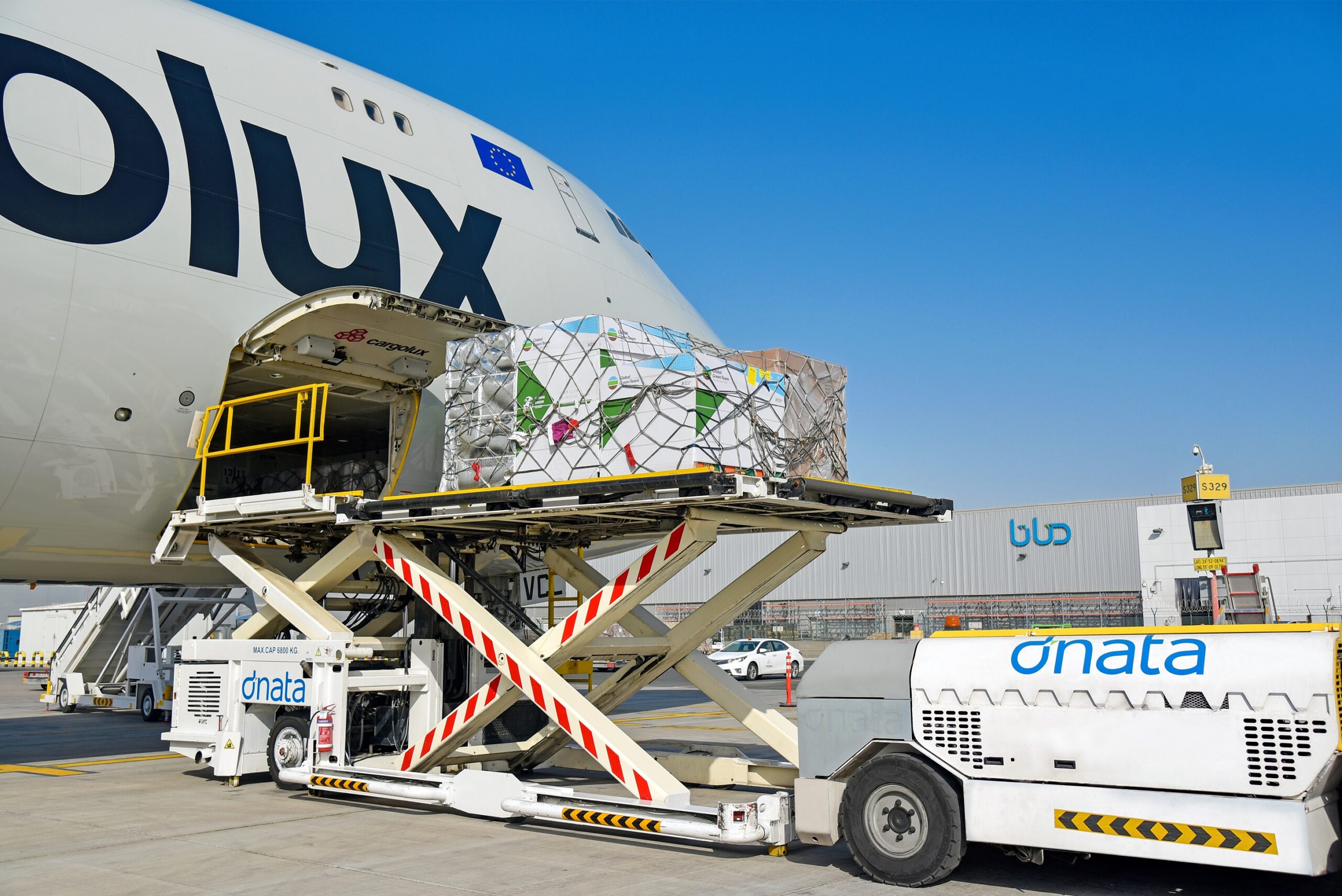
At the heart of dnata’s cold chain operation is Dubai, a strategic hub that links two-thirds of the world’s population within an eight-hour flight. But it’s not just about location—it’s also about infrastructure. The company’s cool chain facilities at Dubai International (DXB) and Dubai World Central (DWC) are IATA CEIV Pharma certified, enabling the safe, efficient, and compliant handling of pharmaceuticals and vaccines.
“dnata plays a key role in the safe handling of pharmaceuticals and vaccines in Dubai,” says Crozier. “Our facilities include dedicated Deep Freeze and refrigerated storage for health care and life sciences products,” with delivery times that can be as fast as two hours from flight arrival. Dubai’s cool chain facilities were integral in the safe handling of global COVID-19 vaccine transportation. In the year leading up to March 2023, dnata handled nearly 8,000 tonnes of temperature-sensitive pharmaceuticals.
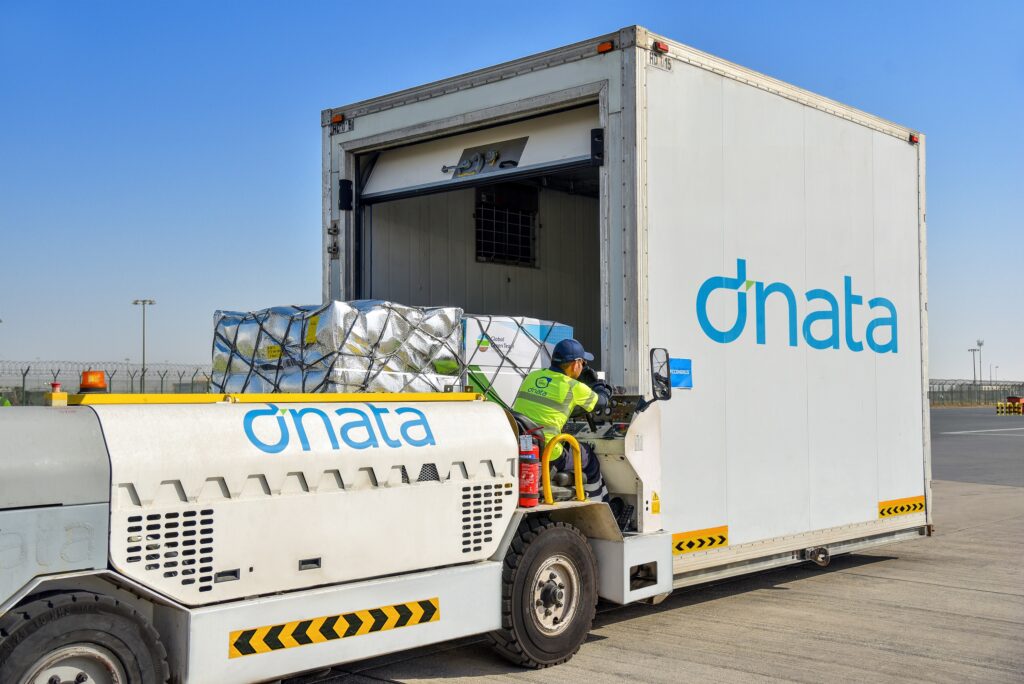
Cool investments in the Asia Pacific
The company has also introduced cool dollies in Australia and Singapore, helping maintain product integrity in extreme weather conditions during airside transport. These additions reflect dnata’s broader investment strategy to enhance infrastructure and technology in key markets. “We will continue to enhance our operations and processes to maximise efficiency and deliver the highest value for our customers globally,” Crozier affirms.
Supporting customers post-pandemic
In a volatile global logistics environment, dnata is focusing on resilience and standardisation to meet shifting customer needs. “Our approach centres on process standardisation and the use of a unified platform across our network,” explains Crozier. “This enables us to build a strong operational baseline, which is essential for absorbing variability between stations.”
He adds that while some locations may see surges in cargo volume, others may face reductions. The goal is to stabilise network performance and maintain quality despite unpredictable conditions. A key part of this strategy is ensuring data maturity across the ecosystem. “It takes each and every stakeholder to have the same level of maturity when it comes to their data architecture, data capability, and data governance. This is still very diverse, and that’s where we keep working hard to provide solutions to SMEs that may not have such data capability.”
Crozier points to Calogi, dnata’s airport community system, as one such enabler: “It is exactly one of the solutions that any ecosystem would need to rise to those challenges.”
The digital backbone
Innovation doesn’t stop at hardware. In 2024, dnata launched a new generation of Calogi, offering real-time visibility and expanded services in third-party logistics and e-commerce fulfilment. In Dubai, dnata has deployed autonomous drones within its warehouses, resulting in “a transformative effect on our efficiency levels, and reducing rack processing times.”
At a data level, the company has developed a real-time data warehouse that is AI-ready and supports advanced analytics and automation. “With robust data governance in place, we can effectively leverage our data,” says Crozier. To support this, dnata has rolled out a customised data literacy framework, giving its teams the tools to make smarter, data-informed decisions.
As part of its digitalisation roadmap, dnata is also investing in computer vision technology to optimise load plans and improve efficiency. “Our airline customers are always looking for optimisation and greater revenue in their aircraft,” says Crozier. “They want their ground handling agent to optimise their load as much as possible, but for that, you need to have the right technology to do it.”
dnata has already implemented this technology in Singapore, in partnership with Speedcargo, with Etihad Cargo as its first customer. The rollout is expanding to other locations, including the UK, UAE, and dnata’s new facility in Amsterdam. This system will allow near real-time visibility of cargo dimensions and weight, a key enabler for future track-and-trace capabilities.
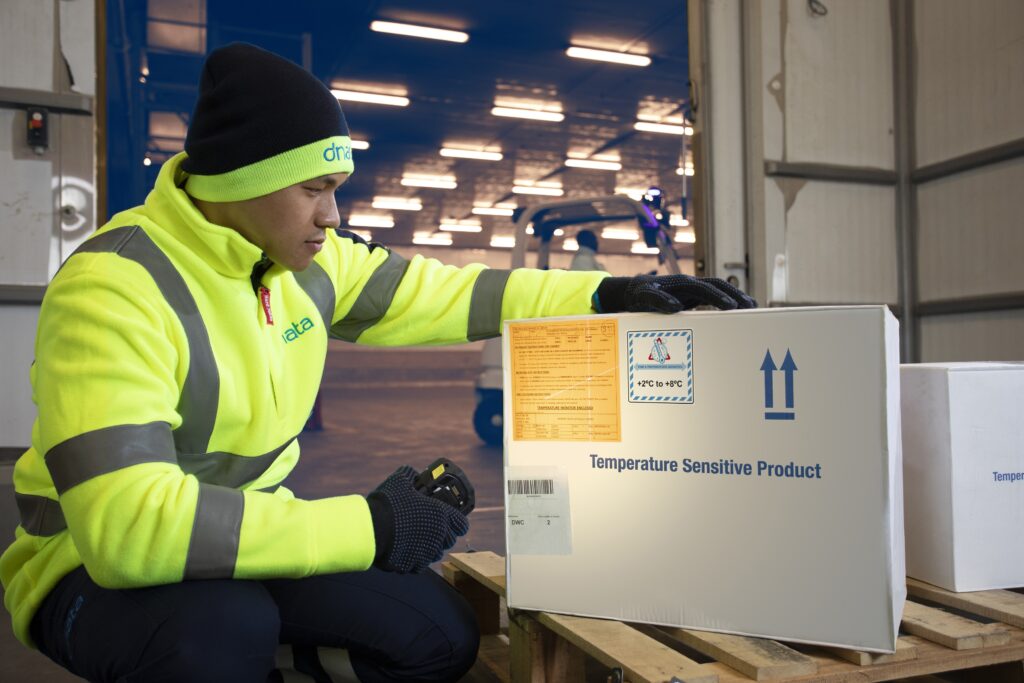
Training for the future
Alongside digital transformation, dnata is heavily focused on workforce development. The company uses Virtual Reality (VR) training tools for ground handling teams and continuously updates its dnata Training Management System to uphold and exceed safety standards across global operations.
“A prominent feature of the ‘One dnata’ identity is its continual focus on safety and security,” Crozier explains. “We are committed to achieving the highest possible safety and security standards for our customers, employees and facilities.”
A sustainable path forward
Sustainability is now part of dnata’s operational DNA. New facilities—including the upcoming dnata Cargo City Amsterdam and the dnata Logistics warehouse in Dubai—are designed to meet BREEAM and LEED certification standards. dnata is also the first ground handler to be IEnvA certified in both the UAE and Amsterdam, further demonstrating its commitment to environmentally responsible operations.
What’s next for dnata
Looking ahead, dnata is preparing to launch dnata Express, a state-of-the-art e-commerce facility at Dubai International Airport, which will be commissioned later this year. The company also plans to expand its cargo footprint in Australia and is contributing its expertise to the development of the future Dubai World Central – Al Maktoum International Airport, expected to redefine cargo handling in the region.
“We’re excited about what lies ahead and proud to operate in a country with visionary leaders who recognise the aviation sector as a key enabler of national growth and success,” says Crozier.
As air cargo continues to evolve, dnata is positioning itself not just as a service provider, but as a solution-driven partner redefining the future of cold chain and cargo handling.
This story was first published in the May-June 2025 issue of Payload Asia.