
Asia-Pacific’s cold chain logistics market is projected to reach $133.97 billion by 2027, driven by pharmaceutical growth and evolving consumer demands for fresh produce, according to Allied Market Research.

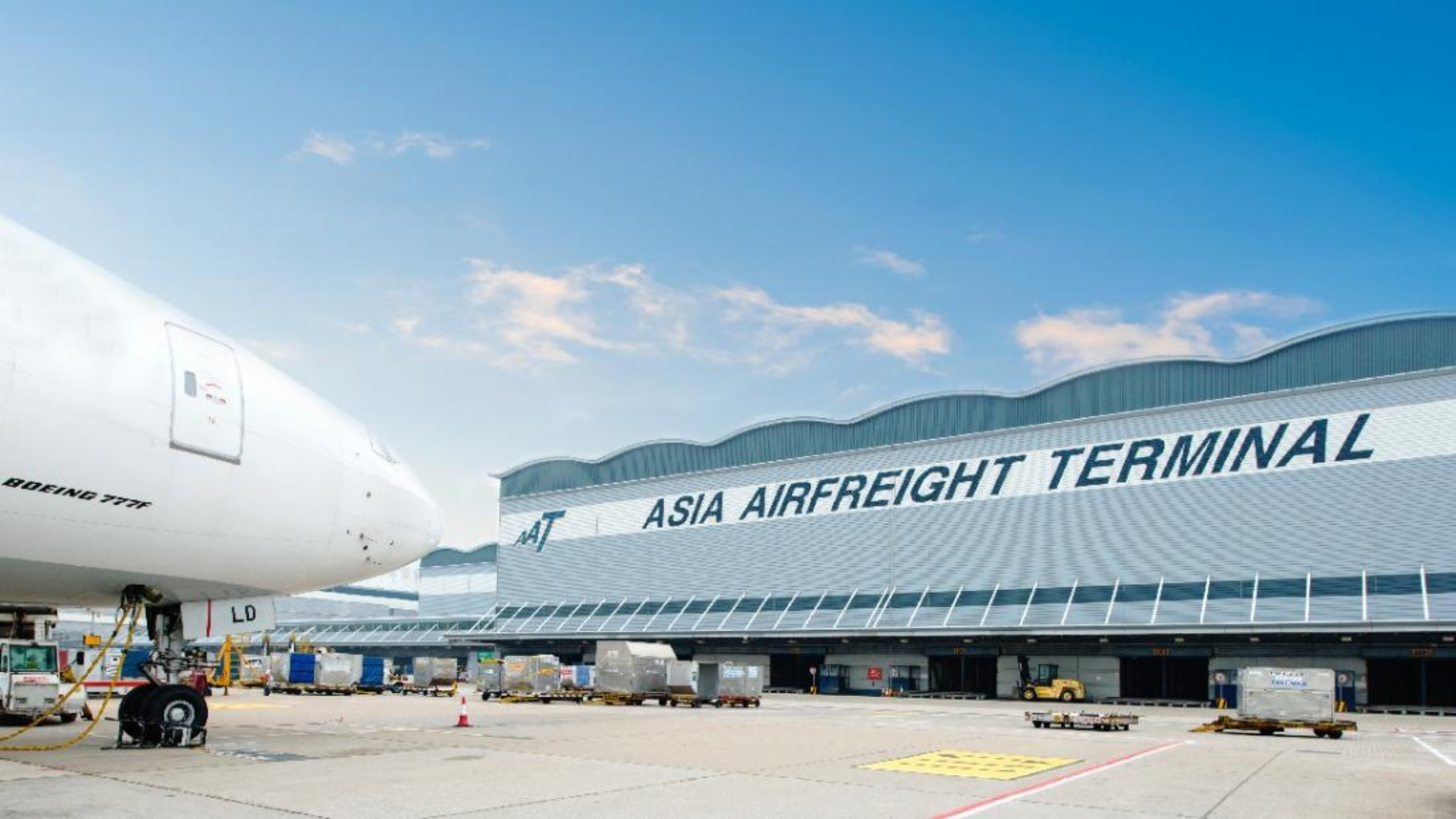
In a landscape where time and temperature control are critical, Asia Airfreight Terminal (AAT) is emerging as a market leader. Under the leadership of CEO Mike Chew, AAT continues to offer tailored cold chain solutions that address the specific needs of airlines, freight forwarders, and business partners riding on its Hong Kong’s first on-airport end-to-end cold chain facility—COOLPORT—but is also expanding its capabilities with cross- border initiatives to streamline the transport of perishable goods into the Greater Bay Area.

Pioneering cold chain logistics with COOLPORT
The launch of COOLPORT in July 2022 marked a turning point for both AAT and the broader Hong Kong logistics industry. Being ahead of its time, AAT began planning improvements to its cold chain infrastructure as early as 2019, well before the pandemic spotlighted the fragility of global supply chains. This forward-thinking approach led to the successful development of Hong Kong’s first fully temperature-controlled on-airport cold chain centre.
Designed to address long-term trends, such as the growing demand for pharmaceuticals, healthcare devices, and the rise of farm-to-table organic produce, COOLPORT was built to meet a clear market need.
“Growing global demand for temperature-sensitive pharmaceuticals such as biologics, vaccines and perishable goods like fresh produce, high-end foods is driving the need for reliable cold chain airfreight, supported by ageing populations, stricter supply chain regulations, and consumer expectations for quality and speed,” says Mike Chew.
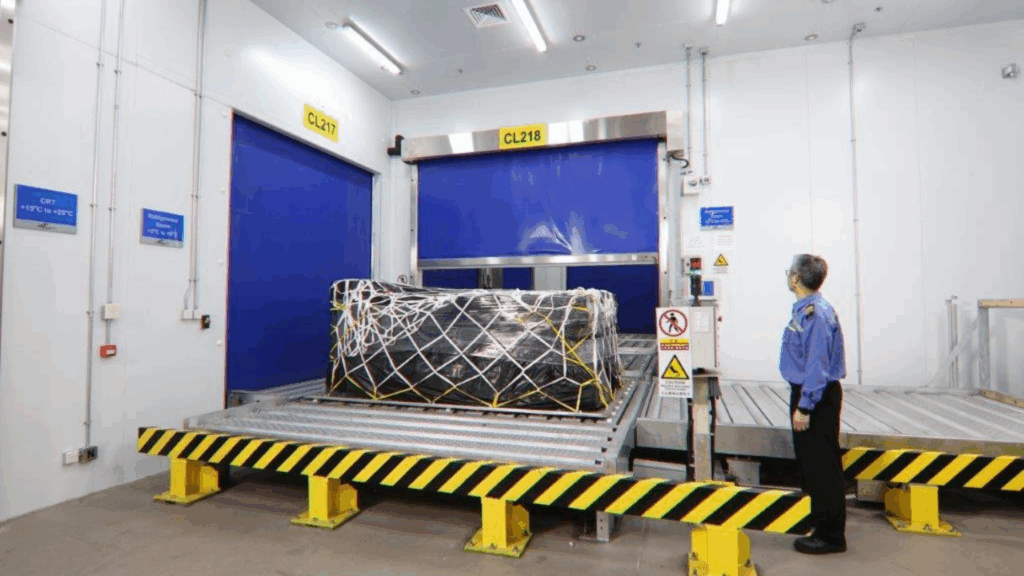
What sets COOLPORT apart is its fully integrated, end-to-end temperature-controlled system. From the moment cargo is received at air-conditioned truck docks, it moves through a tightly controlled temperature environment. Breakdown, weighing, X-ray screening, and palletising all occur in sequence within a tightly controlled environment. At no point are shipments exposed to Hong Kong’s humid climate.
Operational efficiency was a key focus from the outset. AAT introduced a fully automated handling system for palletised cargo, secured direct airside access, and implemented dedicated truck docks as well as prioritised handling procedures to significantly reduce transfer times.
The company also worked to meet the highest regulatory and technical standards. COOLPORT has achieved multiple certifications, including CEIV Pharma, GDP Pharma, CEIV Fresh, ISO 22000:2018, and HACCP. These reflect AAT’s commitment to providing compliant, safe, and efficient handling for pharmaceutical and perishable shipments.
Chew highlighted the facility’s location as a strategic advantage: “COOLPORT stands out with its on-airport location with direct access to the airside, which significantly reduces time and minimises exposure risks for temperature-sensitive cargo.”
Overcoming challenges with precision
Launching COOLPORT was no small feat. AAT faced three major challenges: maintaining temperature integrity across all touchpoints, improving operational efficiency, and meeting strict regulatory standards. The team tackled these by integrating cutting-edge refrigeration systems, deploying ultrasonic sensors to ensure performance even in deep-freeze environments, and building a fully climate-controlled operation from truck docks to storage.
“Through collaboration with tech partners, regulators, and airlines, we transformed these challenges into competitive advantages,” says Chew.
In addition to deep-frozen storage capabilities down to -28°C, COOLPORT features optimised workflows, dedicated truck docks, and direct airside access to reduce dwell times and speed up cargo handling, critical for temperature-sensitive goods like vaccines and fresh produce.
The facility’s green design also reflects AAT’s long-term sustainability goals. COOLPORT uses non-ozone-depleting refrigerants with low global warming potential (GWP), along with double doors, air curtains, speed doors, and thermal insulation panels to minimise heat loss and save energy.
COOLPORT’s excellence has not gone unnoticed. The facility has received multiple accolades, including Cold Chain Service Provider of the Year – Asia Pacific at the 10th and 11th Payload Asia Awards. These recognitions underscore AAT’s leadership and innovation in cold chain logistics.
Beyond operational advantages, COOLPORT plays a pivotal role in reinforcing Hong Kong’s status as a preferred logistics hub for temperature-sensitive cargo. By offering internationally certified, end-to-end cold chain handling, it strengthens HKIA’s position as a gateway for high-growth sectors like biotech, vaccines, and premium food logistics. It also supports rising demand in e-commerce and cross-border grocery delivery—areas where flawless cold chains are critical. As mainland consumers seek high-quality imports, COOLPORT’s efficiency helps Hong Kong meet that demand faster and more reliably than competing regional hubs.
Scaling impact with Fresh Lane
Building on the success of COOLPORT, AAT expands its impact, leveraging the latest Fresh Lane scheme—an innovative initiative that connects Hong Kong with the Greater Bay Area via an intermodal air-land solution using the Hong Kong-Zhuhai-Macau Bridge. Developed in collaboration with Hong Kong and Mainland Customs, the Airport Authority, and the Zhuhai Municipal Government, Fresh Lane is designed to deliver live and fresh goods faster, more securely, and with minimal handling.
“As the operator of Hong Kong’s first on-airport fully temperature-controlled cold chain facility–AAT COOLPORT, AAT plays a crucial role in this initiative by serving as the vital temperature-controlled hub that bridges global air cargo flows with the Greater Bay Area markets,” Chew notes.
The Fresh Lane initiative represents a transformative leap in perishable supply chain connectivity for the Greater Bay Area, establishing Hong Kong as the critical nexus between global markets and mainland consumers. By seamlessly integrating Hong Kong International Airport’s global air cargo network with the cross-border efficiency of the Hong Kong-Zhuhai-Macau Bridge, this innovative corridor addresses long-standing challenges in perishable logistics while creating value for businesses and consumers across the region.
In addition, through AAT’s wholly-owned logistics subsidiary, AAS, plans are underway to expand cross-border trucking services to include temperature-controlled options. This will further enhance AAT’s ability to provide a comprehensive end-to-end cold chain solution, supporting premium imports and more efficient export routes within the Greater Bay Area.
“For customers, this means fresher imports like premium seafood reaching restaurants within hours, while mainland producers gain efficient export routes to global markets. The initiative boosts trade efficiency, reduces spoilage costs, and elevates product quality across the region,” says Chew.

A culture of continuous innovation
Under Mike Chew’s leadership, AAT has embraced innovation not only in infrastructure but also in operations. The company recently upgraded its cargo management system to COSYS+, a secure, cloud-based platform for real-time cargo tracking. The system was adopted from SATS’ global platform, enabling AAT to align with international best practices in digital cargo handling and strengthen its integration with the wider network.
The transition unifies multiple systems into one streamlined portal—accessible via web and mobile—enhancing cybersecurity, real-time visibility, and user experience.
AAT has also replaced RFID with Automatic License Plate Recognition (ALPR) for faster and more precise truck access. The system integrates directly with COSYS+ to optimise dock assignment, reduce waiting times, and improve overall terminal efficiency.
In early 2024, AAT became the first cargo terminal operator in Hong Kong to deploy autonomous electric tractors, further enhancing processing speed while reducing emissions.
“Our commitment to continuous improvement and operational excellence ensures AAT remains a trusted partner in the ever-evolving air cargo industry,” Chew affirms.
The road ahead
Looking forward, AAT is focused on expanding its regional footprint and refining its cold chain corridors. Backed by its shareholder, SATS—the world’s largest air cargo handler—and China Merchants Port, AAT benefits from an extensive global network and deep maritime logistics experience.
Chew shares that AAT will “continue to strengthen our collaboration to deliver global end-to-end solutions… [and] optimise intermodal transhipment solutions, offering alternative options to our airline customers and agent partners.”
As the airfreight landscape evolves, AAT—under Mike Chew’s leadership—remains at the forefront by setting new standards in cold chain logistics and reinforcing Hong Kong’s role as a regional gateway. Through state-of-the-art facilities, strategic partnerships, and a relentless focus on innovation, Asia Airfreight Terminal is shaping the future of perishable supply chains across Asia and beyond.
This story was first published in the May-June 2025 issue of Payload Asia.