


Air cargo hubs operate in a fast-paced, complex environment where quality management is crucial—but not always straightforward. In this Q&A, Marie Seco-Köppen, Executive Director of Cargo iQ, explains how the coalition of air cargo stakeholders is working to bring consistency to how quality is measured across hubs, gateways, and regional airports. While specific examples are often confidential, the approach is clear: rely on consistent performance metrics and embrace digital tools, and foster collaboration, shared accountability, and transparency to strengthen operations.
Payload Asia (PA): How does Cargo iQ define quality when it comes to cargo hubs, and why is it important to align this with industry standards?
Marie Seco-Köppen (MSK): The Cargo iQ members have already defined performance management metrics that include all kinds of locations, including hubs, gateways or regular airports. For the end customer, it doesn’t matter whether cargo transits through a hub, gateway, or regular airport — performance is measured the same way across all locations.

PA: Can you share examples of how investments in physical or digital infrastructure have directly impacted quality and efficiency at cargo hubs?
MSK: Unfortunately, we cannot share examples; we can confirm that adjusting cargo flows and using new tools and equipment, such as handheld devices and automatic scanning machines, does improve the quality of the data and the timeliness of cargo.
PA: Can you share recent best practices or case studies where standardisation has measurably improved performance at cargo hubs or ground handling sites?
MSK: It’s a crucial element to pace efficiency gains and work on our industry’s maturity: standardisation supports and allows us to rapidly scale an initiative and achieve interoperability faster.
The introduction of the Freight into Warehouse (FIW) milestone has notably elevated the conversations around SLA performance as agreed between GHA and Airlines. As presented by one of the Cargo iQ Members who implemented the milestone with high scrutiny, the process step can vary by location and cargo type, but it supports data logging and enables targeted improvements.
PA: How do Cargo iQ’s quality metrics help identify gaps or inefficiencies at the hub level, and how are stakeholders expected to act on these insights?
MSK: Cargo iQ has a set of KPIs which have been agreed upon by the members, who can use these KPIs to measure various aspects of cargo transportation. This includes lead-times, SLA adherence, exception identification, data availability, and real-time data timeliness — all of which are crucial to creating and improving a representative view of performance.
PA: How does Cargo iQ foster collaboration between ground handlers, airlines, and airports to improve overall cargo quality? Can you share any recent initiatives or success stories?
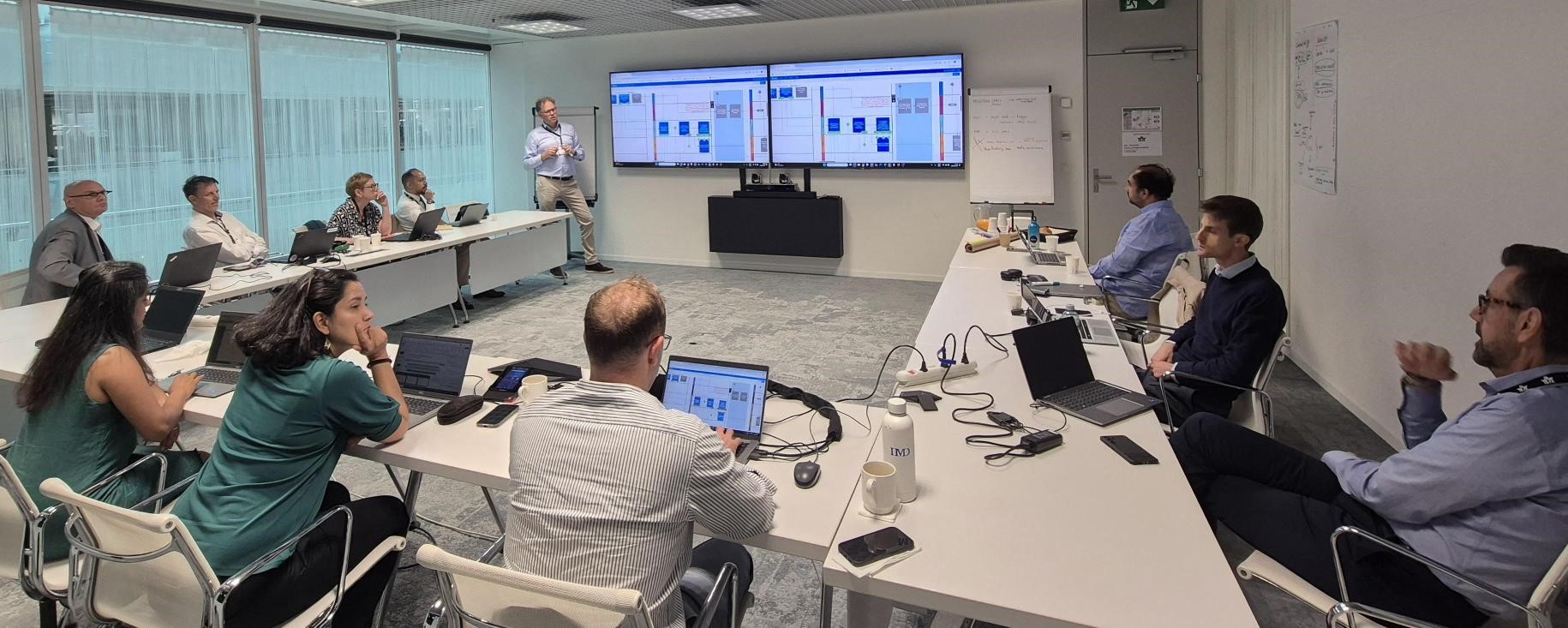
MSK: Each initiative is a joint initiative that collects the points of view of the different stakeholders, and usually, we start or end with the Master Operating Plan. In the membership, we work on the principle that each party needs to be able to play to its strengths and measure performance, looking at data through different lenses, whilst also maintaining a clear view of the end customer’s perspective.
The development of the new FWB metrics is a great example. In the tiers program, we have agreed that FWB availability will be measured by all parties, and this can then be used to hold each other accountable. The focus here is not to place blame but instead to work together to solve problems. Ultimately, each member is working towards the same goal: for the shipper to have the best possible service.
PA: What are some of the challenges when it comes to implementing standardisation at scale across diverse airport environments, particularly in fast-growing regions like the Asia Pacific?
MSK: Investment, and not only in technology, but also in process improvement, rethinking processes, addressing workarounds and isolated solutions, and investing in training. There’s a certain level of upskilling required to move our industry from a hero-effect operation to a continuous improvement mindset, which is disciplined and a well-oiled, people-powered machine.
PA: As automation and digital tools become more common at hubs, how is Cargo iQ adapting its standards or guidance to reflect this shift?
MSK: We very recently launched our rollout plan to adapt the Cargo iQ route map specifications to the API era. First things first, we start de-coupling the three-digit acronyms from the CIMP Messaging protocols and make them future-proof. That means we redefine them to reflect critical process steps, including information handover, checks and change of custody, and movements. The Cargo iQ concept route map is getting a “makeover” and is dressing up for the API party.
PA: Looking ahead, how can cargo hubs leverage quality and performance data to gain a competitive edge?
MSK: They can, just like any other facility. They have the higher volumes, and the more AWBs you measure, the better you can use the data to optimise flows and analyse trends.
This story was first published in the July-August 2025 issue of Payload Asia.