
Live animal transport is often described as a niche within air cargo, but for carriers willing to invest in specialised capability, it has become a revealing test of how well a network truly performs under pressure.
For Cathay Cargo, equine movements in particular have evolved into a strategic proving ground—one where commercial planning, infrastructure, and flight operations must align seamlessly to deliver outcomes with little margin for error.

“We’ve seen strong momentum in this segment,” says James Evans, General Manager, Cargo Commercial, Cathay Cargo. “Our equine shipments increased 33% year-on-year in 2025, and the broader sector is projected to expand by USD 638 million by 2029, according to industry projections. What’s driving demand isn’t just volume, it’s a fundamental shift in expectations.”


That shift reflects how customers now assess live animal logistics: not as point-to-point transport, but as an end-to-end experience defined by welfare, reliability, and operational certainty.
From niche product to strategic differentiator
Elite horses are not treated as standard cargo. They are athletes whose performance can be affected by even minor disruptions during transit. For Evans, this reality has reshaped how equine shipments are positioned within Cathay Cargo’s broader commercial and network strategy.
“From our perspective, this is a strategic, high-yield segment where specialised expertise becomes a genuine differentiator,” he says, pointing to the return of global equestrian events such as the Hong Kong International Horse Show as catalysts for highly concentrated, high-stakes demand.
The Cathay Live Animal solution sits alongside other specialised offerings such as Cathay Pharma and Cathay Fresh, reinforcing a tiered portfolio focused on expert-led, high-touch logistics. According to Evans, transporting live animals requires “exceptional attention to detail, expertise, and infrastructure,” all of which directly influence how routes are planned and resources allocated across the network.
Hong Kong’s role as a hub is central to this approach. With over 100 destinations accessible through the Cathay Group’s network and half the world’s population within five hours’ flying time, network design prioritises shorter total journey times and fewer handoffs—reducing stress for animals while preserving schedule reliability.
Planning for zero tolerance
The stakes in equine transport eclipse those of other live animal movements. “Competition horses are elite athletes,” Evans explains. “As a result, planning and risk management become far more complex and rigorous when you’re coordinating 50 horses on a single charter, each requiring precise environmental controls.”
That planning begins well before the aircraft is assigned. Each equine movement starts with a detailed pre-flight planning session to ensure full compliance with IATA Live Animal Regulations, local laws, and Cathay Cargo’s own safety protocols. Flight operations teams use software to model temperature requirements and ventilation settings based on species-specific needs, while optimising routing to achieve the shortest possible transfer times. IATA-compliant custom stalls are prepared in advance, and contingency plans are built into the operation long before departure.
During the flight, crews actively manage the cargo environment, while professional grooms accompany the horses with full cargo access to monitor welfare throughout the journey. Communication between the grooms and the cockpit allows environmental conditions to be adjusted in real time if required.
On arrival, planning gives way to choreography. Priority handling procedures are applied to minimise noise and stress, ensuring a calm transition from flight to ground handling at one of the most sensitive stages of the journey.

Infrastructure as a network enabler
Much of the complexity in equine logistics is absorbed on the ground. At its Hong Kong hub, Cathay Cargo operates purpose-built live animal infrastructure designed to reduce friction at every transfer point and support high-stakes movements at scale.
“The Large Animal Reception Room is quiet and temperature-controlled to provide a stress-free and comfortable environment during transfers,” Evans says. The facility is equipped with vulcanised rubber mat flooring to protect horses’ hooves. At the same time, its seamless cross-docking design allows stalls to be towed directly from the apron into the centre and onto trucks without unnecessary stops, minimising release time.
These procedures are complemented by priority handling protocols, including “last-on, first-off” loading and slow-speed tarmac transfers capped at 5kph, to minimise stress and maintain welfare throughout the transfer process. According to Evans, these measures are not cosmetic but essential to balancing animal welfare with tight schedules at a major international hub.
Inside the cockpit: operational decisions in real time
While infrastructure sets the foundation, equine transport ultimately tests decision-making in the air.
Pilots verify aircraft capability before departure, ensuring all air-conditioning packs and the auxiliary power unit are fully operational to maintain environmental control on the ground. “Racehorses typically prefer temperatures of 12–14°C,” Evans notes, “but stall interiors can run warmer due to body heat, which crews actively manage during flight.”
During the journey, “temperature, airflow and air quality are actively managed to prevent CO₂ buildup.” Professional grooms—and in some cases veterinarians—accompany high-value shipments with full cargo deck access and can communicate animal status directly to the cockpit. Flight crews are briefed pre-flight on species-specific requirements and adjust conditions as needed throughout the journey.
Routing decisions are equally deliberate. Flight paths are planned to minimise turbulence exposure, and in the event of depressurisation, pilots are instructed to descend to a lower cabin altitude than the standard 25,000 feet, where terrain permits, maintaining acceptable oxygen levels for animals. Landing techniques are also adapted, with lower auto-brake settings and extended runway use to ensure gentle deceleration for standing cargo.
Resilience under pressure
Equine logistics offers little room for improvisation, which is why Cathay Cargo treats it as a stress test for network resilience.
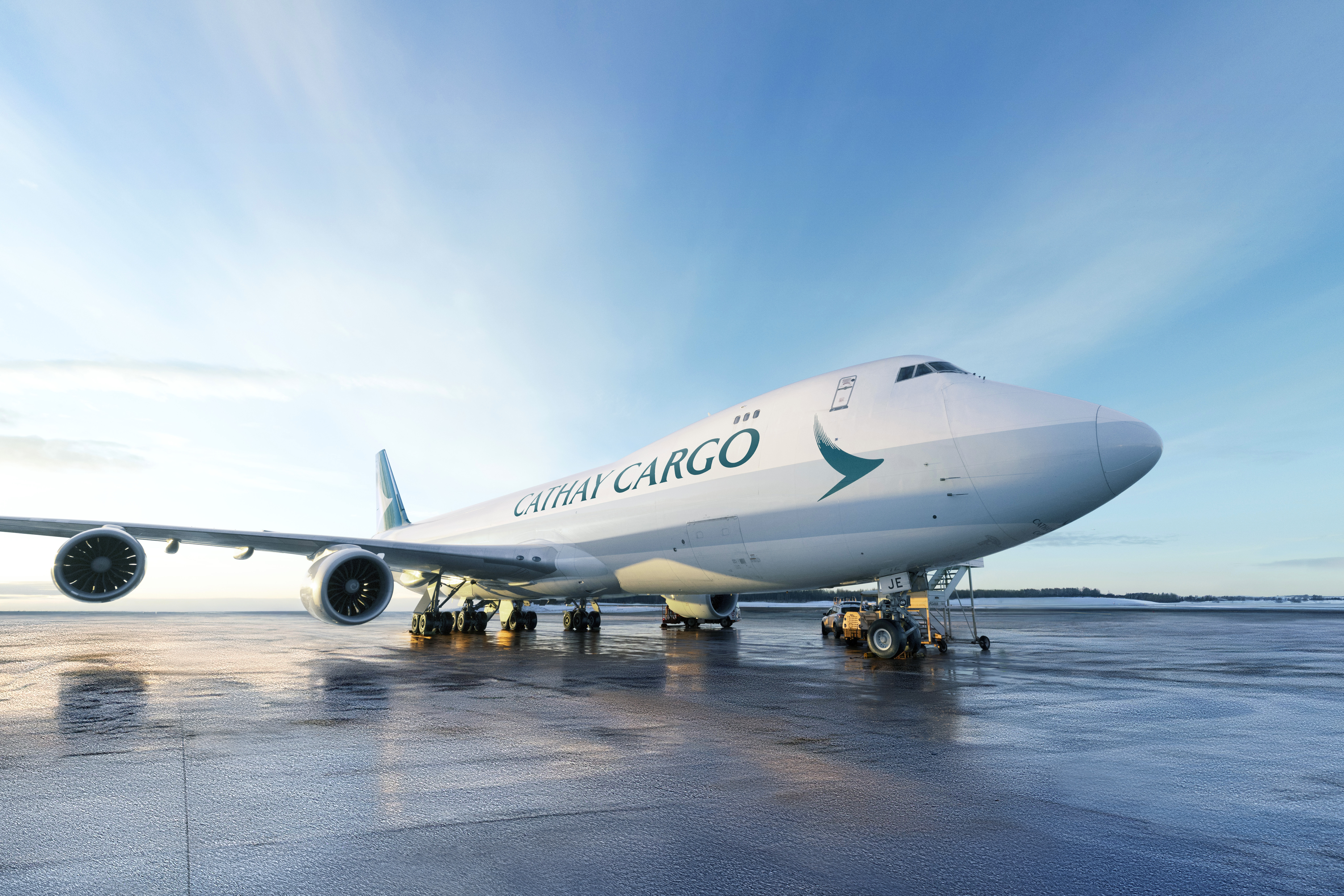
“When weather or technical delays arise, pre-arranged contingency plans activate,” Evans says, including standby aircraft and rerouting to airports equipped with appropriate animal facilities. Large consignments are typically handled via dedicated Boeing 747 charters to preserve space and environmental control, while smaller groups may be integrated into scheduled services without compromising welfare.
Cross-functional working groups spanning cargo planning, flight operations, engineering, and local cargo teams assess every risk before a shipment begins. The result, Evans argues, is a model where schedule reliability and animal welfare reinforce—rather than compete with—each other.
Beyond horses
Many of the disciplines developed for equine transport extend well beyond a single species.
“The focus on calm loading, ventilation, and contingency planning for horses reinforces welfare-centric planning for all animal types,” Evans says, whether the shipment involves pets, livestock, or conservation animals.
This translation is where live animal logistics begins to intersect meaningfully with broader cargo strategy. The same accredited teams, infrastructure investments, and planning frameworks that support elite horses are shaping how carriers approach high-touch cargo more generally—raising expectations across the network.
As one event organiser observed following Cathay Cargo’s recent equine operation, “there’s no margin for uncertainty when dealing with equine athletes,” adding that it is the “assurance and peace of mind” provided by the airline that allows riders and organisers to focus on the competition itself.
For Cathay Cargo, that assurance reflects how a modern cargo network performs when every decision—from hub design to cockpit technique—must work in concert.
This story was first published in the January-February 2026 issue of Payload Asia.