
• Skip to main content
  • Skip to primary sidebar

Ad – Bottom Content

Payload Asia

Evolving the cargo network: How legacy experience shapes a resilient, future-ready strategy

Payload Asia

  • Home
  • Latest News
  • Channels 
    • Carriers
    • Aircraft Manufacturers
    • Airports
    • Courier & Mail
    • Freight Forwarders
    • Express
    • Ground Handling & Cargo Terminals
    • Logistics
  • 12th Payload Asia Awards
    • About
    • Categories
    • 11th Payload Asia Awards
    • 10th Payload Asia Awards
    • 9th Payload Asia Awards
    • Awards Gallery
  • Subscribe
  • Advertise
  • More 
    • Event Calendar
    • Directory
    • Contact Us
Share

Leaderboard

Evolving the cargo network: How legacy experience shapes a resilient, future-ready strategy

June 12, 2026 by Monina Eugenio

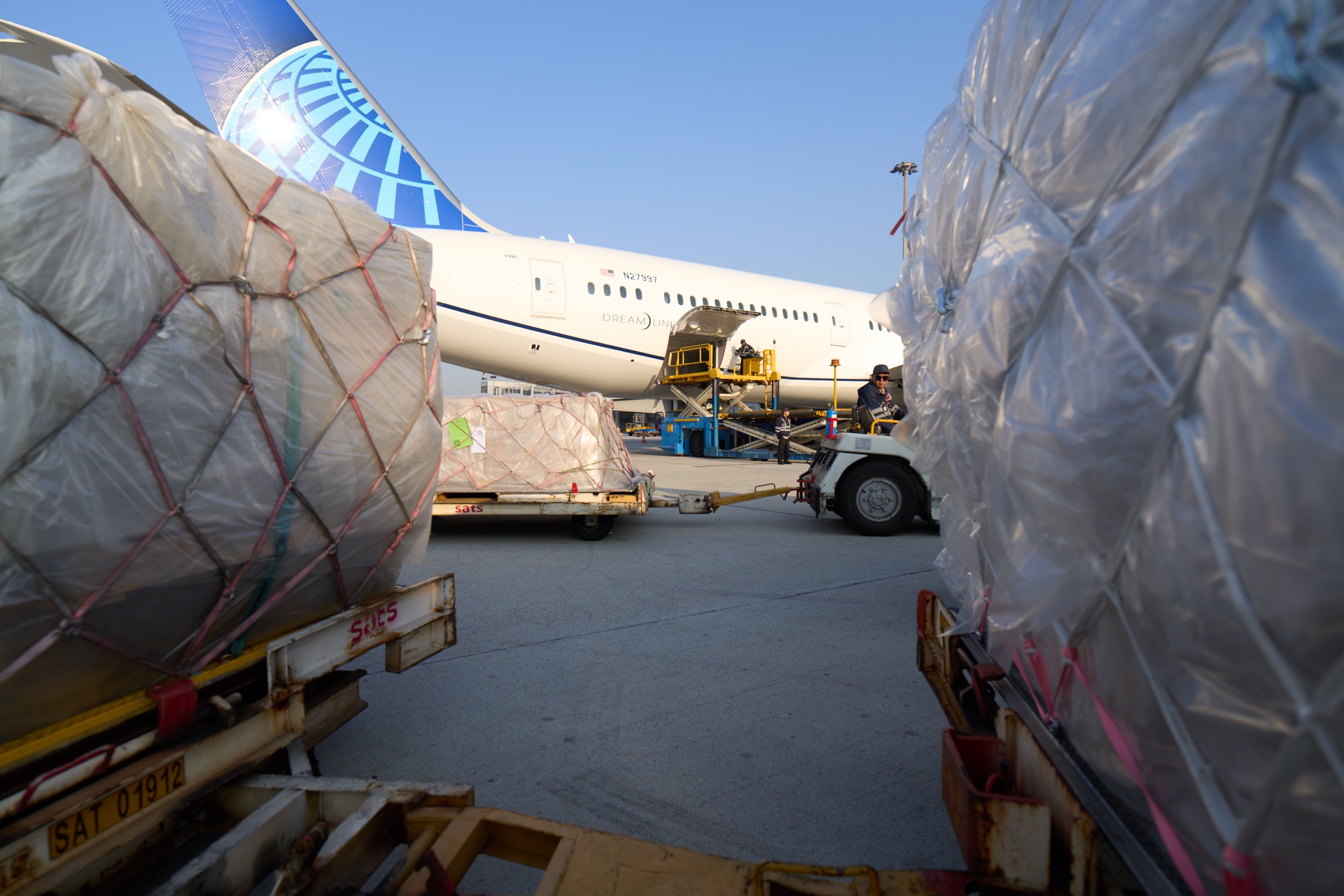
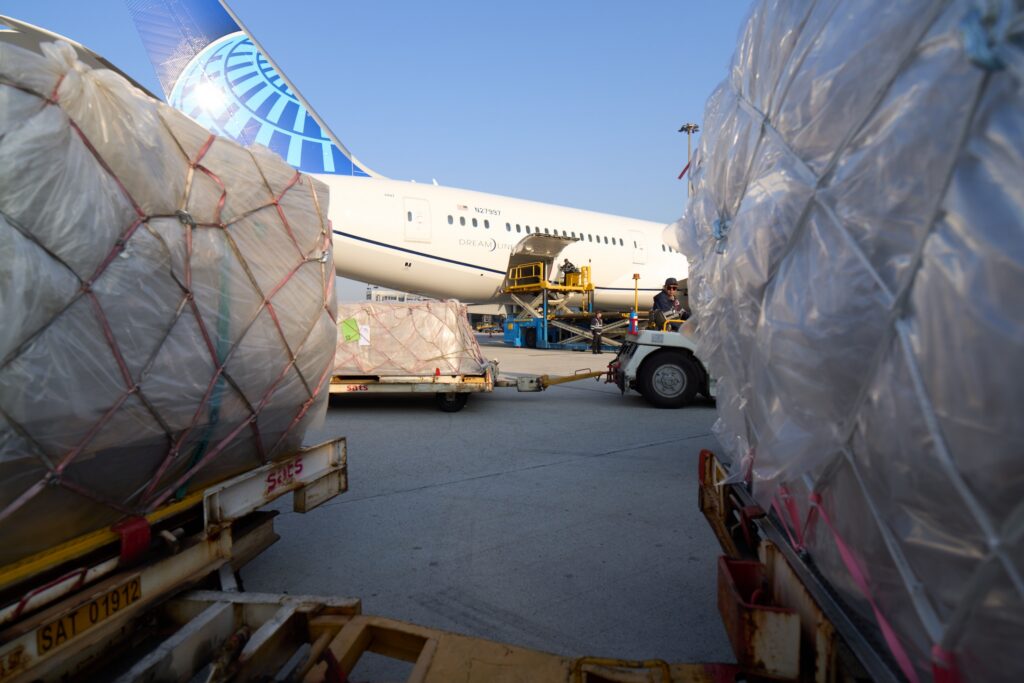
Courtesy of United Cargo

For a global carrier, a cargo network is never static. It is a living, adaptive system shaped by shifting trade flows, evolving customer expectations, and continuous fleet transformation. From the perspective of United Cargo, decades of operating within a legacy airline framework have fundamentally influenced how modern cargo networks are designed: scalable, flexible, and resilient by intent rather than by circumstance.

From passenger network strength to cargo agility
For a legacy carrier like United, the cargo network has always been intrinsically connected to the passenger network—and that connection remains one of United Cargo’s greatest strategic advantages.

United’s expansive global passenger network, built on decades of investment in routes, frequencies, and hub infrastructure, provides a powerful foundation for cargo operations. Rather than viewing cargo capacity as simply a byproduct of passenger flying, United Cargo leverages this breadth and depth as a source of flexibility, reach, and responsiveness.

A large and diversified passenger network enables access to more markets, more often. High flight frequency across key corridors increases routing options, reduces dependency on single lanes, and allows shipments to move with greater speed and reliability. The scale of the passenger operation also supports rapid adjustments, whether accommodating demand surges, navigating disruptions, or opening new trade opportunities.

As cargo demand has grown more complex, driven by e-commerce acceleration, specialised commodities, and evolving supply chain expectations, this network strength has become even more valuable. Time-sensitive and high-value shipments benefit from increased connectivity, alternative gateways, and faster recovery paths when irregular operations occur.

Balancing scale, flexibility, and resilience
Scale remains a core advantage of a global airline group. A broad route map, diverse gateways, and frequent departures provide optionality. But scale alone does not guarantee resilience. In fact, without flexibility, scale can amplify disruption.

United Cargo balances these forces through deliberate network optionality. Multiple gateways serve key trade corridors, enabling shipments to flow through alternative paths when congestion, weather, or regulatory constraints arise. Frequency across hubs supports recovery without significantly compromising transit times, while schedule diversity reduces dependency on any single flight, aircraft type, or node.

Equally important is a mindset shift: planning for variability rather than perfection. Peak seasons, harvest cycles, and promotional surges are treated as anticipated stress tests. Predefined operating playbooks and close cross-functional alignment across sales, operations, and partners enable proactive adjustments. The outcome is a network engineered to absorb volatility rather than react to it after the fact.

The role of hubs in modern cargo strategy
Hubs remain the backbone of a legacy carrier’s cargo network, but their role has evolved. Historically, hubs were primarily consolidation points. Today, they function as control centres for connectivity, speed, and recovery.

United Cargo leverages hubs not just for volume aggregation, but for decision velocity, the ability to redirect freight, prioritise time-critical shipments, and restore flow when disruptions occur. Hub proximity to major consumption markets, advanced handling facilities, and intermodal connections allows cargo to move quickly beyond the airport fence.
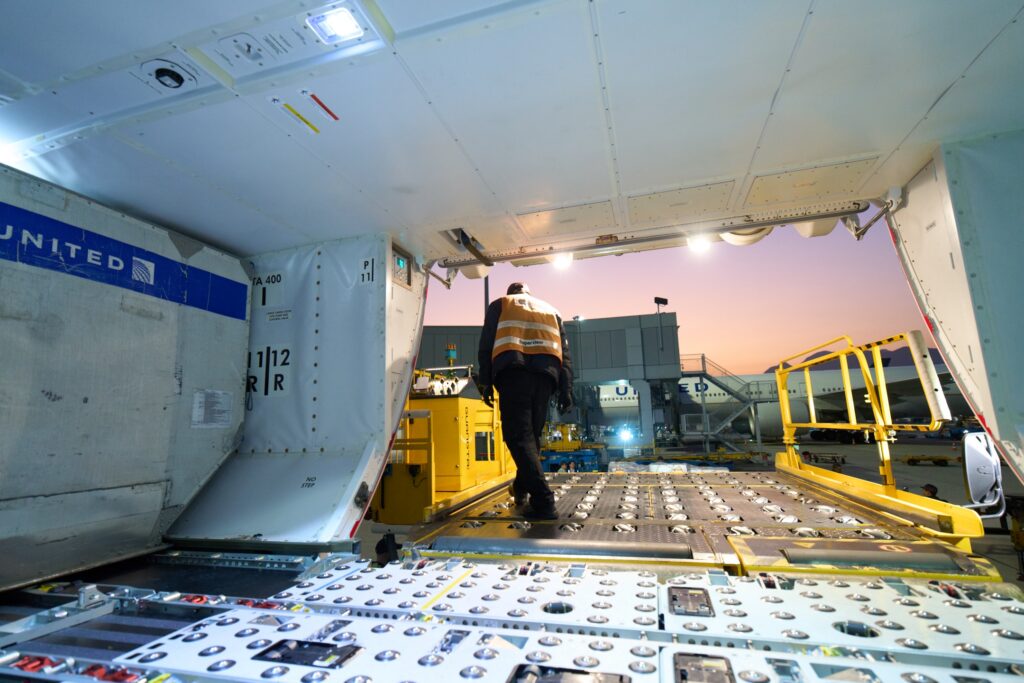
Courtesy of United Cargo

Partnerships as network multipliers
No cargo network operates in isolation. Partnerships have become central to network optimisation, extending reach and capability without adding unnecessary complexity. Strategic airline partnerships, trucking providers, handlers, and digital platforms all act as force multipliers, enhancing access, visibility, and speed.

For United Cargo, partnerships enable alignment across the supply chain – from origin to destination–ensuring that network decisions translate into real-world performance. 

Crucially, partnerships are integrated into planning, not layered on afterwards. This ensures consistency in service standards and faster execution when conditions change.

Fleet mix and network agility
Fleet composition plays a critical role in how cargo networks perform. A modern, diverse fleet provides flexibility in gauge, range, and frequency, allowing capacity to be matched more precisely to demand. Widebody aircraft support long-haul flows and high-density lanes, while narrowbody and regional assets enhance intra-regional connectivity and speed to market. The right fleet mix enables faster response to market shifts, supports new trade flows, and enhances sustainability through more efficient operations.

Letting history inform the future
Perhaps the greatest advantage of operating within a legacy carrier framework is institutional memory. Decades of navigating economic cycles, regulatory change, and global disruptions have created a deep understanding of what works and what does not, under pressure.

Looking ahead, cargo networks will continue to evolve alongside global trade, emerging technologies, and rising customer expectations. For legacy carriers, the challenge—and opportunity—is to combine the strength of scale with the agility typically associated with challengers.

At United Cargo, the network is no longer viewed simply as a map of routes. It is a strategic asset: designed to adapt, built to endure, and optimised to deliver in a world where certainty is the exception rather than the rule.

This story was first published in the January-February 2026 issue of Payload Asia.

Other Topics: air cargo network, air express, air freight services, air logistics, Asia Pacific air cargo, Asia Pacific air freight, Asia Pacific air logistics, Asia Pacific shipments, cargo flights, e-commerce logistics, express delivery, express logistics, international air shipments, international express delivery, transpacific air cargo, transpacific air freight, United Cargo

Related Articles

  • TIACA Executive Summit 2026 drew industry leadership to Warsaw
  • DHL Global Forwarding Japan launches Explosives Detection Dog screening with Sanko Total Service to enhance air cargo security and screening efficiency
  • Frankfurt Airport returns to passenger growth in May as holiday travel boosts demand
  • CEVA Logistics, Chery Auto and CMA CGM sign MoU to advance global automotive logistics collaboration
  • Glasgow Prestwick Airport signs Guangzhou agreement to strengthen China trade lanes
  • Emirates SkyCargo maps new horizons with freighter service to Almaty

Ad – After Content

Primary Sidebar

Trending News

  • CAICargoAi Unveils CargoMART Interline, revolutionising… CargoAi is proud to announce the launch of CargoMART Interline,…
  • lufthansa cargoLufthansa Cargo launches development of innovative… Lufthansa Cargo is developing a new type of virtual reality…
  • cce groupCCE Group and Emirates sign MoU to expand long-term… CCE Group and Emirates have signed a Memorandum of Understanding to explore expanded…
  • ceva logisticsCEVA Logistics reinvents healthcare cold chain in Asia From life-saving vaccines to sensitive biologics, healthcare logistics demands precision,…
  • From L to R - Christopher Lim, Praveen Gregory, Bjoern SchoonDHL Global Forwarding announces strategic leadership… DHL Global Forwarding, the freight specialist arm of DHL Group,…
  • Hactl Executive Director–Information Services John Lee (left) received the ISO IEC 27001 2022 certification from SGS Hong Kong Limited Deputy Director, Products & Services Development Chris Yau (right).Hactl’s COSAC-Plus becomes the first Hong Kong… Hong Kong Air Cargo Terminals Limited (Hactl) – Hong Kong’s largest…
  • Saudia Cargo_Payload Asia 2025Saudia Cargo named ‘Best E-Commerce Carrier –… Saudia Cargo, the leading air cargo carrier in the Middle…

Payload Asia Awards

Subscribe To
Our Newsletter


Payload Asia continues to be the authoritative source for informative, accurate and up-to-date news and information on the air cargo industry and related sectors.

With its updated and refreshed look the online edition continues to provide high quality coverage on the Asia-Pacific, India-Middle East, Europe-CIS, North & South America and Africa air cargo markets.

© 2025 Harvest Information. All rights reserved. Privacy Policy

Partner Sites : Asia Food Journal and Television Asia Plus .

We use cookies and similar technologies to improve your browsing experience.
Continuing to use this site means you agree to our use of cookies. I agreeRead More
Privacy & Cookies Policy

Privacy Overview

This website uses cookies to improve your experience while you navigate through the website. Out of these cookies, the cookies that are categorized as necessary are stored on your browser as they are essential for the working of basic functionalities of the website. We also use third-party cookies that help us analyze and understand how you use this website. These cookies will be stored in your browser only with your consent. You also have the option to opt-out of these cookies. But opting out of some of these cookies may have an effect on your browsing experience.
Necessary
Always Enabled

Necessary cookies are absolutely essential for the website to function properly. This category only includes cookies that ensures basic functionalities and security features of the website. These cookies do not store any personal information.

Non Necessary

Any cookies that may not be particularly necessary for the website to function and is used specifically to collect user personal data via analytics, ads, other embedded contents are termed as non-necessary cookies. It is mandatory to procure user consent prior to running these cookies on your website.

Analytics

Analytical cookies are used to understand how visitors interact with the website. These cookies help provide information on metrics the number of visitors, bounce rate, traffic source, etc.

Performance

Performance cookies are used to understand and analyze the key performance indexes of the website which helps in delivering a better user experience for the visitors.

Advertisement

Advertisement cookies are used to provide visitors with relevant ads and marketing campaigns. These cookies track visitors across websites and collect information to provide customized ads.

Save & Accept

Stay Updated!

Subscribe now to receive the latest news, updates, and exclusive insights. Don’t miss out!


By submitting this form, you consent to receive marketing emails from Payload Asia. You can revoke your consent to receive emails at any time by using the SafeUnsubscribe® link, found at the bottom of every email.

Disclaimer: Translations on this website are automated using Google Translate. While we strive for accuracy, please be cautious, as machine translations may contain errors. For critical or sensitive content, consider seeking professional human translation. We are not liable for any reliance on the translated content.

1