
Recognition at the Payload Asia Awards is often a reflection of consistency rather than a single standout achievement. For SATS, securing both Ground Handler of the Year – Asia Pacific and Global Ground Handler of the Year at the 12th edition of the awards underscores a broader shift in how the company is redefining cargo handling across increasingly complex and time-critical supply chains.
As cold chain, pharmaceutical, and high-value shipments take on greater prominence in Asia’s trade flows, the demands placed on ground handlers have evolved beyond speed and scale. Precision, compliance, and end-to-end visibility are now non-negotiable, and in this context, SATS has been strengthening its capabilities across infrastructure, processes, and workforce disciplines.



“SATS has evolved from a traditional cargo handler into an integrated and specialised cargo solutions partner,” says Bob Chi, CEO of APAC Gateway Services at SATS. “These capabilities create a structural advantage that cannot be easily replicated, enabling us to adapt quickly as trade flows shift and demand for specialised services increases.”
Building a network for specialised cargo
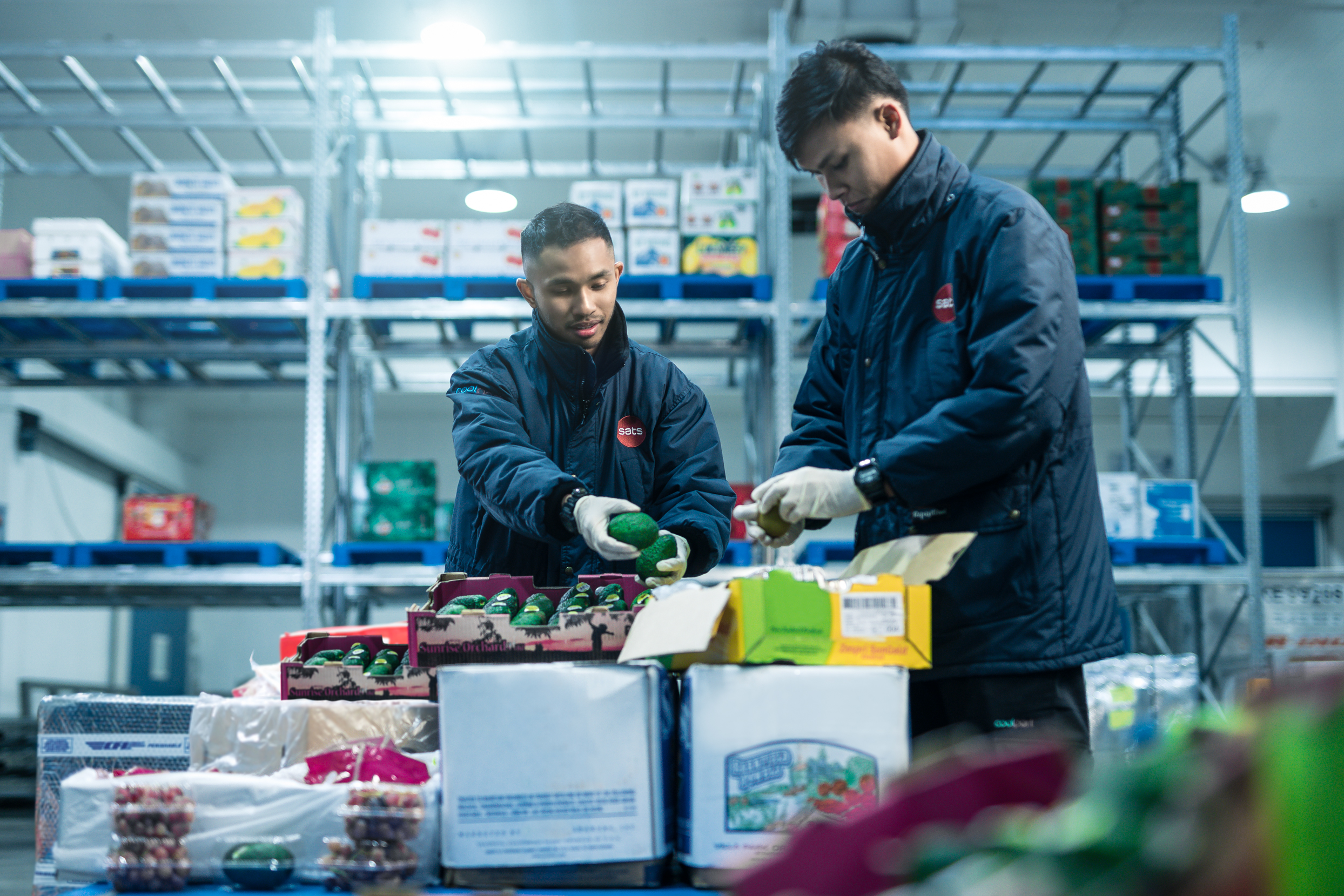
Central to this transformation is the scale and depth of SATS’ global network. Operating across more than 225 stations in 27 countries, the company has invested heavily in building out its cold chain footprint, with 42 dedicated facilities—32 of which are CEIV or GDP certified.
But expansion alone is not the defining feature. Instead, SATS has focused on strengthening consistency across the cargo journey, particularly in areas where variability has historically posed the greatest risk.
“Our focus has been on strengthening consistency across the cargo journey—particularly temperature stability, handover discipline, and end-to-end visibility,” Chi explains.
This has translated into targeted facility upgrades, process redesigns, and the gradual standardisation of procedures across its network. Programmes such as the Hub Handler of the Future initiative in Singapore are aimed at reducing manual intervention, integrating IoT-enabled tracking, and standardising processes across stations to minimise variability across the network.
At its core, the strategy reflects a clear understanding: cold chain reliability depends not on isolated excellence, but on eliminating weak links across every touchpoint.
Infrastructure designed for integrity
While process discipline is critical, the physical environment in which cargo is handled remains foundational. SATS continues to invest in specialised infrastructure designed specifically to support temperature-sensitive and high-value shipments.
Facilities such as the AISATS BLR Logistics Park at Kempegowda International Airport in Bengaluru illustrate this approach. Spanning more than 240,000 square feet, the logistics park integrates temperature-controlled storage, bonded warehousing, and secure handling zones within a single ecosystem.
By reducing the number of handling interfaces and consolidating operations within a controlled environment, SATS is able to minimise exposure risks for sensitive cargo while maintaining tighter control over the entire handling process.
“We continue to invest in specialised infrastructure to enable cold chain corridor solutions across our network,” Chi says.
Design plays an equally important role. Facility layouts are optimised to shorten transfer paths, while insulated staging areas, configurable temperature zones, and restricted access controls help mitigate both environmental and security risks.
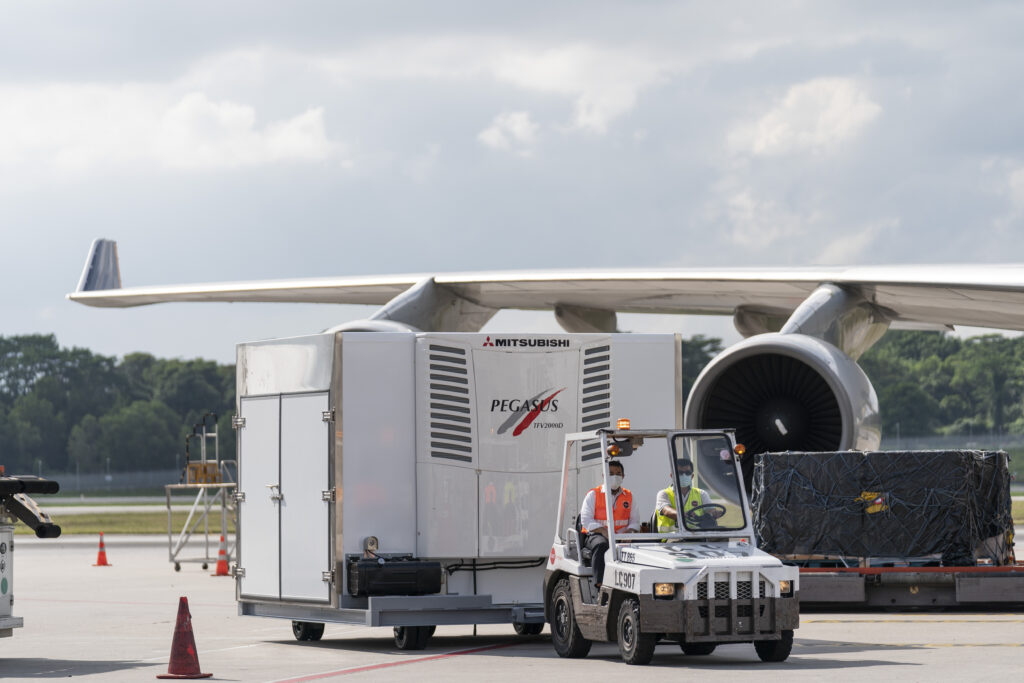
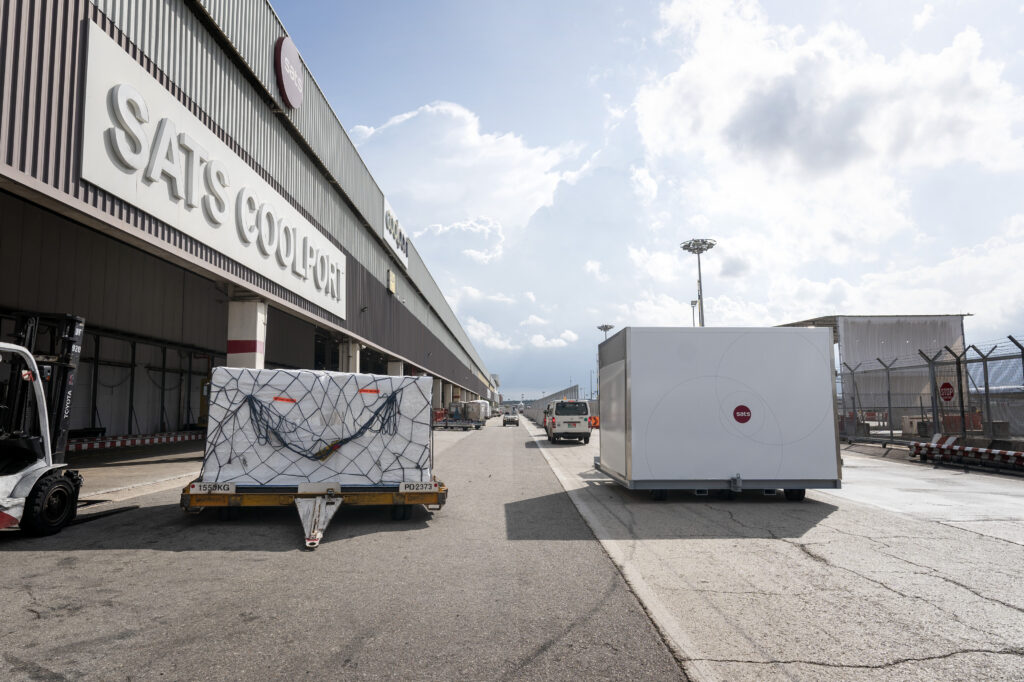
At SATS Coolport in Singapore, these principles are brought together through the company’s Cool Corridor solution—a purpose-built system that enables direct airside-to-warehouse transfer using temperature-controlled equipment such as cool dollies.
Supported by continuous monitoring, integrated building management systems, and redundant cooling mechanisms, the design ensures that temperature-sensitive cargo is protected throughout the handling process.
“Risk mitigation is embedded in design—not treated as an afterthought,” Chi notes.
Yet even the most advanced infrastructure cannot eliminate risk on its own.
Process discipline at every touchpoint
If infrastructure provides the foundation, operational discipline ensures consistency.
Nowhere is this more critical than at handover points—widely recognised as the most vulnerable stage in the cold chain. SATS addresses this through a combination of standardised processes and strict control measures, including documented chain-of-custody protocols, dual verification checks for high-value shipments, and time-stamped digital logs.
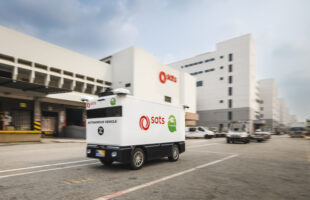
Controlled vehicle transfers between apron and warehouse further reduce variability, while continuous staff training ensures adherence to CEIV and GDP-aligned standard operating procedures.
“Infrastructure protects cargo, but disciplined process execution ensures integrity throughout the journey,” Chi says.
This emphasis on discipline also underpins SATS’ approach to balancing speed and compliance—a tension that has become more pronounced as shipment profiles grow increasingly time-sensitive.
“Speed and compliance are not trade-offs,” he adds. “When processes are engineered correctly, they reinforce each other, enabling turnaround speed to be achieved through disciplined operational design rather than procedural shortcuts.
Operational excellence means delivering both speed and reliability.
At facilities such as SATS Coolport, temperature-controlled docks and specialised equipment enable rapid transfers without breaking the cold chain, supported by continuous monitoring and pharma-trained teams operating within secure environments.
Embedding compliance into culture
Certification frameworks such as CEIV Pharma and GDP play an important role in shaping industry standards. For SATS, however, their value lies not in accreditation, but in how they influence day-to-day operations.
“Compliance is embedded into our culture—it governs how we work every day,” Chi explains.
Standard operating procedures, training programmes, audit drills, and exception reporting are all aligned with these frameworks, ensuring that compliance is not treated as a periodic requirement but as a continuous operational baseline.
This is particularly important given the scale of SATS’ network, where maintaining consistency across multiple stations and regulatory environments requires both structured processes and a shared operational mindset.
People at the core of performance
Despite increasing levels of automation and digitalisation, cold chain integrity ultimately depends on people.
SATS has placed significant emphasis on workforce capability, recognising that human error remains one of the most critical risk factors in specialised cargo handling.
“People remain at the heart of all SATS operations,” Chi says.
Training programmes are designed not only to reinforce procedures but also to build a deeper understanding of how individual actions impact the broader supply chain, from regulatory compliance to downstream delivery.
Initiatives such as the company’s “Just Culture” programme encourage open reporting of incidents and errors without fear of punishment, fostering a culture of accountability and continuous improvement.
At the same time, digital tools such as the PULSE mobile application enable frontline staff to report and track incidents in real time, strengthening both transparency and responsiveness.
Digital visibility and proactive risk management
As cargo flows become more complex, digitalisation has emerged as a critical enabler of visibility and control.
At SATS, systems such as its proprietary Cosys+ platform provide real-time tracking of shipment milestones, operational status, and special cargo requirements across its network.
Automated alerts flag deviations from defined thresholds, allowing control centres to intervene early and coordinate corrective actions. Combined with IoT-enabled sensors, monitoring platforms, and integrated dashboards, these systems provide a comprehensive view of cargo handling processes.
“Together, these technologies strengthen operational oversight and enable proactive risk management without compromising the speed required for time-critical shipments, such as pharmaceutical and high-value cargo,” Chi explains.
The result is a more resilient operating model better equipped to manage variability while maintaining service consistency.
Meeting evolving customer expectations
The shift towards more specialised cargo has also reshaped customer expectations.
Airlines and shippers are no longer looking solely for handling capacity, but for partners capable of supporting highly time-critical and sensitive shipments with precision and reliability.
“Customers now expect greater transparency, reliability, and specialised capabilities from their cargo handling partners,” Chi says.
This has driven SATS to expand its service offerings, including time-critical solutions for aircraft-on-ground (AOG) scenarios through partnerships such as its collaboration with Sterling, enabling rapid acceptance, handling, and release of urgent shipments supported by real-time updates and milestone visibility.
These capabilities reflect a broader shift in the role of ground handlers—from service providers to integrated partners within the supply chain.
Recognition and the road ahead
For SATS, its recognition at the 12th Payload Asia Awards reflects the strength of the operational systems and culture it has built across its network.
“The awards reinforce our commitment to delivering consistent service excellence across the SATS network,” Chi says.
Looking ahead, the industry is moving towards more specialised handling solutions as operators seek to mitigate commoditisation and meet the growing demands of temperature-sensitive and high-value cargo. These solutions require not only dedicated infrastructure, but also tightly controlled processes and integrated networks that strengthen reliability across the cargo journey.
SATS expects this shift to be shaped by three key enablers: AI and automation, continued investment in specialised infrastructure, and deeper network integration. Backed by investments in automation, digital cargo systems, and specialised facilities, the company is also advancing real-time visibility and proactive risk management through integrated platforms and centralised control centres.
As supply chains grow more complex, the ability to deliver both precision and pace will remain critical—with SATS continuing to strengthen the systems and processes that underpin cargo integrity at every stage of the journey.
This story was first published in the March-April 2026 issue of Payload Asia.