

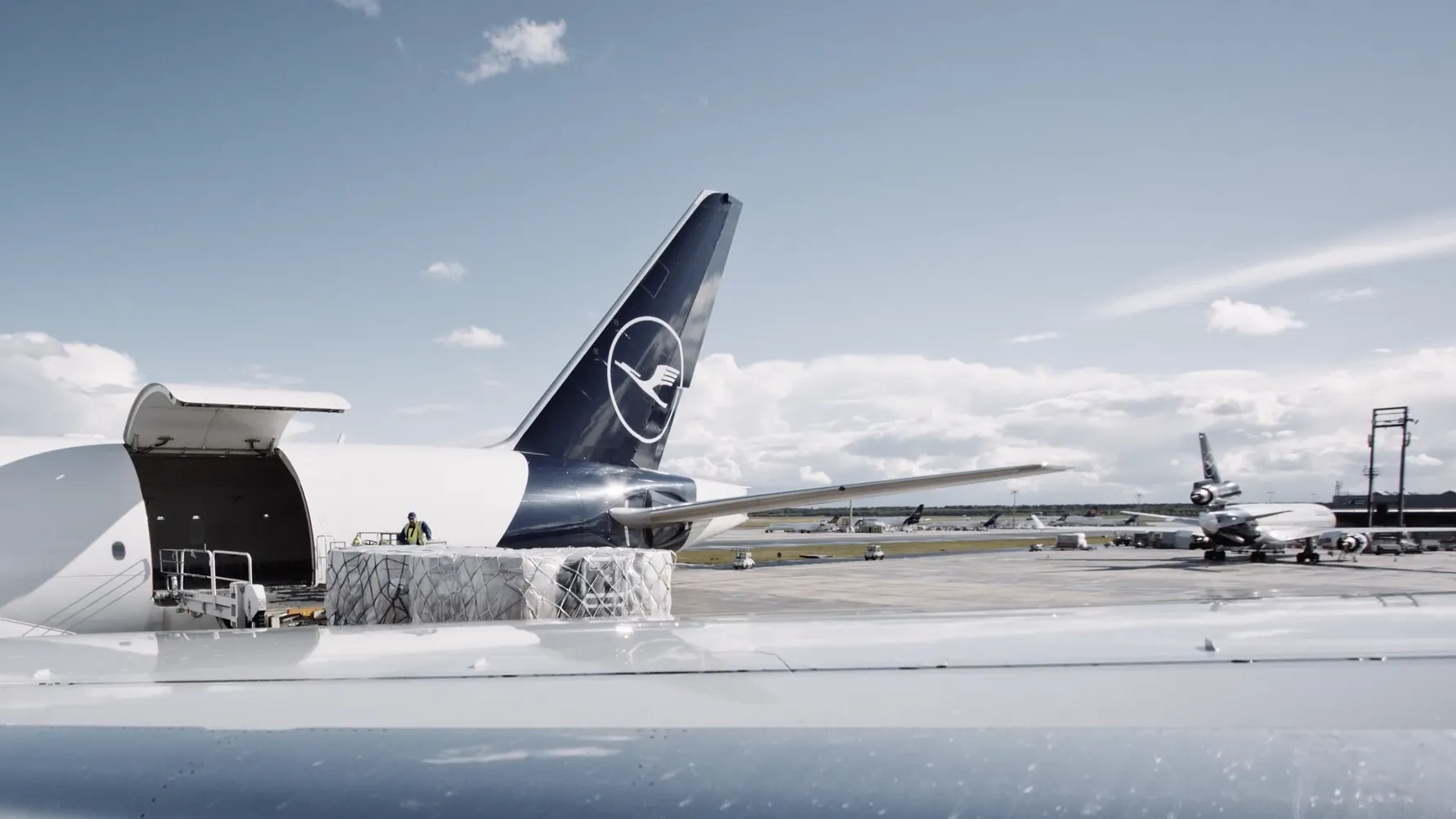
Lufthansa Cargo significantly improved its financial performance in the first half of 2026 compared with the previous year. Revenue increased by 16 percent to EUR 1.92 billion (previous year: EUR 1.65 billion), while Adjusted EBIT rose by 47 percent to EUR 199 million (previous year: EUR 135 million). The Adjusted EBIT margin improved by 2.2 percentage points to 10.4 percent (previous year: 8.2 percent).
Available cargo capacity also continued to expand during the first half of the year. A total of 7.21 billion freight tonne-kilometers (+5 percent) was offered. Capacity growth was driven in particular by increased belly capacity, including the marketing of cargo capacity on ITA Airways flights compared to the previous year.
Demand also increased, with traffic volume rising by 5 percent to 4.6 billion freight tonne-kilometers compared with the first half of 2025. As a result, the average load factor improved slightly by 0.2 percentage points to 63.8 percent.
“Alongside sustained strong market demand and continued robust business performance in Asia, we have continued our BOLD MOVES growth strategy and shaped Lufthansa Cargo’s success in the first half of 2026”, said Gregor Schleussner, CFO and CHRO of Lufthansa Cargo. “At the same time, we recognise that the global air freight market continues to be shaped by volatility, geopolitical uncertainties, rising costs, constantly evolving customer expectations, dynamic market conditions, and increasing competitive pressure. Companies that want to succeed in the long term must be faster, more efficient, and more adaptable than their competitors. This is why we continue to work hard to create the foundation for Lufthansa Cargo’s next phase of development through our BOLD MOVES strategy. Our goal is clear: by 2030, we aim to return to the ranks of the world’s top three cargo airlines.”
Since the end of 2023, BOLD MOVES has been implemented with the objective of firmly re-establishing Lufthansa Cargo among the world’s top three leading cargo airlines by 2030, based on freight tonne-kilometres. During the first two quarters of the current financial year, Lufthansa Cargo achieved several important milestones to support its future-oriented development and sustainable growth.
Successful commissioning of the ALPHA construction phase of the LCCevo infrastructure project
With the on-schedule commissioning of the ALPHA construction phase at the end of June, Lufthansa Cargo officially inaugurated the first and most important stage of the transformation of its Frankfurt cargo hub into Europe’s most advanced air cargo centre. LCCevo serves as the foundation for the gradual development of the Lufthansa Cargo Centre into Europe’s most modern air cargo hub by 2030.
The project involves investments of approximately EUR 600 million and will significantly improve efficiency and handling capacity through highly automated material handling and conveyor systems, a fully automated high-bay warehouse, and dedicated storage facilities for temperature-sensitive cargo. With LCCevo, Lufthansa Cargo is strengthening the performance and future viability of its most important hub, enhancing its competitiveness in the global air freight market, and creating the conditions for continued profitable growth.
GlobeCross strengthens cross-border logistics business
In the second quarter of 2026, Lufthansa Cargo also consolidated the activities of its former subsidiaries heyworld GmbH and CB Customs Broker GmbH under the newly established GlobeCross GmbH.
Through the new company, Lufthansa Cargo combines digital eCommerce logistics solutions with comprehensive customs expertise to provide customers with integrated end-to-end solutions for cross-border trade. The service portfolio includes digital customs services, eCommerce import terminals at key air cargo hubs, and fully integrated logistics solutions that seamlessly connect transportation, customs clearance, and final delivery.
With GlobeCross, Lufthansa Cargo is expanding its service offering beyond the traditional airport-to-airport business model, strengthening its position in the growing cross-border parcel logistics market, and creating additional growth opportunities through digital, scalable, and customer-centric logistics services.