
• Skip to main content
  • Skip to primary sidebar

Ad – Bottom Content

Payload Asia

Singapore and Japan deepen collaboration to serve rising demand for air travel

Payload Asia

  • Home
  • Latest News
  • Channels 
    • Carriers
    • Aircraft Manufacturers
    • Airports
    • Courier & Mail
    • Freight Forwarders
    • Express
    • Ground Handling & Cargo Terminals
    • Logistics
  • 12th Payload Asia Awards
    • About
    • Categories
    • 11th Payload Asia Awards
    • 10th Payload Asia Awards
    • 9th Payload Asia Awards
    • Awards Gallery
  • Subscribe
  • Advertise
  • More 
    • Event Calendar
    • Directory
    • Contact Us
Share

Leaderboard

Singapore and Japan deepen collaboration to serve rising demand for air travel

November 20, 2024 by PLA Editor

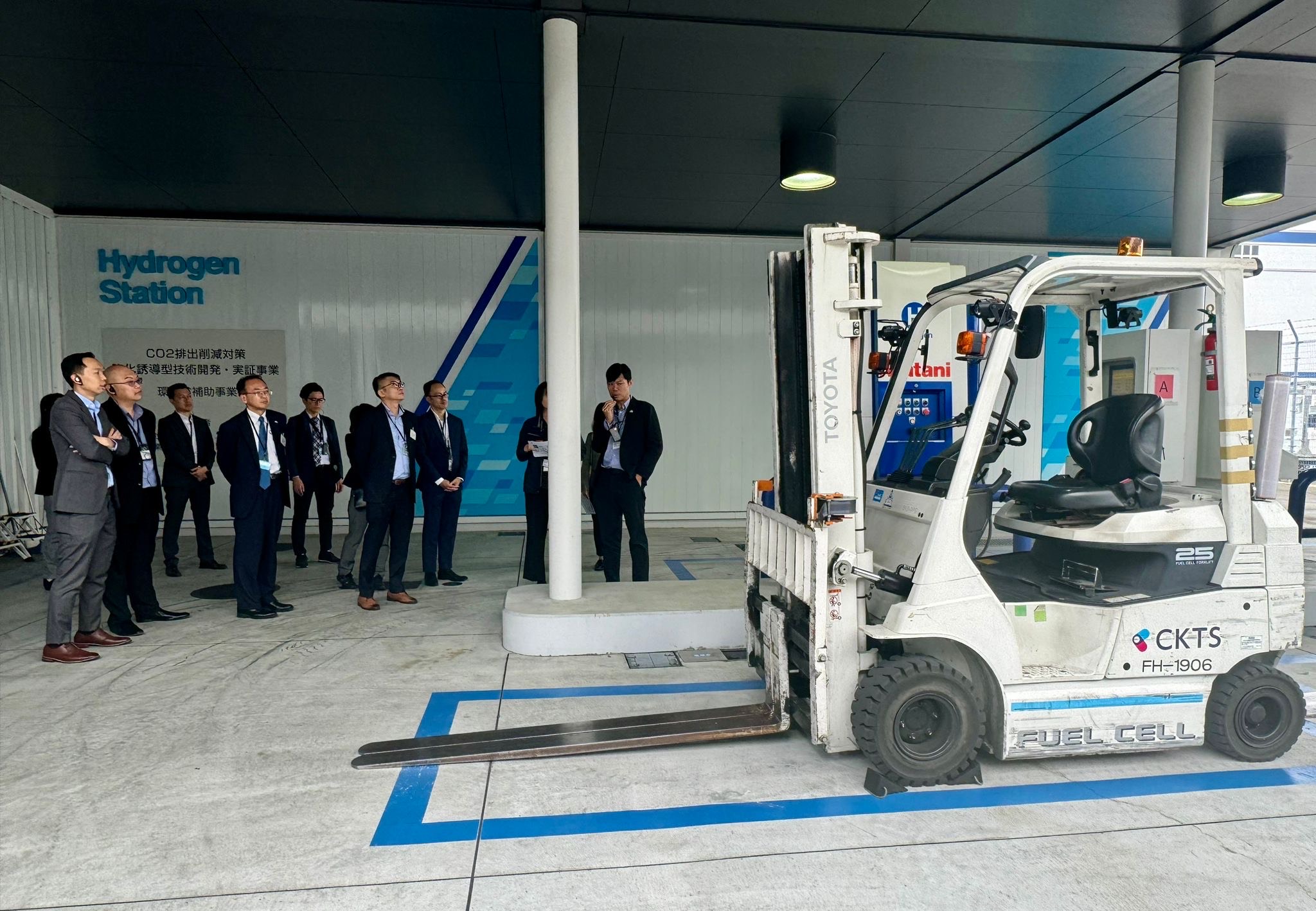
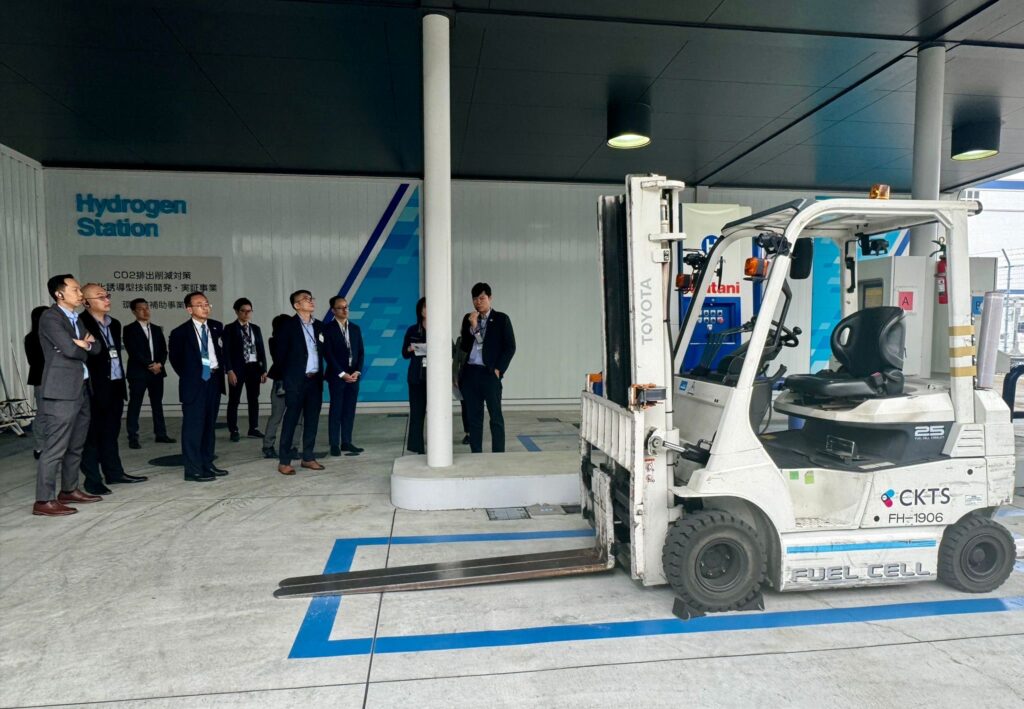
JCAB hosted CAAS to a visit to the Hydrogen Fuelling Station for hydrogen fuel-power cell power ground support vehicles at Kansai International Airport

At the 3rd Singapore-Japan Dialogue on Aviation Collaboration co-chaired by Civil Aviation Authority of Singapore (CAAS) Director-General Han Kok Juan and Japan Civil Aviation Bureau (JCAB) Senior Deputy Director-General Onuma Toshiyuki, in Kansai, Japan on 14 and 15 November 2024, the two civil aviation authorities agreed to deepen collaboration in air connectivity, sustainable aviation, aviation safety, air traffic management, aviation innovation, and unmanned aircraft systems (UAS) and advanced air mobility (AAM), to serve rising demand for global air travel which is expected to at least double over the next 20 years.

Air connectivity
Air travel between Singapore and Japan has recovered strongly over the last year. As of November 2024, the number of weekly flights between the two countries – 165 weekly passenger services operated by seven air carriers – was at close to 90% of pre-COVID levels, compared to 70% a year ago. CAAS and JCAB expect air travel between the two countries to fully recover in 2025 and agreed to work together to further grow air connectivity and improve flight punctuality and efficiency to better serve passengers.

Sustainable aviation
Recognising the important contribution of sustainable aviation fuels (SAF) to achieving net zero aviation emissions by 2050, CAAS and JCAB will explore opportunities to open more SAF feedstocks and production pathways for the region and contribute to the expansion of supply of CORSIA Eligible Fuels (CEF). Besides SAF, CAAS and JCAB will also start conversation for future collaborative activities on hydrogen as a complementary pathway for decarbonisation, such as sharing information on the deployment of hydrogen-powered airside vehicles. As part of the Dialogue, JCAB hosted CAAS to visits to hydrogen-filling stations for hydrogen fuel-cell powered ground support vehicles at Osaka International Airport and Kansai International Airport.

Aviation safety
CAAS and JCAB are working together to learn from the Haneda incident and on measures to enhance aviation safety, particularly runway safety, as air travel volume grows. These include harnessing technology to prevent potential runway incursions, implementing a runway safety action plan to enhance runway safety in a comprehensive manner and strengthening collaboration amongst all relevant stakeholders which impact runway safety, including airlines, airport operators, ground handling companies and air navigation service providers.

Air Traffic Management (ATM)
CAAS and JCAB shared initiatives in User Preferred Route (UPR) which allow pilots to choose more efficient and direct routes to their destinations without having to stick to predefined routes, thus saving flight times and reducing carbon emissions.

Both parties agree to encourage the adoption of UPR in the region. Japan introduced the Ground Based Augmentation System (GBAS) Landing System (GLS) which is under operational trial at Haneda Airport. GLS is a state-of-the-art technology toenhance the safety and efficiency of aircraft landings using satellite-based guidance information. Japan also provided updates on the status of GNSS (Global Navigation Satellite System) Radio Frequency Interference (RFI) in Japan and both sides will cooperate to mitigate the risks.

Aviation innovation
CAAS and JCAB agreed to work together to better leverage technology to increase capacity and productivity, to meet rising demand for air travel. On 10 November 2024, Narita Airport has signed a Joinder Agreement to join the International Aviation Lab, alongside Airbus, Boeing, CAAS, Changi Airport Group (CAG), International Airlines Group (IAG), International Centre for Aviation Innovation (ICAI), SATS Ltd, Singapore Airlines and Singapore University of Technology and Design (SUTD). The International Aviation Lab is set up to develop innovative solutions for the transformation of airport operations around the world. Narita Airport’s participation will allow the Lab to benefit from Japan’s wealth of expertise in airport operations and its technology ecosystem. As part of the 3rd Singapore-Japan Dialogue, CAAS visited the Osaka International Airport and Kansai International Airport to view various airport innovation projects including the Mototok pushback tug and the Automated Passenger Loading Bridge.

UAS and AAM
Recognising the rapid advancement and tremendous opportunities in this field, CAAS and JCAB will work together to develop robust regulations to facilitate and support the safe integration of UAS and AAM operations with conventional aviation in the Asia-Pacific region. Singapore and Japan are active members of the Meeting of Asia-Pacific Regulators on AAM and UAS, working alongside 22 other Asia-Pacific States and Administrations to develop AAM and UAS reference materials which will be published by mid-2025.8 The annual Singapore-Japan Dialogue on Aviation Collaboration follows the signing of a Memorandum of Cooperation (MOC) in 2022 which established a strategic framework for civil aviation collaboration between Singapore and Japan.

Mr Han Kok Juan, Director-General of CAAS said, “The 3rd Singapore-Japan Dialogue marks a significant milestone in Singapore’s civil aviation partnership with Japan, with a shared commitment for the two major air hubs in the Asia-Pacific region to work together to share expertise to position for growth and meet rising demand for air travel. CAAS also warmly welcomes Narita Airport joining the International Aviation Lab. Its participation will allow the Lab to benefit from Japan’s deep technological and operational expertise and is an affirmation of the transformative value the Lab can bring to airport operations around the world.”

Mr Onuma Toshiyuki, Senior Deputy Director-General of JCAB expressed his satisfaction and appreciation for having witnessed great progress of cooperation to address many challenges. He emphasized that two authorities have paved the way for the future collaboration through three meetings they have held so far. He also wished to further continue this cooperative action and to have a lot of opportunities to discuss individually or in the context of the regional or global meetings.
Other Topics: air cargo network, air express, air freight services, air logistics, Asia Pacific air cargo, Asia Pacific air freight, Asia Pacific air logistics, Asia Pacific shipments, cargo flights, Civil Aviation Authority of Singapore, e-commerce logistics, express delivery, express logistics, international air shipments, international express delivery, Japan Civil Aviation Bureau, transpacific air cargo, transpacific air freight

Related Articles

  • Clark International Airport Corporation stakes its claim as a regional logistics hub
  • New white paper: How stronger air cargo networks could unlock multi-billion dollar opportunities and healthcare access in sub-Saharan Africa
  • dnata scales up in Milan with cargo expansion
  • GA Telesis MRO Services Group signs multi-year agreement to overhaul landing gears for a large cargo carrier
  • Cargo iQ presents two new awards at quality-rally to recognise collaboration on key industry challenges
  • ACI: Asia-Pacific and Middle East will continue to lead global air cargo growth through 2028

Ad – After Content

Primary Sidebar

Trending News

  • CAICargoAi Unveils CargoMART Interline, revolutionising… CargoAi is proud to announce the launch of CargoMART Interline,…
  • lufthansa cargoLufthansa Cargo launches development of innovative… Lufthansa Cargo is developing a new type of virtual reality…
  • cce groupCCE Group and Emirates sign MoU to expand long-term… CCE Group and Emirates have signed a Memorandum of Understanding to explore expanded…
  • ceva logisticsCEVA Logistics reinvents healthcare cold chain in Asia From life-saving vaccines to sensitive biologics, healthcare logistics demands precision,…
  • From L to R – Christopher Lim, Praveen Gregory, Bjoern SchoonDHL Global Forwarding announces strategic leadership… DHL Global Forwarding, the freight specialist arm of DHL Group,…
  • Saudia Cargo_Payload Asia 2025Saudia Cargo named ‘Best E-Commerce Carrier –… Saudia Cargo, the leading air cargo carrier in the Middle…
  • caasCAAS sets up Singapore Sustainable Aviation Fuel… The Civil Aviation Authority of Singapore (CAAS) has set up…

Payload Asia Awards

Subscribe To
Our Newsletter


Payload Asia continues to be the authoritative source for informative, accurate and up-to-date news and information on the air cargo industry and related sectors.

With its updated and refreshed look the online edition continues to provide high quality coverage on the Asia-Pacific, India-Middle East, Europe-CIS, North & South America and Africa air cargo markets.

© 2025 Harvest Information. All rights reserved. Privacy Policy

Partner Sites : Asia Food Journal and Television Asia Plus .

We use cookies and similar technologies to improve your browsing experience.
Continuing to use this site means you agree to our use of cookies. I agreeRead More
Privacy & Cookies Policy

Privacy Overview

This website uses cookies to improve your experience while you navigate through the website. Out of these cookies, the cookies that are categorized as necessary are stored on your browser as they are essential for the working of basic functionalities of the website. We also use third-party cookies that help us analyze and understand how you use this website. These cookies will be stored in your browser only with your consent. You also have the option to opt-out of these cookies. But opting out of some of these cookies may have an effect on your browsing experience.
Necessary
Always Enabled

Necessary cookies are absolutely essential for the website to function properly. This category only includes cookies that ensures basic functionalities and security features of the website. These cookies do not store any personal information.

Non Necessary

Any cookies that may not be particularly necessary for the website to function and is used specifically to collect user personal data via analytics, ads, other embedded contents are termed as non-necessary cookies. It is mandatory to procure user consent prior to running these cookies on your website.

Analytics

Analytical cookies are used to understand how visitors interact with the website. These cookies help provide information on metrics the number of visitors, bounce rate, traffic source, etc.

Performance

Performance cookies are used to understand and analyze the key performance indexes of the website which helps in delivering a better user experience for the visitors.

Advertisement

Advertisement cookies are used to provide visitors with relevant ads and marketing campaigns. These cookies track visitors across websites and collect information to provide customized ads.

Save & Accept

Stay Updated!

Subscribe now to receive the latest news, updates, and exclusive insights. Don’t miss out!


By submitting this form, you consent to receive marketing emails from Payload Asia. You can revoke your consent to receive emails at any time by using the SafeUnsubscribe® link, found at the bottom of every email.

Disclaimer: Translations on this website are automated using Google Translate. While we strive for accuracy, please be cautious, as machine translations may contain errors. For critical or sensitive content, consider seeking professional human translation. We are not liable for any reliance on the translated content.

1