
As global supply chains evolve amid shifting economic landscapes and growing demand across Asia, Singapore’s Changi Airport stands as a beacon of innovation and resilience in air cargo. In 2024, the airport handled close to 2 million tonnes of freight—a 15 percent year-on-year increase, thus reinforcing its role as a vital gateway connecting Southeast Asia to the world’s fastest-growing manufacturing and logistics markets.

Spearheading this transformation is Lim Ching Kiat, Executive Vice President for Air Hub & Cargo Development at Changi Airport Group (CAG). Under his leadership, Changi is not only expanding capacity but fundamentally future-proofing its cargo ecosystem. By integrating ambitious infrastructure development, cutting-edge digital solutions, and sector-specific partnerships, Lim and his team are positioning Changi to meet the complex demands of tomorrow’s global trade landscape.


“The Changi air cargo hub has remained focused on the fundamentals of building a well-connected hub, strengthening operational excellence, and serving customer needs to enhance our value proposition and establish new competitive advantages,” Lim says.
Planning for the next phase
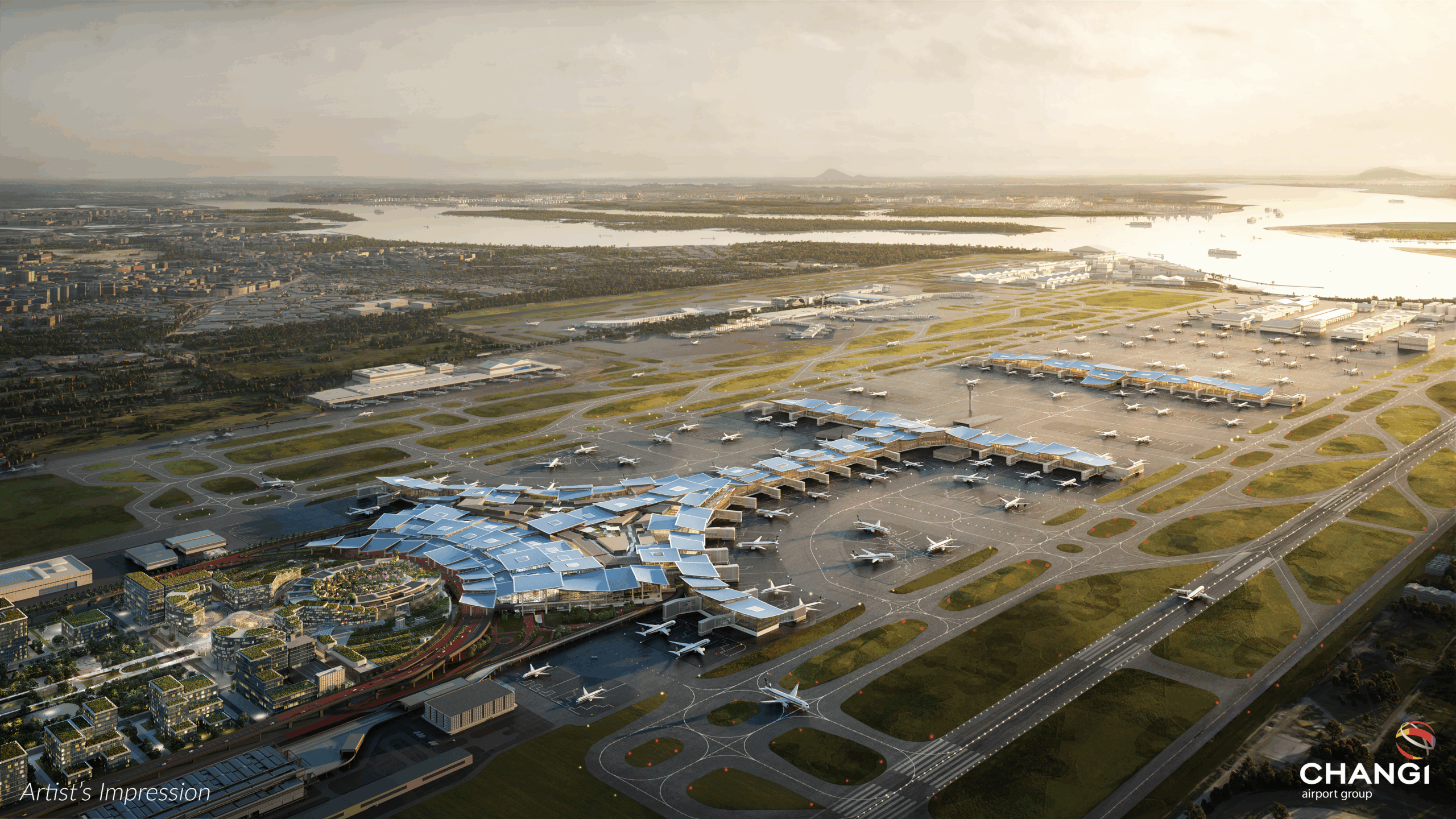
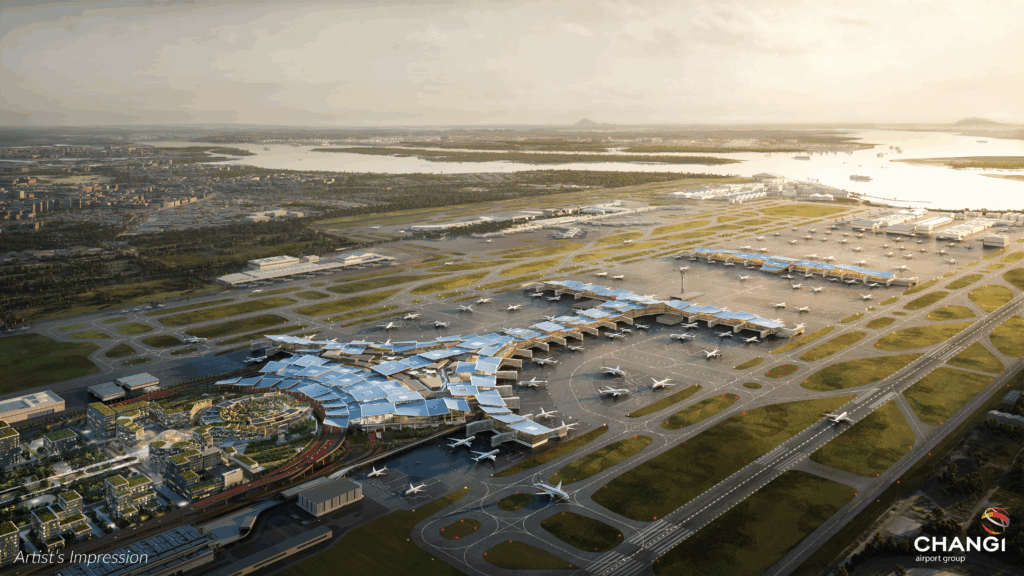
A key part of Changi’s long-term vision is its upcoming Terminal 5, part of the expansive Changi East Development. Slated to open in the mid-2030s, the new terminal will be seamlessly connected to the airport’s existing facilities, enabling Changi to function as a single, integrated air hub. Also in the pipeline is the Changi East Industrial Zone (CEIZ), which will serve growing needs for airfreight, express, and MRO (maintenance, repair, and overhaul) services.
When complete, these developments are expected to increase Changi’s cargo handling capacity from 3 million to 5.4 million tonnes per annum, reinforcing its ability to support long-term growth across the Asia Pacific. According to the Airports Council International, Asia Pacific will be among the fastest-growing air travel markets in the next two decades. The International Monetary Fund (IMF) projects 4% YoY GDP growth for Southeast Asia—outpacing global averages—and Changi is poised to meet the corresponding rise in both passenger and cargo demand.
The Changi East Development is also designed as an airport of the future, with a strong focus on automation and robotics. Changi plans to implement Next Generation Integrated Operations for airport-wide management, powered by intelligent systems and data. Trials for autonomous mobility are also in the works, including applications for the transfer of baggage, passengers, and cargo.
“With land intensification, operational excellence, sustainability, and process innovation as the core planning parameters, CEIZ will better serve airfreight, air express and MRO activities at Changi Airport,” says Lim.
In line with this transformation, the Changi Airfreight Centre will be remodelled and supported by new infrastructure, including the Airport Logistics Park of Singapore (ALPS 2), announced in late 2024 to expand capacity beyond the original ALPS.
Connecting cargo with digital infrastructure
While infrastructure provides the backbone of Changi’s growth, digitalisation has become the connective tissue driving performance and innovation. In 2020, CAG launched the Changi Air Cargo Community System, focusing on practical use cases that solve operational pain points. One such initiative is the Truck Dock Slot Booking (TDSB) system, which reduces landside congestion and dwell times.
“Today, based on early results, 90 percent of export cargo is now cleared via TDSB, reducing the waiting time of drivers by up to 30 percent for those who arrived on booked slots,” Lim notes.
Changi plans to extend this system to import cargo collection, with the goal of transforming traditional landside processes end-to-end. Government partners have embraced the shift: Singapore’s Immigration & Checkpoints Authority (ICA) now enables 95 percent of import cargo vehicles to be cleared digitally through its paperless system.
A global standard in pharma logistics
Pharmaceutical cargo has emerged as one of the fastest-growing segments in Changi’s airfreight portfolio. Through its Pharma@Changi initiative—Asia Pacific’s largest community of CEIV Pharma-certified stakeholders—the airport continues to strengthen pharma handling standards across the full value chain.
“We continue to maintain Changi’s status as the first and largest community of CEIV Pharma certified companies in Asia Pacific,” Lim highlights.
Changi is also a co-founder of Pharma.Aero, a global platform that connects pharma shippers and CEIV-certified airport communities. As part of this collaboration, CAG co-led the Green Air Pharma Logistics (GAPL) project, which developed a Lane Sustainability Readiness Index (LSRI) to help pharmaceutical manufacturers and forwarders integrate sustainability into freight procurement and lane assessment.
A greener cargo future
Sustainability is another cornerstone of Changi’s future-ready cargo blueprint. The airport is targeting a 20% reduction in Scope 1 and 2 emissions by 2030 and aims to reach net zero by 2050.
Efforts are already underway, including the installation of a large-scale solar photovoltaic system on terminal rooftops—including the Cargo Agent Buildings—expected to generate enough energy to offset up to 19,000 tonnes of carbon emissions annually.
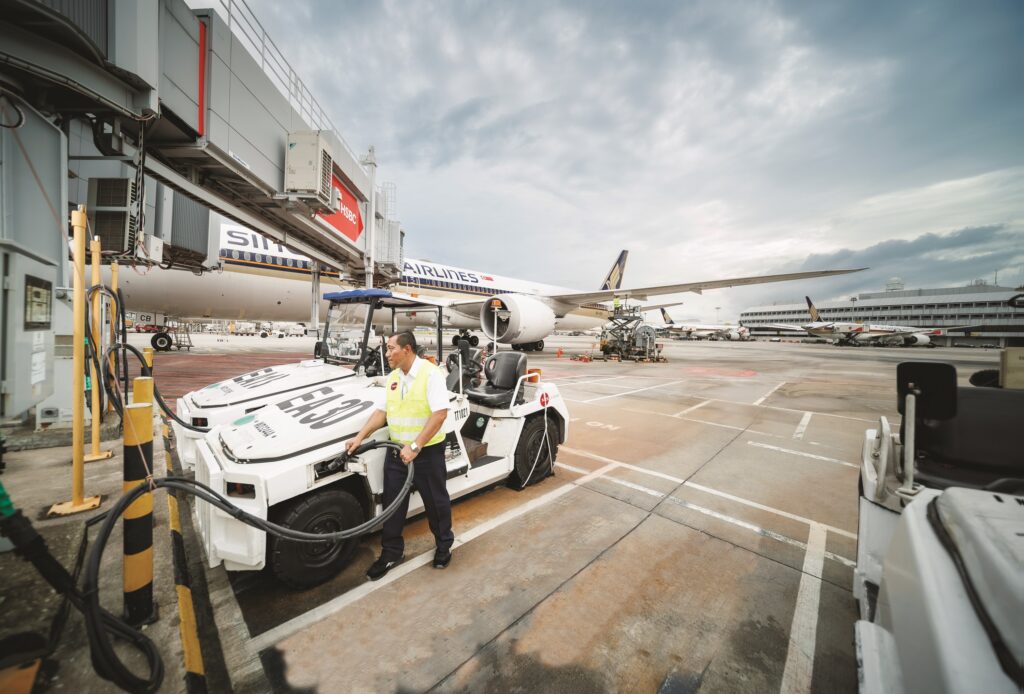
On the ground, CAG has made significant strides in electrifying its airside operations, with over 100 EV charging points already in place to support an all-electric baggage tractor fleet. From 2025, all new airside light vehicles, tractors, and forklifts will be required to be electric-powered, with a target for all airside vehicles to run on cleaner energy by 2040. For vehicles without viable electric alternatives, renewable diesel trials are ongoing. Plans are also in motion to expand the airport’s charging network to over 300 points, including upgrades to the Changi Airfreight Centre to support broader EV adoption.
From 2026, all departing flights from Singapore will be required to use Sustainable Aviation Fuel (SAF), starting with a 1% blend. CAG is working closely with the Singapore government and airline partners to encourage broader adoption of SAF in the years ahead.
Integrated by land, sea, and sky
Changi’s strategic location—alongside one of the world’s busiest container ports—positions it well for multimodal logistics. In collaboration with PSA Singapore, the airport is enabling smoother cargo transfers between air and sea, supported by modern infrastructure and close proximity between terminals.
“Intermodal transport has emerged as an alternative and risk mitigation transportation strategy,” says Lim, adding that it helps businesses “overcome geographical challenges, enable cost efficiencies in transporting products to new markets while securing supply chain resilience.”
Building a future-ready workforce
Beyond infrastructure and systems, Lim emphasises the importance of preparing Changi’s people for the future. CAG is actively investing in upskilling across three core areas: Innovation, Data and Digital, and Leadership.
To support this, the airport has established in-house Centres of Excellence that offer workshops on topics such as AI, data analytics, and robotic process automation. CAG also empowers employees and managers to build adaptive leadership skills and decision-making under uncertainty.
“These skills help employees build an optimal mindset and prepare them to be ready for the future of work,” Lim adds.
The long view
Looking ahead, CAG’s strategy hinges on sustaining Changi’s position along major trade lanes and adapting to a logistics environment marked by growth, competition, and uncertainty. With the right mix of infrastructure, digital systems, sustainability frameworks, and collaborative partnerships, Changi Airport is preparing not just for the next wave—but for the long haul.
This story was first published in the July-August 2025 issue of Payload Asia.