

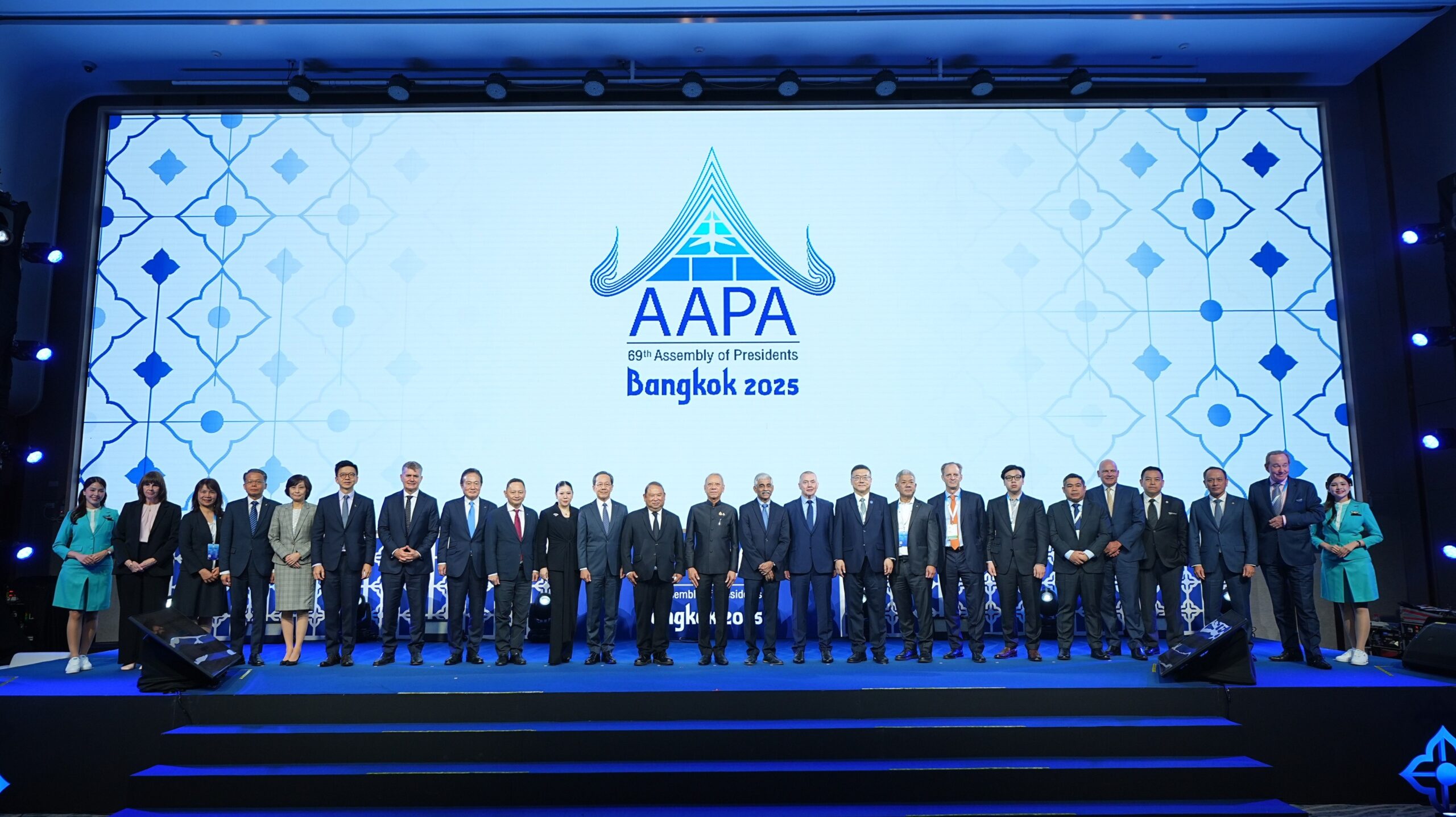
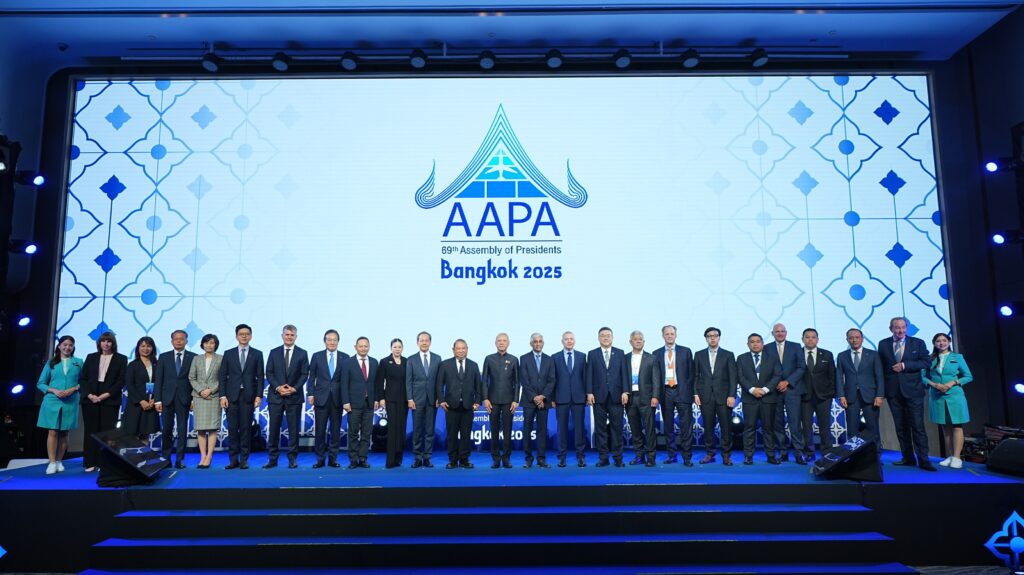
Optimism was the prevailing tone as Asia Pacific’s airline leaders convened in Bangkok from 14–15 November 2025 for the 69th Association of Asia Pacific Airlines (AAPA) Assembly of Presidents. And the confidence is well-founded: the region handles 35% of global air traffic, boasts the world’s fastest cargo growth, and is poised to dominate aviation’s future. Against this backdrop, airline executives outlined strategies to ensure that infrastructure, workforce development, and sustainability progress can keep pace with rising demand.
While global aviation continues to navigate supply chain constraints and evolving regulatory landscapes, discussions at the Assembly underscored strong confidence in the Asia Pacific’s position as the world’s most dynamic and fastest-growing aviation market.
Strong demand anchors growth momentum
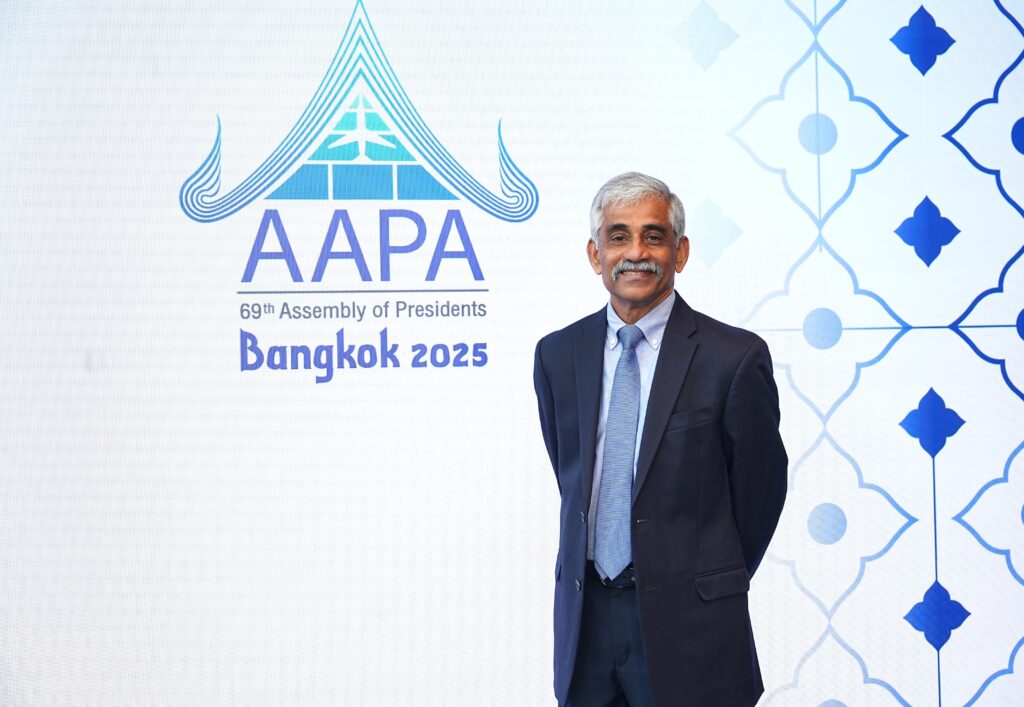
AAPA Director General Subhas Menon opened the Assembly by highlighting the region’s robust performance in both passenger and cargo markets. Passenger load factors have reached 82%, while cargo load factors remain elevated at 60%, supported by resilient intra-Asia trade and the ongoing expansion of cross-border e-commerce.
“Asia Pacific is not only the largest but also the fastest-growing air cargo market,” Menon noted, emphasising that cargo growth remains 50% above global averages.
The region’s long-term outlook was echoed across the programme. International Civil Aviation Organisation (ICAO) Asia Pacific Regional Director Tao Ma noted that Asia Pacific accounts for 35% of global traffic and could reach nearly 50% by 2043, with air cargo expected to rise from 260 billion FTK (Freight Tonne Kilometres) in 2024 to 638 billion FTK by 2050.
IATA Director General Willie Walsh described the Asia Pacific as “the most exciting aviation market in the world,” underpinned by strong demographics and expanding middle-class consumption.
A shared resolve to strengthen global supply chains
Supply chain recovery dominated the panel discussions, with OEM leaders acknowledging that airlines across the region continue to face acute shortages of parts, engines, and skilled labour. As GE Aerospace’s Nakul Gupta put it, “We are truly united in that challenge… the airlines don’t have enough parts and engines, and if they can’t get the parts, they can’t fly.”
While no new timelines were announced, panellists emphasised practical fixes and deeper supplier engagement. Boeing highlighted its “boots-on-the-ground” model in Southeast Asia—working directly with suppliers on lean manufacturing, certification, specialised training, and aggregation strategies to strengthen quality and resilience.
Airbus detailed its extensive regional ecosystem, including 1,700 suppliers contributing €7 billion to global production lines. The company also pointed to expanded infrastructure, such as its global flight operations hub in Bangkok, and the deployment of teams into second-, third-, and fourth-tier suppliers to identify vulnerabilities earlier.
Advancing sustainability through regional action
Sustainability remained a major focus, with airlines, regulators, and industry partners outlining pathways to reduce emissions and scale sustainable aviation fuel (SAF) production.
Countries such as Malaysia and Thailand have introduced voluntary 1% SAF blending mandates, while Singapore is moving ahead with the world’s first SAF levy on departing passengers beginning in 2026.
Airlines also showcased concrete initiatives underway. Air New Zealand uses AI-driven tools to model onboard consumption and reduce food waste, while Malaysia Aviation Group has eliminated 15.4 million single-use plastic items and is expanding AI-enabled meal planning with a target of 100% pre-order meals by 2030.
Panellists acknowledged that SAF availability remains limited today, but momentum is building as more governments adopt supportive frameworks and producers invest in capacity.
AAPA’s sustainability resolution reaffirmed the region’s commitment to achieving 5% SAF usage by 2030, calling for harmonised policies, SAF accounting systems, and continued innovation.
Building the workforce of the future
Talent development emerged as a critical enabler of the Asia Pacific’s long-term growth. According to ICAO, the region will require 300,000 pilots, 300,000 maintenance engineers, and 500,000 cabin crew by 2037 to support its expanding aviation ecosystem.
AAPA’s manpower resilience resolution urged governments and industry partners to deepen investment in aviation education, expand training pathways, and promote diversity and inclusion across the workforce pipeline.
“There is tremendous opportunity for Asia to build the talent and infrastructure needed to support the next wave of aviation growth,” Menon said.
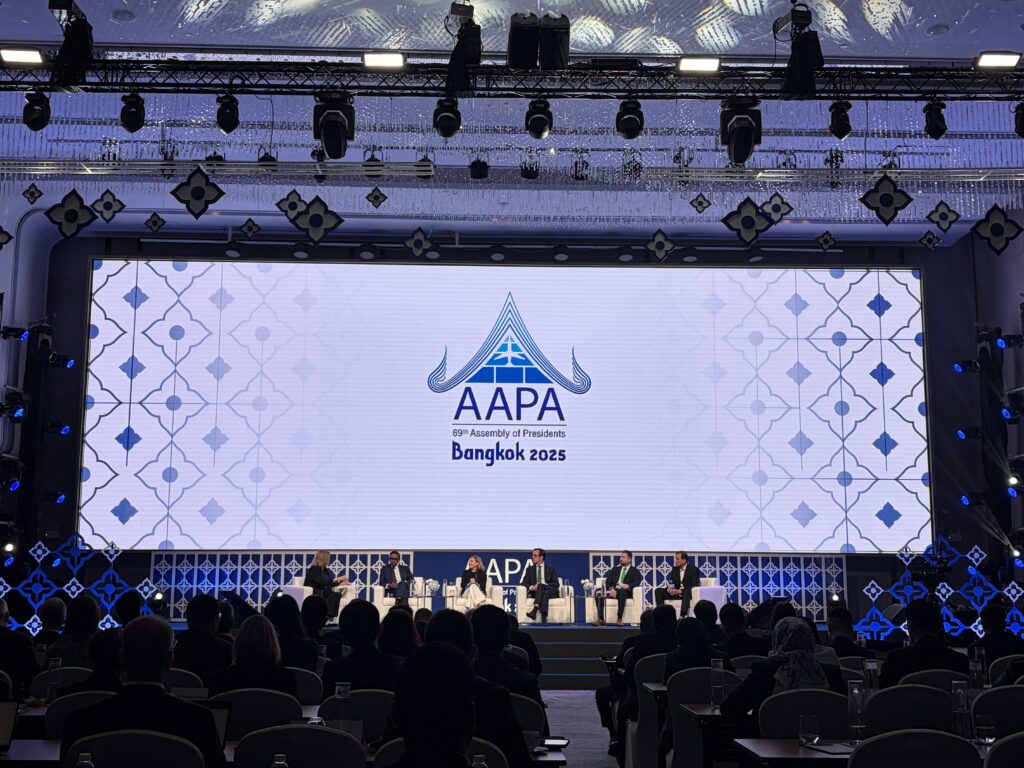
Media programme highlights: A confident outlook from Airbus and Boeing
During the media programme, Airbus and Boeing presented aligned forecasts that highlighted the Asia Pacific’s long-term growth trajectory across both passenger and cargo markets.
Airbus projected that the region will require 19,560 new aircraft over the next 20 years, accounting for 46% of global demand. This includes roughly 3,500 widebodies and more than 16,100 single-aisle aircraft to support both long-haul and intra-regional expansion.
Airbus noted that 68% of deliveries will support fleet growth, while 32% will replace older aircraft—contributing to decarbonisation, with next-generation widebodies offering up to 25% fuel-efficiency improvements.
Cargo remains a central pillar of the forecast: Asia Pacific is expected to operate around 850 freighters in the long term, nearly one-third of the global fleet, with 250 new-build widebody freighters entering service over the next two decades. The A350F continues to gain traction among carriers planning next-generation fleet renewals.
“The Asia-Pacific region is entering an exciting phase of growth, fuelled by strong demand for air travel and logistics,” said Anand Stanley, President of Airbus Asia Pacific.
Boeing shared an equally strong outlook, forecasting Southeast Asia’s air travel market to grow by 7% annually, supported by rising disposable income, increased international connectivity, and a solid tourism rebound. Thailand alone is expected to grow by 65% over the next decade.
On the cargo side, Boeing emphasised its dominant position: more than 90% of global air freight is carried on Boeing aircraft. Its freighter portfolio spans from the 737-800BCF for regional operations to the upcoming 777-8F, capable of lifting 118 tonnes. The widely used 777F remains central to global cargo networks as airlines plan long-term fleet renewal.
Together, the Airbus and Boeing briefings delivered a clear message: Asia Pacific remains central to global aviation’s future, with rising demand across both passenger and cargo markets creating opportunities for investment, innovation, and long-term fleet planning.
Looking ahead to 2026
Despite the complexities of today’s operating environment, the sentiment at this year’s Assembly was overwhelmingly positive. As supply chain pressures begin to ease and SAF adoption gathers momentum across the region in 2026, airlines are preparing for what many executives described as a pivotal transition year—one that will set the tone for the next decade of expansion across the world’s fastest-growing aviation market.
“The future is bright for the Asia Pacific,” Menon concluded. “We must continue to work together to seize the opportunities ahead.”
Key resolutions from the 69th AAPA Assembly:
The Assembly concluded with the adoption of four resolutions that underscore the industry’s shared priorities for stability, growth, and long-term sustainability.
- Advancing sustainability & SAF adoption
Setting clear direction for SAF development, CORSIA implementation, and the region’s 2030 decarbonisation goals. - Enhancing lithium battery safety
Strengthening harmonised global standards to ensure safer handling and reduce passenger confusion. - Supporting supply chain & MRO development
Encouraging governments to expand manufacturing capacity, invest in skilled labour, and strengthen the region’s MRO ecosystem. - Promoting fair and sustainable regulation
Calling for equitable tax structures, balanced policy frameworks, and collaborative regulatory engagement.
Together, these resolutions reflect a unified commitment to building a resilient, competitive, and future-ready Asia Pacific aviation sector.