
Cargo terminals are no longer simply the physical endpoint of an airfreight journey. As airlines streamline networks and concentrate operations around fewer, high-intensity hubs, terminals increasingly influence reliability, connectivity, and overall network performance.

“Air Cargo terminals are playing an important and ever-increasing global role in consolidating and distributing airfreight via their network independent hubs,” says Björn Ussat, Director Air Cargo at Lödige Industries. “Having evolved from pure handling facilities into digitally connected performance nodes within airline and forwarder networks, their role has become more strategic within the global cargo networks rather than a local processing point.”
“Beyond physical handling, terminals today capture structured operational events across the cargo journey and feed them into airline and cargo management systems,” Björn adds.


Automation is now standard—intelligence is the differentiator
Automation has become common across major hubs, but Lödige Industries argues that mechanisation alone does not guarantee performance. The real leap comes from combining automated equipment with process control and integrated software.
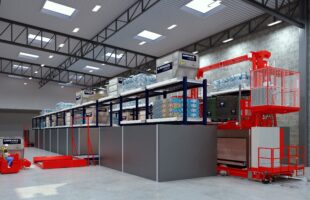
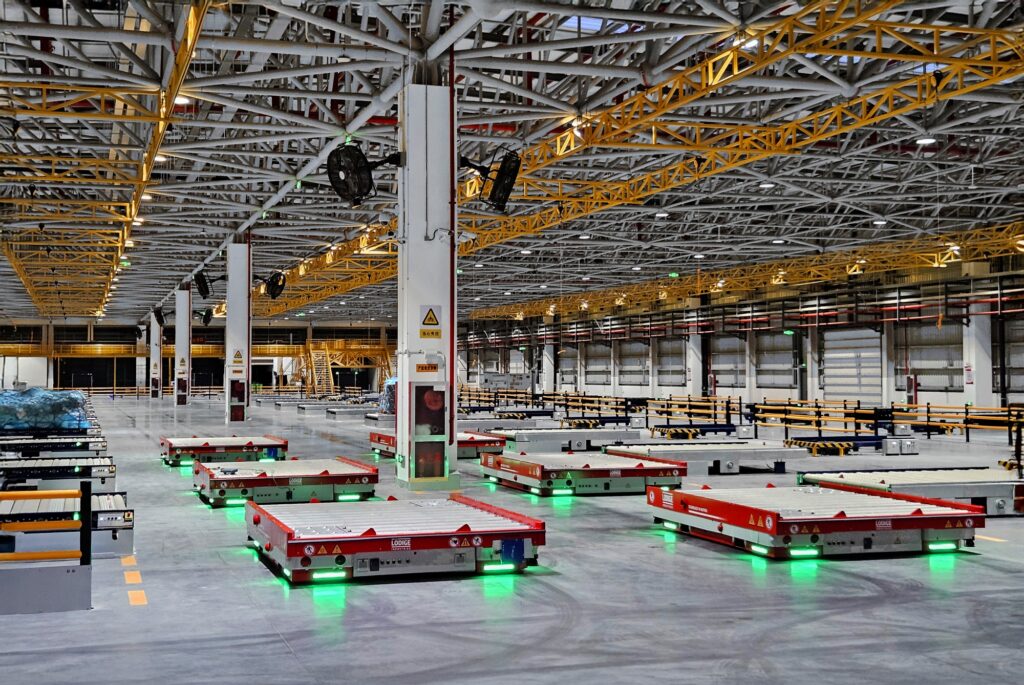
“Automation primarily refers to mechanised or automated equipment — ranging from assisted handling and operator-driven systems to highly automated solutions such as Elevating Transfer Vehicle (ETV) storages, Automated Storage and Retrieval System (ASRS) or Automated Guided Vehicle (AGV)-based transport and all kinds of conveyor decks,” says Björn Ussat, Director Air Cargo at Lödige Industries.
What distinguishes an intelligent terminal is the ability to orchestrate those systems through a software layer that drives consistency and repeatable performance. Lödige’s Cargo Direct software acts as this process-controlling “brain,” using air waybill data, handling requirements, terminal layout, system interfaces, and real-time availability of equipment and personnel to determine the next optimal step for each cargo unit—reducing user interaction to a structured “scan-and-confirm” workflow.
“This distinction matters because intelligence delivers consistency, predictability and repeatable performance,” Björn notes. “Combining modern equipment with process automation has shown that significant throughput gains can be achieved within the same footprint — providing airlines and network planners with reliable operational throughput rather than theoretical capacity assumptions.”
Visibility becomes a performance tool
As cargo networks become more complex, terminals are expected to provide visibility that goes beyond shipment status updates. Instead, real-time operational dashboards and performance indicators are becoming essential tools for managing throughput, staffing, and hub connectivity.
Björn notes that improved data visibility allows terminal operators and airline managers to move beyond traditional freight data and take a more proactive view of day-to-day operations. By consolidating shipment information, special handling requirements, flight schedules, and resource availability into a continuously updated activity plan, terminals can create a single operational view that supports faster and better-informed decision-making.
“Operational status and location data are fed back to cargo management systems in real time, creating a consistent audit trail across the terminal,” he says.
This level of transparency strengthens schedule resilience and helps terminals stay aligned with airline expectations for predictability and network performance. As digitalisation accelerates, initiatives such as Cargo iQ reporting and preparations for ONE Record are also shaping the next phase of data-driven cargo handling.
“Digitalisation — including Cargo iQ event reporting and preparation for ONE Record concepts — enables terminals to actively support transparency, predictability and performance management across networks,” Björn adds.
Hub-centric design priorities
With airlines consolidating cargo flows into key hubs, terminal design must be aligned with future demand and operational flexibility rather than static capacity assumptions.
“Accurate forecasting and simulation-driven design are critical,” Björn says. “Terminal layouts must be based on realistic demand assumptions and validated through detailed simulations, including ‘what-if’ scenarios.”
“On the hardware side, long-term flexibility and redundancy of individual operational functions are essential to prevent bottlenecks,” he explains. “On the software side, systems must provide sufficient transparency to stay ahead of ad-hoc decisions while remaining flexible enough to meet customer requirements.”
“With terminal delivery timelines often exceeding two years, the ability to scale capacity in line with actual network development is essential to avoid premature constraints,” Björn adds.
Smarter disruption handling and a gap in process automation
Irregular operations, shifting flight schedules, and demand surges have become common realities. In this environment, cargo terminals need structured information and central orchestration to respond quickly.
“Advanced cargo handling systems place real-time, structured information directly in the hands of operational managers through configurable dashboards and alerts,” Björn says.
“Because planning and execution are centrally orchestrated, activities can be dynamically re-sequenced when volumes, flight schedules or priorities change,” he adds. “This allows terminals to adjust processes during disruptions rather than relying solely on manual intervention.”
Despite progress in equipment automation, Björn believes a key gap still persists: process automation remains limited across many terminals.
“Despite widespread equipment automation, a key gap remains the limited adoption of true process automation,” he says. “In many terminals, operational consistency still depends heavily on individual experience required to handle freight with non-sufficient data quality rather than system-guided workflows.”
At the same time, specialised cargo flows such as e-commerce and temperature-controlled freight are adding new complexity.
“Increasing volumes of specific types of freight – such as temperature-controlled freight and e-commerce – require terminal space and scalable, seamlessly integrated processes alongside general cargo,” Björn says.
Shanghai Pudong Terminal 4: flexibility and scalability in action
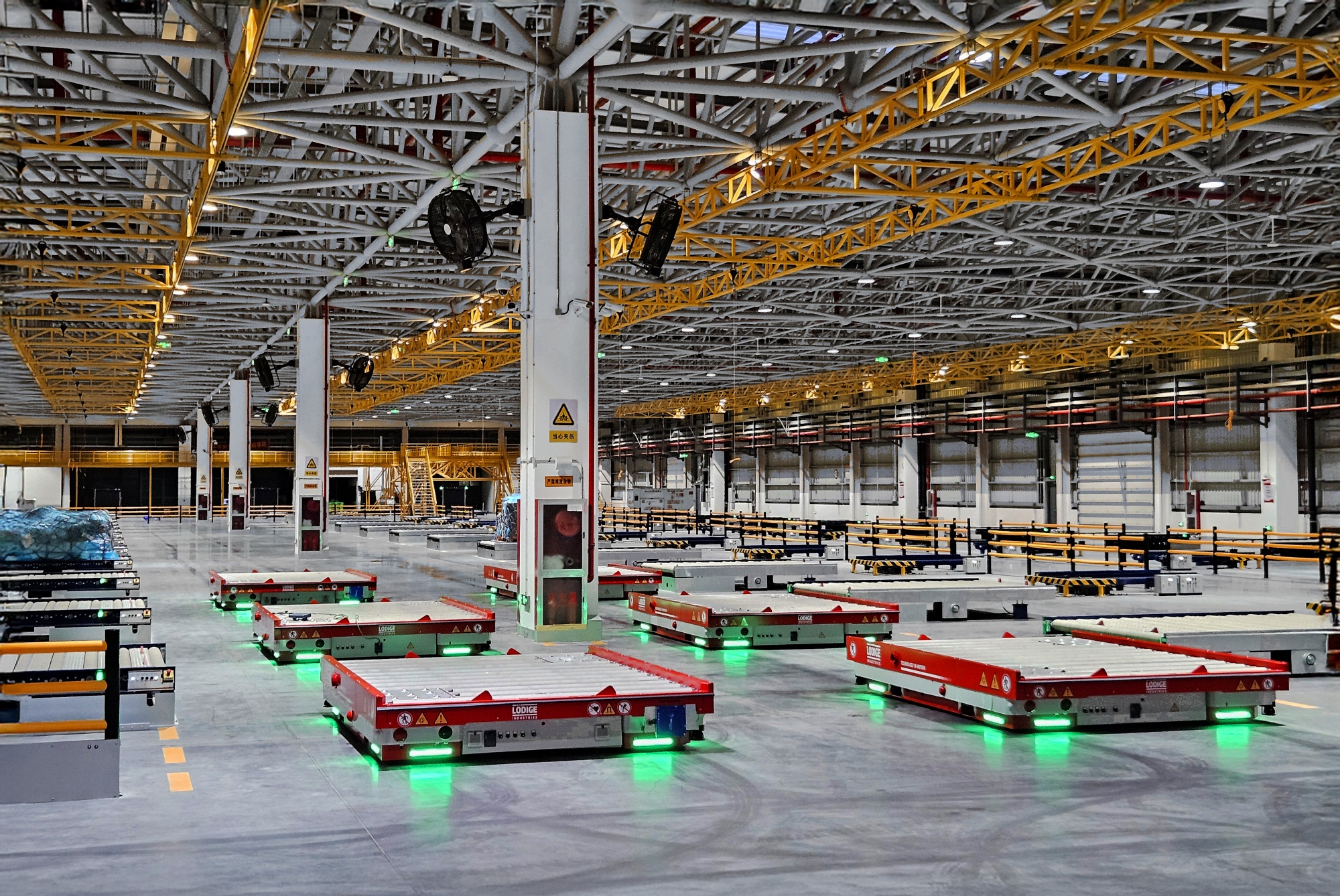
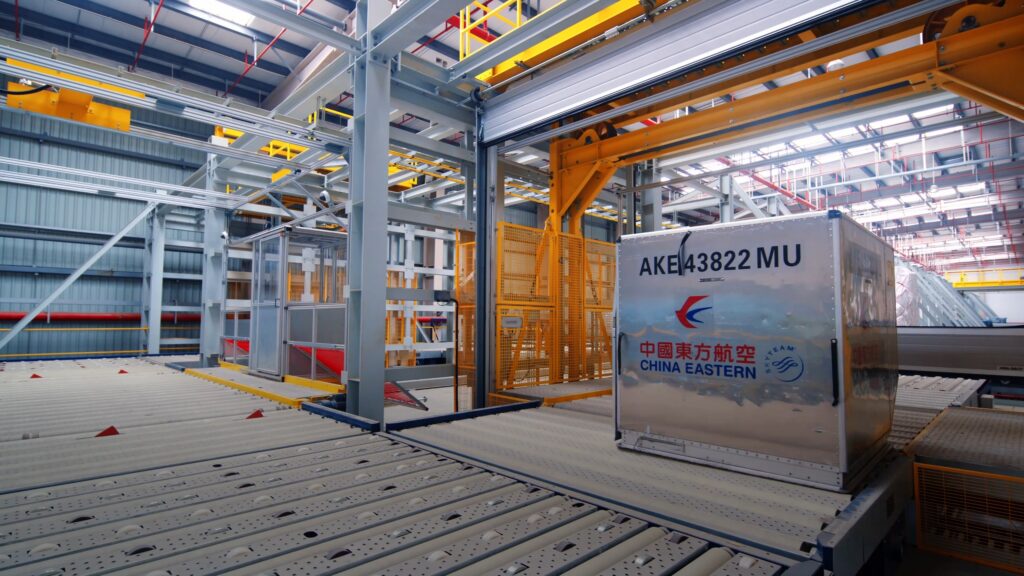
Lödige Industries’ recent deployment at Shanghai Pudong International Airport Terminal 4—operated by China Eastern Air Logistics—offers a timely example of how automation, software integration, and flexible design can support future-ready hub operations.
The project includes six high-capacity AGVs capable of transporting ULDs up to 6.8 tonnes, reinforcing the push toward scalable terminal systems built for evolving hub demands.
“The Shanghai Pudong Terminal 4 project demonstrates how smart automation can support future-ready hub capacity,” Björn says. “The terminal combines a flexible layout with high-capacity AGVs and an integrated software environment within Lödige Industries’ Cargo Professional Suite.”
“This enables dynamic routing, reduces dependence on fixed infrastructure and provides real-time visibility of cargo movements,” he explains.
“From a network perspective, the scalability and adaptability of the solution support long-term operational resilience and allow capacity to evolve in line with airline and airport growth strategies,” Björn adds.
A shift toward integrated platforms
Lödige Industries’ recognition as Air Cargo Automation Provider of the Year at the 12th Payload Asia Awards reflects what Björn describes as changing expectations across the industry.
“The recognition reflects a clear shift in market expectations toward integrated, data-driven platforms that unify core processes, material handling and automation — particularly in environments characterised by constrained floor space, manpower shortages and live operations that cannot be disrupted,” he says.
Looking ahead, Björn expects cargo terminals to become even more closely aligned with airline and airport network strategies, supported by increasing automation and AI-assisted guidance.
“Increased automation combined with AI-supported guidance will further integrate cargo terminals into airline and airport network strategies,” he says. “Rather than operating as isolated facilities, terminals will increasingly function as digitally connected nodes that support coordinated, data-driven decision-making across networks, improving local performance while enhancing end-to-end visibility and predictability.”
For airlines reassessing hub strategies, the takeaway is clear: terminal performance must increasingly be treated as a network planning asset—not just a handling capability.
This story was first published in the January-February 2026 issue of Payload Asia.