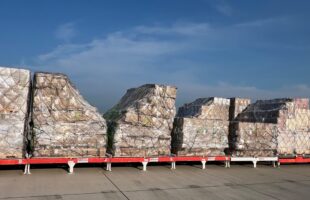

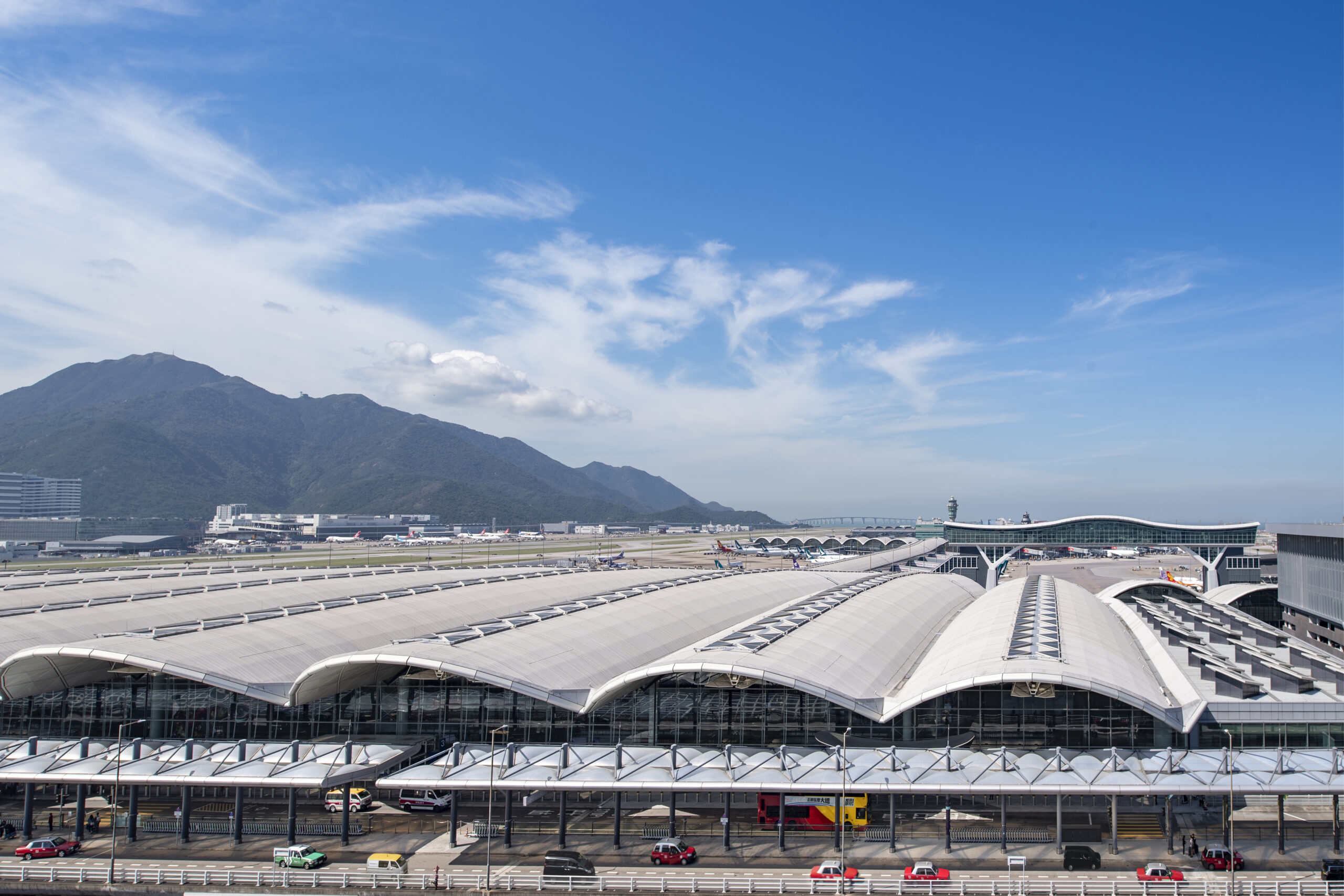
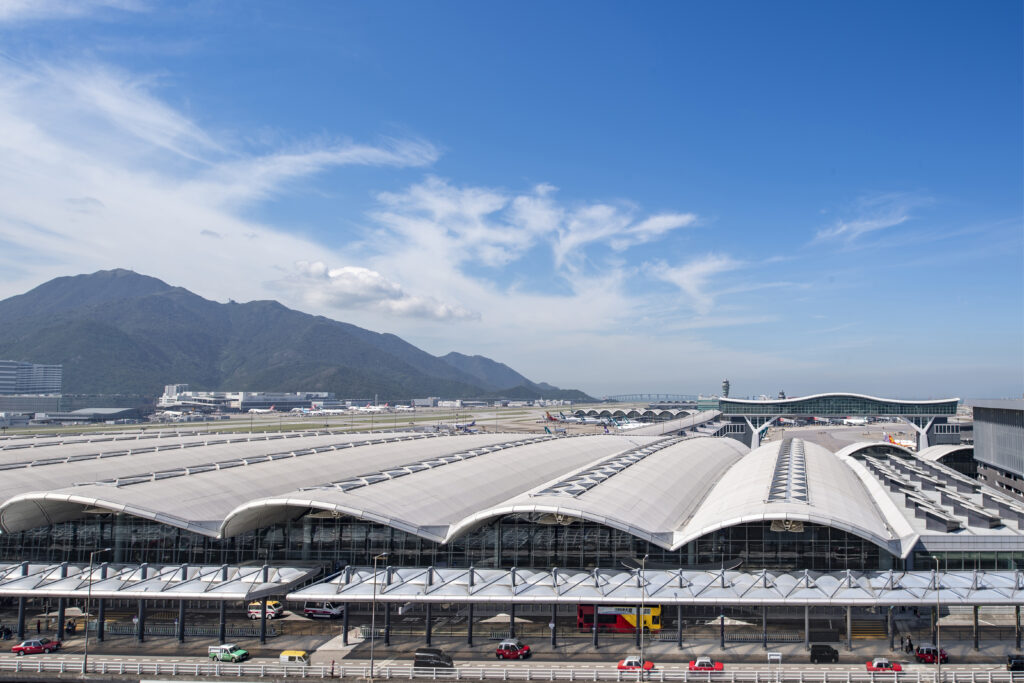
Hong Kong International Airport (HKIA) reaffirms its position as a leading global cargo hub with a combination of infrastructure expansion, digital innovation, and a long-term vision aligned with evolving regional trade dynamics. In the first half of 2025, HKIA recorded a 1.9% year-on-year increase in cargo volume to 2.4 million tonnes, contributing to a 7.8% growth in throughput over the past 12 months, reaching 4.98 million tonnes. This builds on a strong performance in 2024, during which HKIA was named the world’s busiest cargo airport for the 14th time since 2010.
Recognised as Cargo Airport of the Year – Asia Pacific and, together with Global Logistics System Co Ltd, as Air Cargo Technology Provider of the Year at the 2024 Payload Asia Awards, HKIA is setting new benchmarks in operational excellence and cargo innovation.
Unleashing the potential of 3RS
The commissioning of the Three-Runway System (3RS) in November 2024 marked a pivotal milestone in HKIA’s development. With expanded capacity, the airport is now equipped to handle up to 10 million tonnes of cargo annually and 120 million passengers in the future. This positions HKIA to better serve the growing demand from international trade and cross-border e-commerce.


“Despite the geopolitical uncertainties that are impacting international trade and reshaping the global supply chain, we maintain a cautiously optimistic outlook on the long-term development of air cargo as we see new opportunities not only in emerging markets like the Middle East, but also in the fast-developing world of cross-border e-commerce,” says Cissy Chan, Executive Director, Commercial, Airport Authority Hong Kong.
Chan adds that the airport continues to identify growth opportunities and expand into emerging markets, enhancing cargo handling capacity, and working closely with industry stakeholders to effectively navigate shifting market dynamics.
Digital transformation at the core
At the heart of HKIA’s innovation roadmap is the HKIA Cargo Data Platform, a digital ecosystem launched in 2021 to support seamless cargo operations through the integration of smart technologies and stakeholders. The platform is also compatible with the International Air Transport Association’s (IATA) ONE Record standard, allowing for streamlined communication and data exchange among air cargo supply chain partners.
“Leveraging the latest smart technologies, such as blockchain, smart contracts, artificial intelligence and IoT, we developed a community-based digital platform, the HKIA Cargo Data Platform,” Chan says. “It provides a synchronised, neutral and trusted network for the Hong Kong air cargo industry that connects key stakeholders, including cargo terminal operators, freight forwarders, truckers, warehouse operators and regulators, thus enhancing cargo handling efficiency and enabling secure, paperless operations with improved visibility across the cargo journey.”
The platform’s Import Module, a first-of-its-kind innovation, enables local forwarders to complete the entire import cargo collection process digitally, with functions like e-payment, e-queue, e-stamp, and e-pouch.
In July 2025, HKIA officially launched HKIA Cargo Connect, the world’s first airport-led digital initiative to facilitate airline partnerships. The platform provides intelligent matchmaking based on flight schedules, aircraft types, and transhipment lead times, addressing inefficiencies in manual interline coordination.
HKIA has also made significant progress in autonomous and AI-powered technologies. Its apron is supported by the IoT-augmented Digital Apron and Tower Management System, integrating real-time video, flight and surveillance data to enhance situational awareness. Meanwhile, over 70 autonomous electric vehicles, including patrol cars, buses and tractors, support airside logistics with more than 2.3 million kilometres already logged.
Building for e-commerce growth
HKIA has forged key partnerships to strengthen its position as a regional e-commerce hub. One of the key developments is the Cainiao Smart Gateway, which opened in 2023. Developed by a joint venture led by Cainiao Network, the logistics arm of Alibaba Group, the facility spans 4.1 million square feet and is poised to become Hong Kong’s third-largest warehouse. Equipped with advanced robotics, the facility serves as Alibaba’s flagship smart hub in Asia.
A new Transit Mail Centre is set to open in late 2025 to support the growing volume of e-commerce parcels from Mainland China. In parallel, UPS has begun developing its new integrator hub at HKIA, scheduled for completion in 2028.
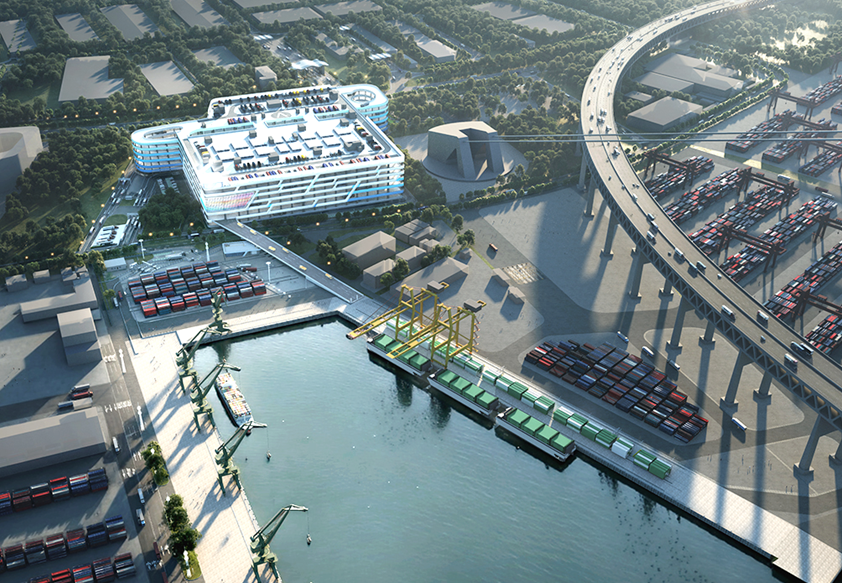
Among HKIA’s most strategically important developments is the Dongguan Logistics Park, a key project that reinforces the airport’s role as a logistics gateway for the Greater Bay Area (GBA). The initiative supports HKIA’s position as a double gateway between the GBA and the world, handling about 70% of the region’s international cargo. Through an innovative sea-air intermodal transhipment model, HKIA has extended its efficient and reliable freight services upstream into Dongguan. Security screening, palletisation, and cargo acceptance are completed at the logistics park, allowing shipments to be transferred by designated vessels directly to HKIA’s restricted area—eliminating the need for repeated checks upon arrival. The model also works in reverse for inbound cargo bound for Mainland China.
A pilot scheme has been running smoothly since 2023, with total cargo value handled exceeding RMB 30 billion. Construction of the permanent facility is underway, with the first phase set to launch in the first half of 2027. To further enhance cargo handling efficiency and security, the facility will incorporate digitalised and automated systems, including autonomous guided vehicles, customised containers, and other advanced infrastructure. Once fully operational, the arrangement is expected to reduce processing time by one-third and cut costs by 50 percent.
In response to rising demand for perishable goods, HKIA also launched the Air-Land Fresh Lane in April 2025. This dedicated service transports fresh and live products from overseas into the GBA using truck transfers via the Hong Kong-Zhuhai-Macau Bridge.
Commitment to sustainability
HKIA has pledged to achieve Net Zero Carbon by 2050, with a mid-term target of a 55 percent absolute emissions reduction by 2035 from a 2018 baseline. The airport has introduced multiple green initiatives, including the electrification of airside vehicles, the introduction of renewable diesel for ground handling, and a green airport design strategy for future developments.
“In 2024, AAHK jointly launched the Renewable Diesel Pilot Project with Hong Kong Air Cargo Terminals Limited and Shell Hong Kong Limited, making HKIA the first airport in Asia to adopt renewable diesel for ground services equipment. Compared to petroleum diesel, this renewable alternative fuel can reduce greenhouse gas emissions by 87%,” says Chan.
HKIA is also preparing the groundwork for sustainable aviation fuel (SAF) adoption. Its two aviation fuel facilities have been certified under the International Civil Aviation Organisation (ICAO)’s CORSIA framework, ensuring SAF traceability throughout the supply chain.
Looking ahead
From physical expansion and smart cargo systems to green operations and intermodal connectivity, HKIA is demonstrating how a future-ready cargo hub can lead with innovation and purpose. With the full operation of the 3RS and a solid pipeline of projects, the airport is well-positioned to shape the next chapter of air cargo in the Greater Bay Area and across the Asia Pacific.
This story was first published in the July-August 2025 issue of Payload Asia.